Efficacy of a Calcium Sucrose Phosphate Based Toothpaste in Elevating the Level of Calcium, Phosphate Ions in Saliva and Reducing Plaque: A Clinical Trial
- PMID: 29875552
- PMCID: PMC5968674
- DOI: 10.4103/ccd.ccd_562_17
Efficacy of a Calcium Sucrose Phosphate Based Toothpaste in Elevating the Level of Calcium, Phosphate Ions in Saliva and Reducing Plaque: A Clinical Trial
Abstract
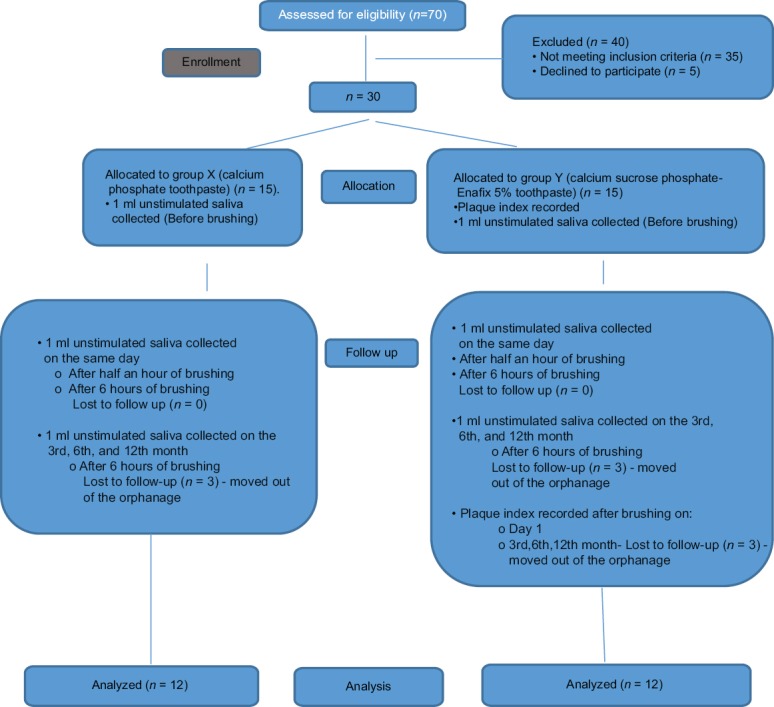
Aim: To evaluate and compare the efficacy of "calcium sucrose phosphate" (CaSP) toothpaste (Enafix 5%) with ordinarily used calcium, phosphate-containing toothpaste in elevating the level of calcium, phosphate ions in saliva. Secondary aims were to evaluate substantivity and plaque-reducing ability of CaSP toothpaste.
Materials and methods: Thirty study participants of age group 6-13 years were divided into two groups: Group X (Control group) was made to continue brushing with their regularly used calcium, phosphate-containing toothpaste and Group Y (Test group) was allotted CaSP toothpaste. 1 ml of unstimulated saliva was periodically collected from both groups to determine any alteration in the salivary calcium, phosphate level. Parameters such as substantivity and plaque-reducing ability of CaSP toothpaste were also evaluated. Salivary mineral's intergroup comparison was evaluated by Student's t-test while its intragroup comparison along with the plaque amount variation in Group Y was evaluated by ANOVA and Tukey's post hoc test.
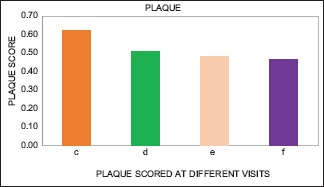
Results: Group Y showed an increase in the salivary calcium level though not statistically significant. The increase was pronounced in samples collected on day 1. Group Y showed a consistent level of calcium, phosphate in samples collected immediately and 6 h postbrushing, indicating its substantivity. In addition, Group Y had an impact in reducing the plaque level when the 1st-month plaque score was compared with the 12th-month score.
Conclusion: CaSP leads to an increase in the salivary calcium level though it was not statistically significant. Supervised brushing and dietary habits showed a positive effect on both the groups. CaSP toothpaste also showed substantivity and plaque-reducing ability.
Keywords: Calcium sucrose phosphate toothpaste; plaque; saliva; salivary calcium and phosphate.
Conflict of interest statement
There are no conflicts of interest.
Figures
References
-
- Raksha B, Mithra H. An overview on remineralizing agents. Indian J. Appl Res. 2015;6:331–6.
-
- Reynolds EC. Calcium phosphate-based remineralization systems: Scientific evidence? Aust Dent J. 2008;53:268–73. - PubMed
-
- Reynolds EC, Cai F, Cochrane NJ, Shen P, Walker GD, Morgan MV, et al. Fluoride and casein phosphopeptide-amorphous calcium phosphate. J Dent Res. 2008;87:344–8. - PubMed
-
- Harris R, Schamschula RG, Gregory G, Roots M, Beveridge J. Observations on the cariostatic effect of calcium sucrose phosphate in a group of children aged 5-17 years. Preliminary report. Aust Dent J. 1967;12:105–13. - PubMed
-
- Lehl G, Bansal K, Sekhon R. Relationship between cariogenic diet and dental caries as evaluated from a 5-day diet diary in 4-12 year-old children. J Indian Soc Pedod Prev Dent. 1999;17:119–21. - PubMed
LinkOut - more resources
Full Text Sources
Other Literature Sources