Prevalence and factors associated with metabolic syndrome in an urban population of adults living with HIV in Nairobi, Kenya
- PMID: 29875971
- PMCID: PMC5987082
- DOI: 10.11604/pamj.2018.29.90.13328
Prevalence and factors associated with metabolic syndrome in an urban population of adults living with HIV in Nairobi, Kenya
Abstract
Introduction: Metabolic syndrome affects 20-25% of the adult population globally. It predisposes to cardiovascular disease and Type 2 diabetes. Studies in other countries suggest a high prevalence of metabolic syndrome among HIV-infected patients but no studies have been reported in Kenya. The objective of this study was to assess the prevalence and factors associated with metabolic syndrome in adult HIV-infected patients in an urban population in Nairobi, Kenya.
Methods: In a cross-sectional study design, conducted at Riruta Health Centre in 2016, 360 adults infected with HIV were recruited. A structured questionnaire was used to collect data on socio-demography. Blood was collected by finger prick for fasting glucose and venous sampling for lipid profile.
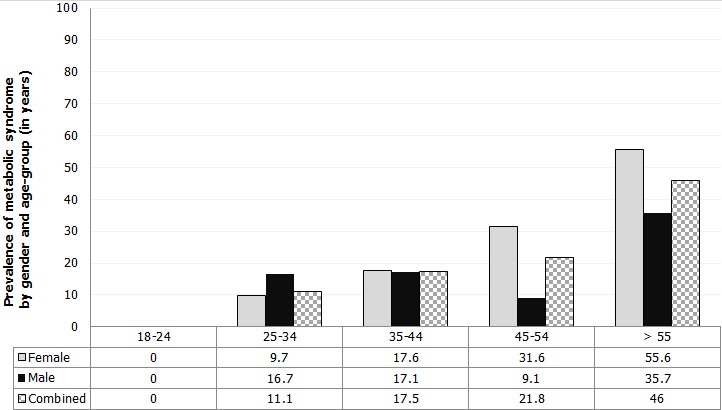
Results: Using the harmonized Joint Scientific Statement criteria, metabolic syndrome was present in 19.2%. The prevalence was higher among females than males (20.7% vs. 16.0%). Obesity (AOR = 5.37, P < 0.001), lack of formal education (AOR = 5.20, P = 0.002) and family history of hypertension (AOR = 2.06, P = 0.029) were associated with increased odds of metabolic syndrome while physical activity (AOR = 0.28, P = 0.001) was associated with decreased odds.
Conclusion: Metabolic syndrome is prevalent in this study population. Obesity, lack of formal education, family history of hypertension, and physical inactivity are associated with metabolic syndrome. Screening for risk factors, promotion of healthy lifestyle, and nutrition counselling should be offered routinely in HIV care and treatment clinics.
Keywords: HIV; Metabolic syndrome; associated factors; prevalence.
Figures
References
-
- Alberti KGMM, Zimmet P, Shaw J. Metabolic syndrome: a new world-wide definition: a consensus statement from the international diabetes federation. Diabet Med J Br Diabet Assoc. 2006 May;23(5):469–80. - PubMed
-
- Hu G, Qiao Q, Tuomilehto J, Balkau B, Borch-Johnsen K, Pyorala K. Prevalence of the metabolic syndrome and its relation to all-cause and cardiovascular mortality in Nondiabetic European Men and Women. Arch Intern Med. 2004 May 24;164(10):1066–76. - PubMed
-
- Isomaa B, Almgren P, Tuomi T, Forsén B, Lahti K, Nissén M, et al. Cardiovascular morbidity and mortality associated with the metabolic syndrome. Diabetes Care. 2001 Apr 1;24(4):683–9. - PubMed
MeSH terms
LinkOut - more resources
Full Text Sources
Other Literature Sources
Medical