


Estimating mortality rates among passerines caught for ringing with mist nets using data from previously ringed birds
- PMID: 29876090
- PMCID: PMC5980556
- DOI: 10.1002/ece3.4032
Estimating mortality rates among passerines caught for ringing with mist nets using data from previously ringed birds
Abstract
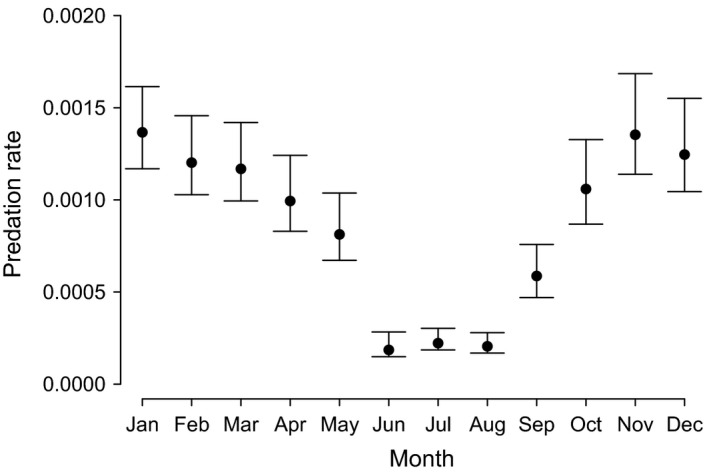
Mist netting is the most commonly used method for catching birds for scientific ringing, but despite decades of use, there have been few attempts to quantify the associated potential risks to the individuals caught. Any incidence of mortality through capture and handling, however low, is of potential ethical concern and may also introduce biases into the data. We estimate the mortality rate associated with capture of previously ringed (recaptured) passerines from the British and Irish Ringing Scheme (c. 1.5 million records) caught using mist nets. The importance of species, age, mass, month, time, previous captures, and an index of predator occurrence was tested using generalized linear mixed-effects models. The average mortality rate was 0.0011, most of which was reported to occur before the individuals had been extracted from the nets (c. 70% of incidents). Juveniles appeared to be at higher risk and the incidence of predation from mist nets was seasonal, with increased risk during the winter. Species differed in their reported mortality rates with the apparent risk being greatest for Chiffchaff Phylloscopus collybita (0.0029) and Bullfinch Pyrrhula pyrrhula (0.0027). To improve our understanding (and hence minimize risk in future), we recommend collecting more complete data on incidences of mortality, and also injuries; exercising increased care when the species we have identified as being at greater risk are likely to be captured, and ensuring there are robust procedures for the checking of nets (as most reported incidents of mortality occur before handling). We also recommend that all Ringing Schemes should collate and make available data on capture-related mortality. Overall rates of mortality associated with capture, although, were low and support the use of mist netting as a safe capture technique, without undue bias from mortality, when used by appropriately trained individuals.
Keywords: avian; bird ringing; injury; mark–recapture; mortality; passerine; trapping; welfare.
Figures

References
-
- Amat, J. A. (1999). Foot losses of metal banded snowy plovers (Charadrius alexandrinus). Journal of Field Ornithology, 70, 555–557.
-
- Anderson, G. Q. , & Green, R. E. (2009). The value of ringing for bird conservation. Ringing & Migration, 24, 205–212. https://doi.org/10.1080/03078698.2009.9674393 - DOI
-
- Anon (2012). Guidelines for the treatment of animals in behavioural research and teaching. Animal Behaviour, 83, 301–309. - PubMed
-
- Arnemo, J. M. , Ahlqvist, P. , Andersen, R. , Berntsen, F. , Ericsson, G. , Odden, J. , … Swenson, J. E. (2006). Risk of capture related mortality in large free‐ranging mammals: Experiences from Scandinavia. Wildlife Biology, 12, 109–113. https://doi.org/10.2981/0909-6396(2006)12[109:ROCMIL]2.0.CO;2 - DOI
Associated data
LinkOut - more resources
Full Text Sources
Other Literature Sources
