. 2018 Aug 15:353:55-66.
doi: 10.1016/j.taap.2018.06.002. Epub 2018 Jun 5.

Sex differences in effects of gestational polychlorinated biphenyl exposure on hypothalamic neuroimmune and neuromodulator systems in neonatal rats

Affiliations

Sex differences in effects of gestational polychlorinated biphenyl exposure on hypothalamic neuroimmune and neuromodulator systems in neonatal rats

Margaret R Bell et al. Toxicol Appl Pharmacol. .

Abstract

Polychlorinated biphenyls (PCBs) are ubiquitous in the environment and exposure to them is associated with immune, endocrine and neural dysfunction. Effects of PCBs on inflammation and immunity are best described in spleen and blood, with fewer studies on neural tissues. This is an important gap in knowledge, as molecules typically associated with neuroinflammation also serve neuromodulatory roles and interact with hormones in normal brain development. The current study used Sprague-Dawley rats to assess whether gestational PCB exposure altered hypothalamic gene expression and serum cytokine concentration in neonatal animals given an immune challenge. Dams were fed wafers containing a mixture of PCBs at an environmentally relevant dose and composition (20 μg/kg, 1:1:1 Aroclor 1242:1248:1254) or oil vehicle control throughout their pregnancy. One day old male and female offspring were treated with an inflammatory challenge (lipopolysaccharide, LPS, 50 μg/kg, sc) or saline vehicle control approximately 3.5 h prior to tissue collection. Across both basal and activated inflammatory states, PCB exposure caused greater expression of a subset of inflammatory genes in the hypothalamus and lower expression of genes involved in dopamine, serotonin, and opioid systems compared to oil controls. PCB exposure also altered reactions to inflammatory challenge: it reversed the normal decrease in Esr2 hypothalamic expression and induced an abnormal increase in IL-1b and IL-6 serum concentration in response to LPS. Many of these effects were sex specific. Given the potential long-term consequences of neuroimmune disruption, our findings demonstrate the need for further research.

Keywords: Cytokine; Dopamine; Endocrine disrupting chemicals; Estrogen receptor beta; Lipopolysaccharide; Sex difference.


Conflict of interest statement

Conflict of Interest Statement

• None of the authors (M Bell, A Dryden, R Will, or A Gore) have any conflicts of interests regarding any of the following items:

• third-party financial support for the work in the submitted manuscript.

• financial relationships with any entities that could be viewed as relevant to the general area of the submitted manuscript.

• sources of revenue with relevance to the submitted work who made payments to us, or to our institution on our behalf, in the 36 months prior to submission.

• interactions with the sponsor of outside of the submitted work.

• relevant patents or copyrights (planned, pending, or issued).

• relationships or affiliations that may be perceived by readers to have influenced, or give the appearance of potentially influencing, what we wrote in the submitted work.

Figures
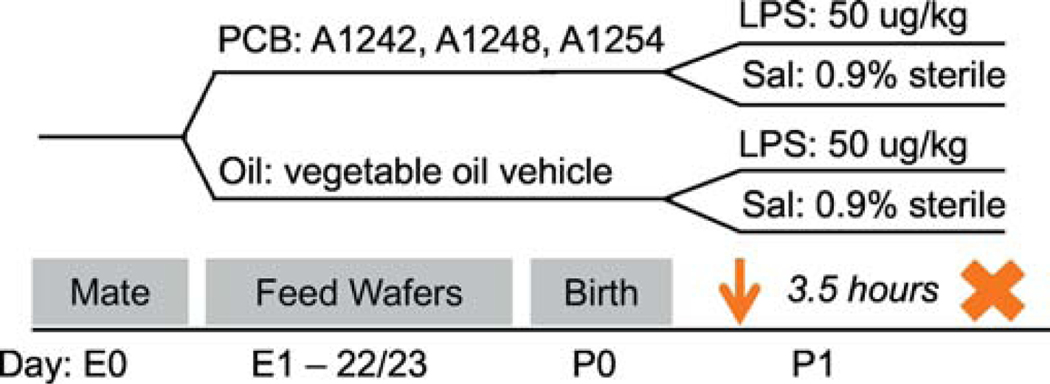
Figure 1.
Figure 1.
Experimental Design. Pregnant dams were fed pieces of wafers treated with ~100ul of either Oil (n=12) or PCBs (n = 11) throughout their pregnancy, embryonic day (E)1 to E22 or 23. One male and one female from each litter was injected (i.p.) with lipopolysaccharide (LPS) or saline (Sal) on postnatal day (P) 1 and brains were collected 3.5 hours later.
Figure 2.
Figure 2.
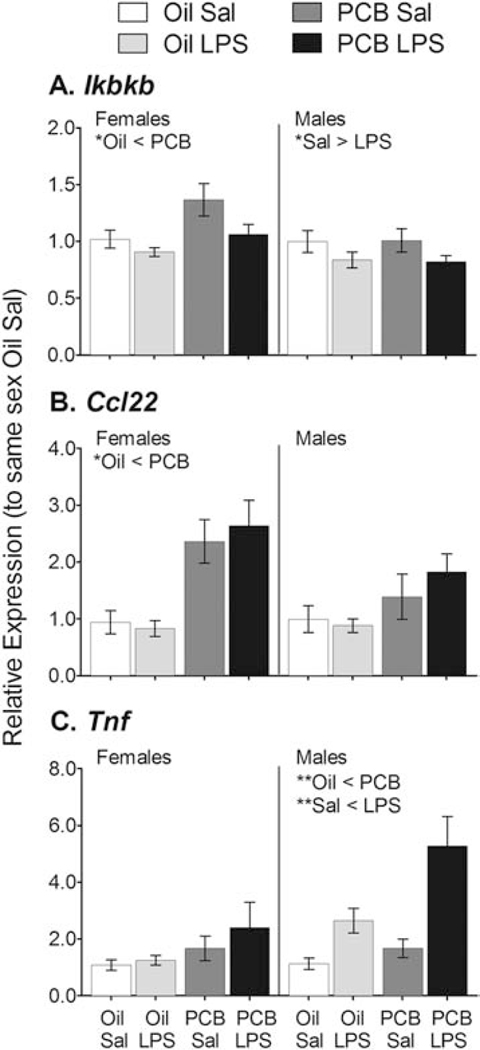
PCBs increased gene expression of inflammatory molecules in the hypothalamus. Expression of Ikbkb in females (A), Ccl22 in females (B), and Tnf in males (C); were all greater in PCB than Oil exposed rats. LPS also reduced expression of Ikbkb (A) and increased expression of Tnf (C) in males relative to Sal controls. Data shown are mean +/− SEM. Within-sex main effects of PCB or LPS treatment are noted in each subtitle, *p < 0.05 and **p < 0.01.
Figure 3.
Figure 3.
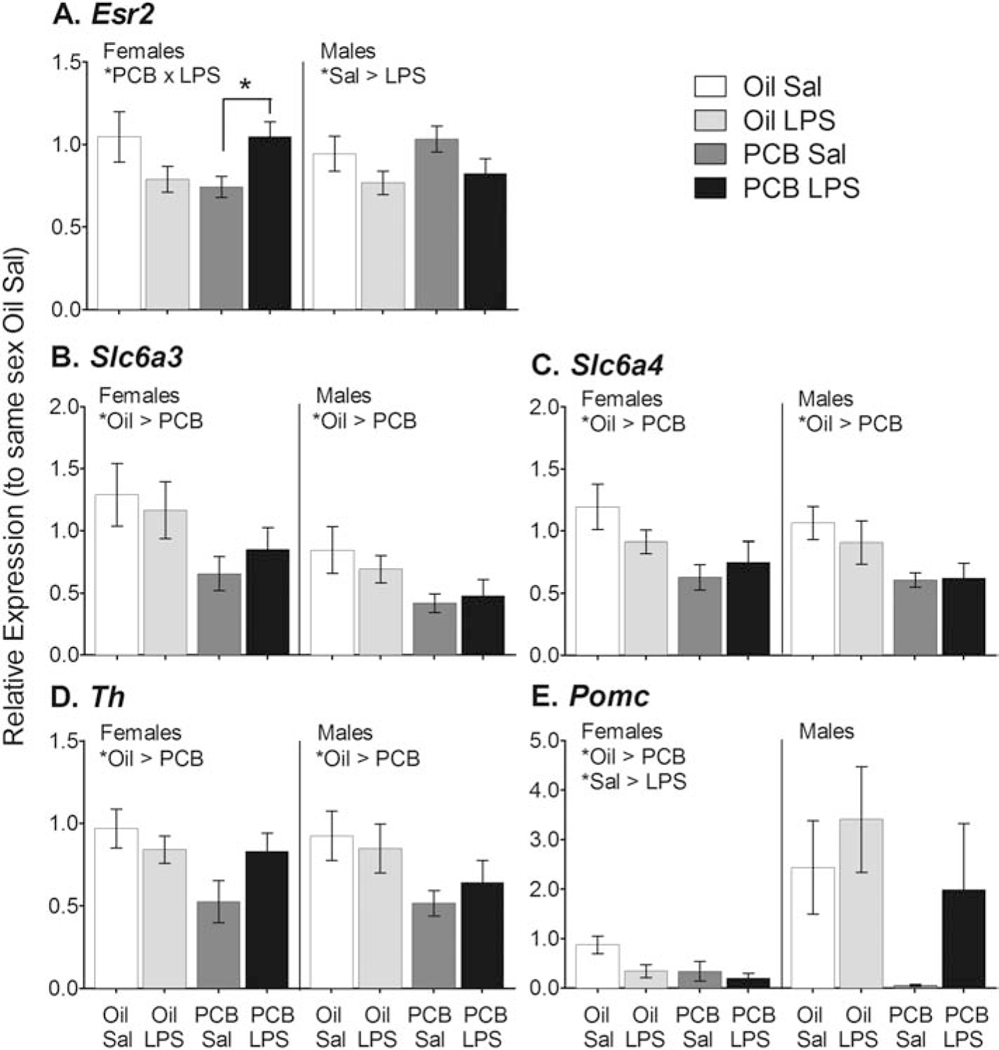
PCBs reduced gene expression of neurotransmission modulators in the hypothalamus. PCB exposed females showed an increase in Esr2 expression in response to LPS that was not present in controls, while LPS reduced expression in males (A). PCBs also downregulated expression of Slc6a3 in males and females (B); Slc6a4 in males and females (C); Th in females and males (D); and Pomc in females (E). Data shown are mean +/− SEM. Within-sex main effects of PCB or LPS treatment and PCB × LPS interaction are noted in each subtitle, *p < 0.05.
Figure 4.
Figure 4.
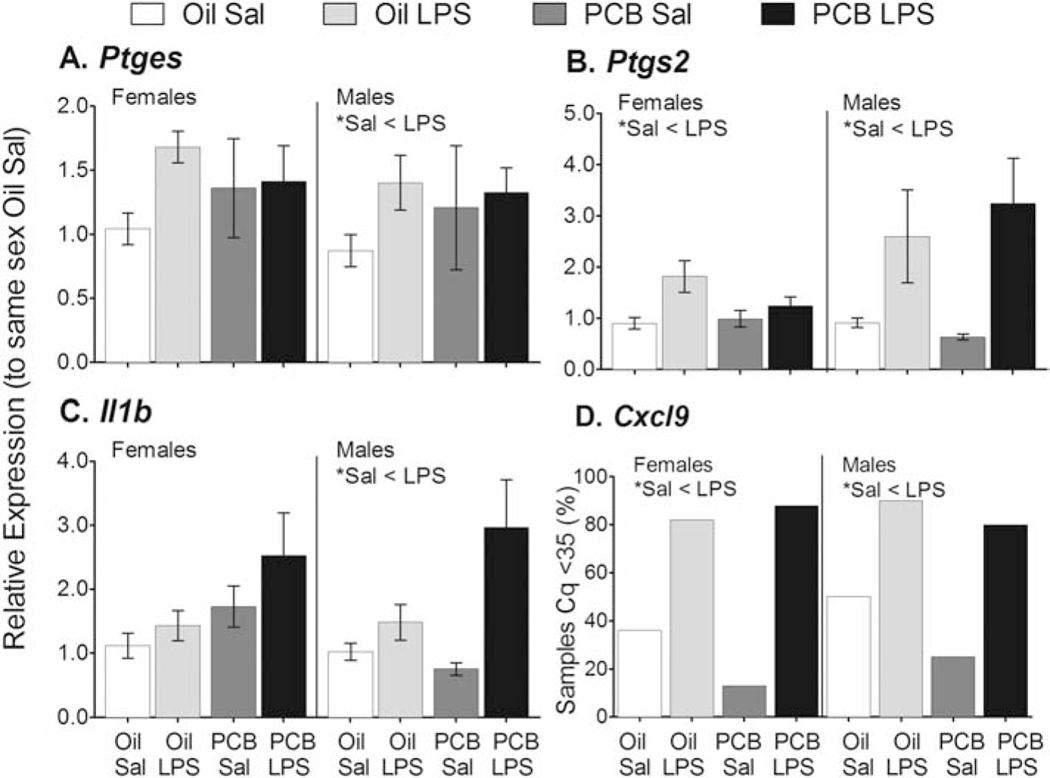
LPS increased expression of four inflammatory molecules in the hypothalamus. Expression of Ptges in males (A); Ptgs2 in females and males (B); and Il1b in males (C); were all greater in LPS than Sal treated rats. Data shown are mean +/− SEM. LPS exposure also increased the percent of samples with detectable levels of Cxcl9 in males and females (D). No effects of PCBs were observed in these targets. Within-sex main effects of LPS treatment are noted in each subtitle, *p < 0.05.
Figure 5.
Figure 5.
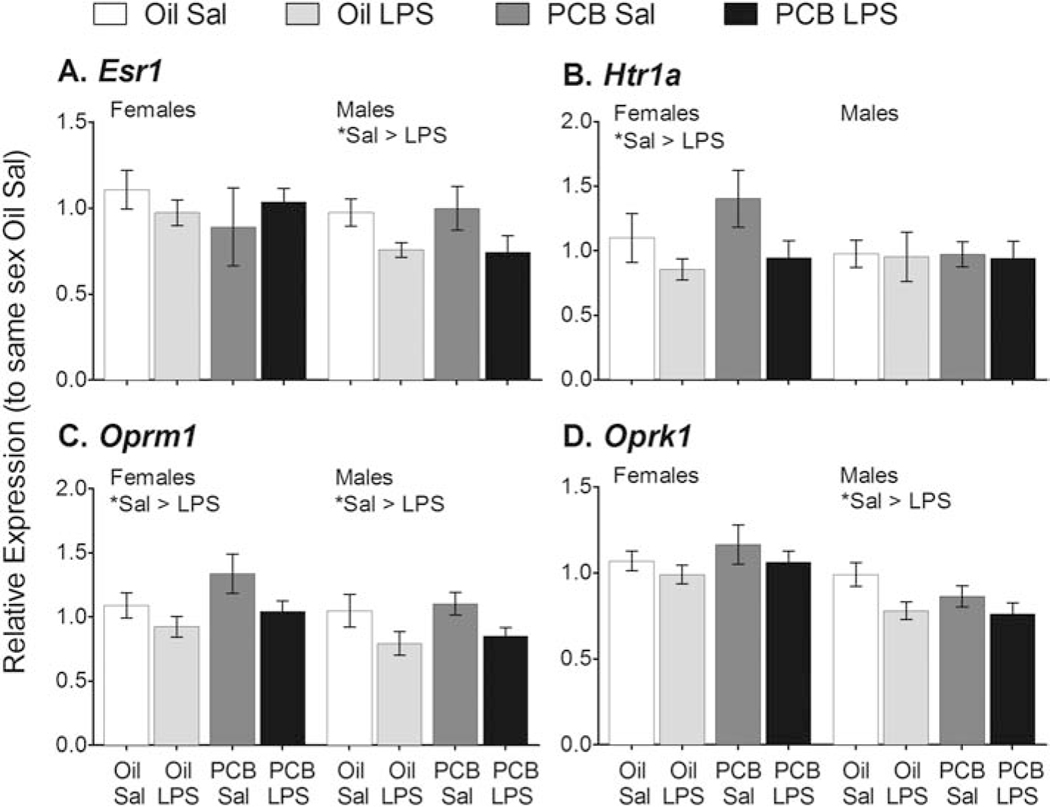
LPS reduced gene expression of four neurotransmission modulators in the hypothalamus. Expression of Esr1 in males (A); Htr1a in females (B); Oprm1 in females and males (C); and Oprk1 in males (D); were all lower in LPS than Sal counterparts. No effects of PCBs were detected on these targets. Data shown are mean +/− SEM. Within-sex main effects of LPS treatment are noted in each subtitle, *p < 0.05.
Figure 6.
Figure 6.
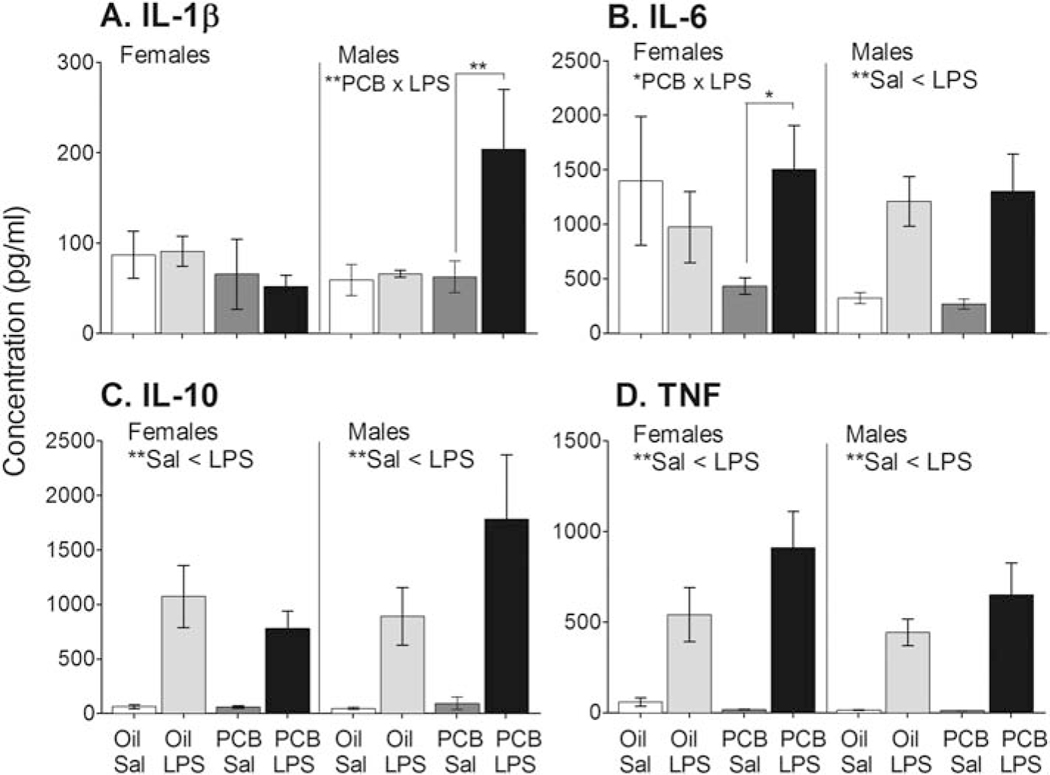
Serum concentrations are shown for four cytokines significantly affected by treatments. LPS increased interleukin-1β in PCB exposed males only (A), and interleukin-6 in PCB exposed females only (B). A significant main effect of LPS (greater than Sal) was found for IL-6 in males (B), and for interleukin-10 (C) and tumor necrotic factor (D) in all groups. No main effects of PCBs were observed. Data shown are mean +/− SEM. Within-sex main effects of LPS treatment are noted in each subtitle, and sources of significant PCB × LPS interactions are shown by bars. *p < 0.05 and **p < 0.01.
Figure 7.
Figure 7.
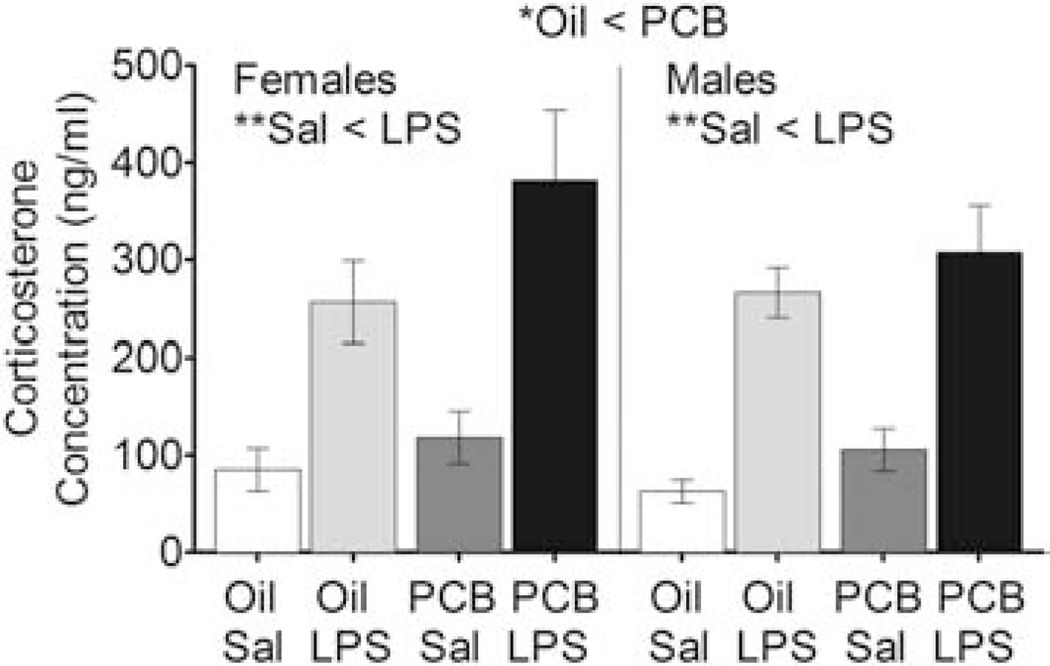
Serum Hormone Results. A) Corticosterone was greater in LPS- than Sal-treated males and females, and in PCB- than Oil-exposed animals (but only when analyzed across sexes but not within). Data shown are mean (bar height or line) +/− SEM. Within sex main effects of PCB or LPS treatment are noted in each subtitle, *p < 0.05 and **p < 0.01.
Figure 8.
Figure 8.
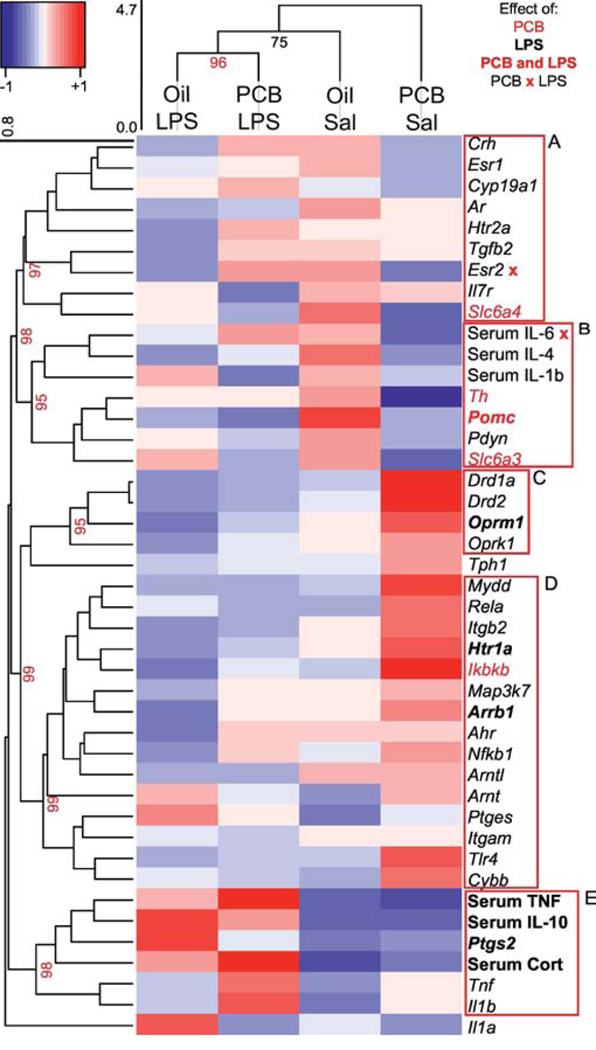
Female Heatmap. Hierarchical cluster analysis using correlation coefficients of hypothalamic gene expression, serum hormones, and serum cytokines was used to create dendrograms showing relationships within the targets and groups. The height of the clusters indicates the distance between measures, and a p value (>95 is significant) and red box indicates validated clusters. For visual clarity, only highest tier significant target clusters are shown, and some large clusters are broken down into similarly significant and more functionally relevant groups. Dendrograms are linked to a heatmap showing z-scores of target expression, with red indicating highest expression and blue indicating lowest. Target labels are red if targets are significantly affected by PCBs, bold if targets are significantly affected by LPS, and both red and bold if targets are affected by both PCBs and LPS. Interactions between PCB and LPS treatments on Esr2 and Serum IL-6 are indicated by an x.
Figure 9.
Figure 9.
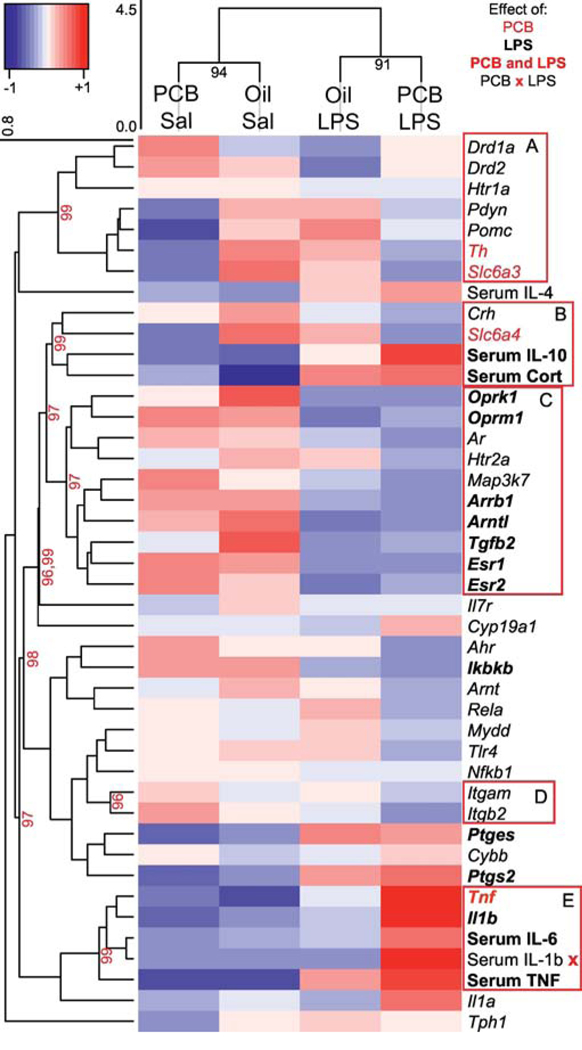
Male Heatmap. Hierarchical cluster analysis using correlation coefficients of hypothalamic gene expression, serum hormones, and serum cytokines was used to create dendrograms showing relationships within the targets and groups. The height of the clusters indicates the distance between measures, and a p value (>95 is significant) and red box indicates validated clusters. For visual clarity, only highest tier significant target clusters are shown, and some large clusters are broken down into similarly significant and more functionally relevant groups. Dendrograms are linked to a heatmap showing z-scores of target expression, with red indicating highest expression and blue indicating lowest. Target labels are red if targets are significantly affected by PCBs, bold if targets are significantly affected by LPS, and both red and bold if targets are affected by both PCBs and LPS. Interactions between PCB and LPS treatments on serum IL-1b are indicated by an x.

References

    1. Abliz A, Chen C, Deng W, Wang W, Sun R, 2016. NADPH Oxidase Inhibitor Apocynin Attenuates PCB153-Induced Thyroid Injury in Rats. International Journal of Endocrinology 2016, 11. - PMC - PubMed
    1. Amateau SK, McCarthy MM, 2002. A novel mechanism of dendritic spine plasticity involving estradiol induction of prostaglandin-E2. J. Neurosci 22, 8586–8596. - PMC - PubMed
    1. Amateau SK, McCarthy MM, 2004. Induction of PGE2 by estradiol mediates developmental masculinization of sex behavior. Nat. Neurosci 7, 643–650. - PubMed
    1. Anderson HA, Falk C, Hanrahan L, Olson J, Burse VW, Needham L, Paschal D, Patterson D, Hill RH, 1998. Profiles of Great Lakes critical pollutants: a sentinel analysis of human blood and urine. The Great Lakes Consortium. Environmental Health Perspectives 106, 279–289. - PMC - PubMed
    1. Aomatsu M, Kato T, Kasahara E, Kitagawa S, 2013. Gender difference in tumor necrosis factor-α production in human neutrophils stimulated by lipopolysaccharide and interferon-γ. Biochem Bioph Res Co 441, 220–225. - PubMed

Publication types