


Endothelial progenitor cells in age-related vascular remodeling
- PMID: 29882417
- PMCID: PMC6047273
- DOI: 10.1177/0963689718779345
Endothelial progenitor cells in age-related vascular remodeling
Abstract
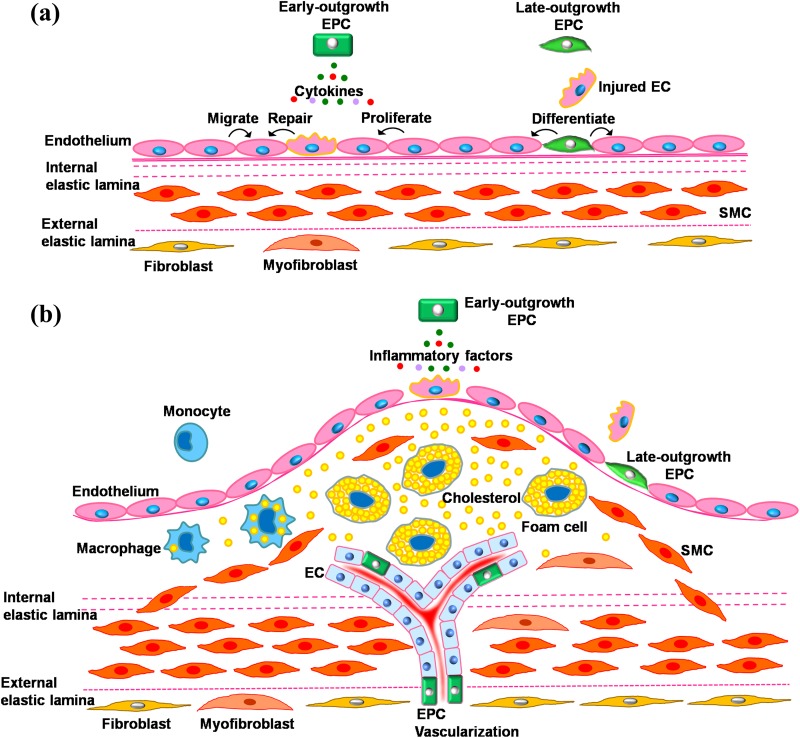
Accumulating evidence has demonstrated that endothelial progenitor cells (EPCs) could facilitate the reendothelialization of injured arteries by replacing the dysfunctional endothelial cells, thereby suppressing the formation of neointima. Meanwhile, other findings suggest that EPCs may be involved in the pathogenesis of age-related vascular remodeling. This review is presented to summarize the characteristics of EPCs and age-related vascular remodeling. In addition, the role of EPCs in age-related vascular remodeling and possible solutions for improving the therapeutic effects of EPCs in the treatment of age-related diseases are discussed.
Keywords: Endothelial progenitor cell; age; vascular remodeling.
Conflict of interest statement
Figures
References
-
- Altabas V, Altabas K, Kirigin L. Endothelial progenitor cells (EPCs) in ageing and age-related diseases: how currently available treatment modalities affect EPC biology, atherosclerosis, and cardiovascular outcomes. Mech Ageing Dev. 2016;159:49–62. - PubMed
-
- Tian XL, Li Y. Endothelial cell senescence and age-related vascular diseases. J Genet Genomics. 2014;41(9):485–95. - PubMed
-
- Bao Q, Pan J, Qi H, Wang L, Qian H, Jiang F, Shao Z, Xu F, Tao Z, Ma Q, Nelson P, Hu X. Aging and age-related diseases—from endocrine therapy to target therapy. Mol Cell Endocrinol. 2014;394(1–2):115–18. - PubMed
-
- Libby P. Inflammation in atherosclerosis. Nature. 2002;420(6917):868–74. - PubMed
Publication types
MeSH terms
LinkOut - more resources
Full Text Sources
Other Literature Sources
Medical
