


Lower Urinary Tract Dysfunction and Associated Pons Volume in Patients with Wolfram Syndrome
- PMID: 29883657
- PMCID: PMC7369647
- DOI: 10.1016/j.juro.2018.06.002
Lower Urinary Tract Dysfunction and Associated Pons Volume in Patients with Wolfram Syndrome
Abstract
Purpose: Wolfram syndrome is a neurodegenerative disorder characterized by childhood onset diabetes mellitus, optic nerve atrophy, diabetes insipidus, hearing impairment, and commonly bladder and bowel dysfunction. We hypothesized that there is an association between a smaller pons, which contains the pontine micturition center, and abnormal lower urinary tract function.
Materials and methods: Patients with genetically confirmed Wolfram syndrome attended an annual multidisciplinary research clinic. Subjects underwent noninvasive urodynamic testing and brain magnetic resonance imaging, and completed validated patient reported outcome measures. Bowel and bladder diaries were completed before visits. Age and gender corrected linear and logistic mixed effects models were used to correlate pons volume, corrected for whole brain size, to urodynamic and patient reported outcomes.
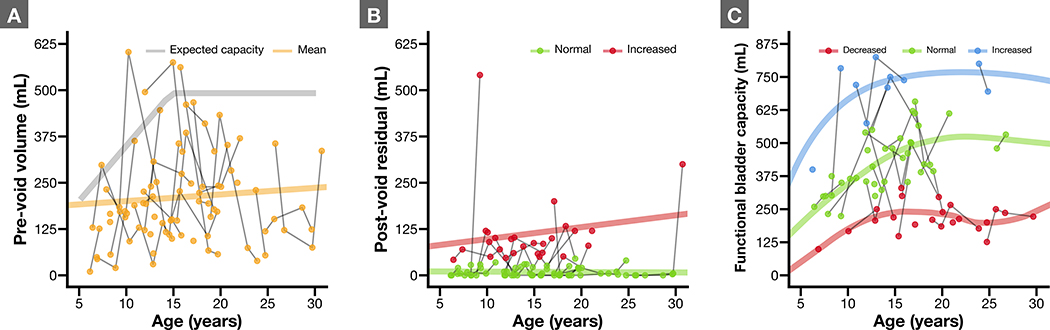
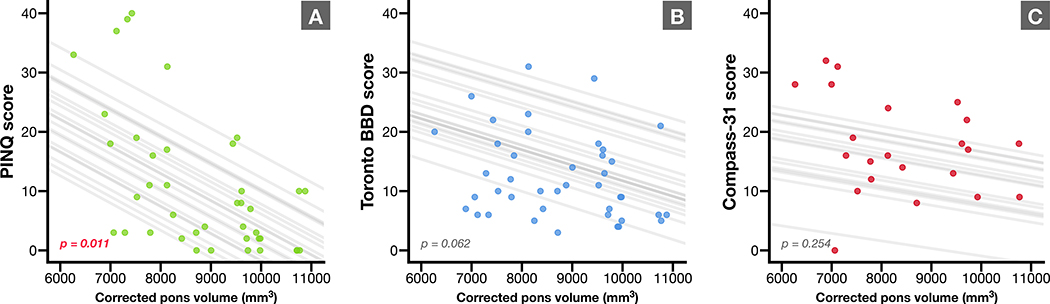
Results: A total of 36 patients attended 142 visits between 2010 and 2016. Mean age was 16.9 years (range 7 to 30) and 64% of patients were female. Functional bladder capacity was decreased in 31% of the patients, normal in 54% and increased in 14%. Of the patients 44% and 54% had abnormal uroflowmetry and post-void residual, respectively, on at least 1 occasion. There was no increase through time in incidence of lower urinary tract dysfunction. Decreased pons volume was associated with increased post-void residual (p = 0.048) and higher PinQ (Pediatric Incontinence Questionnaire) score (p = 0.011), indicating lower quality of life and higher levels of dysfunction.
Conclusions: A significant number of children, adolescents and young adults with Wolfram syndrome have objective evidence of lower urinary tract dysfunction. Decreased pons volume is associated with more abnormal urinary function and lower quality of life in patients with Wolfram syndrome.
Keywords: Wolfram syndrome; urination; urination disorders; urodynamics.
Copyright © 2018 American Urological Association Education and Research, Inc. Published by Elsevier Inc. All rights reserved.
Conflict of interest statement
Figures
References
-
- Wolfram DJ: Diabetes mellitus and simple optic atrophy among siblings: report of four cases. Proc Staff Meet Mayo Clin 1938; 13: 715.
-
- Barrett TG, Bundey SE, Fielder AR, et al.: Optic atrophy in Wolfram (DIDMOAD) syndrome. Eye (Lond) 1997; 11: 882–888. - PubMed
MeSH terms
Grants and funding
LinkOut - more resources
Full Text Sources
Other Literature Sources
Medical
