


Chronic obstructive pulmonary disease subpopulations and phenotyping
- PMID: 29884286
- PMCID: PMC5996762
- DOI: 10.1016/j.jaci.2018.02.035
Chronic obstructive pulmonary disease subpopulations and phenotyping
Abstract
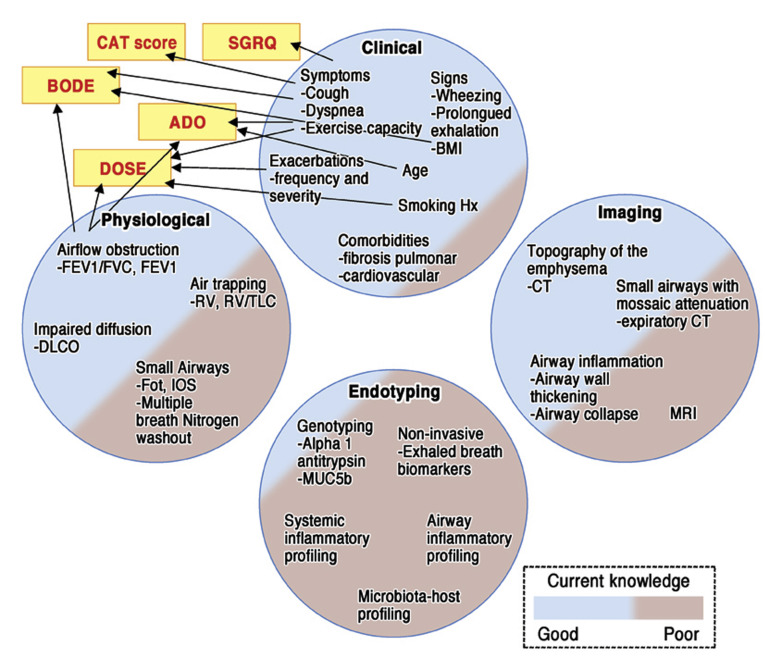
The diagnosis and treatment of chronic obstructive pulmonary disease (COPD) has been based largely on a one-size-fits-all approach. Diagnosis of COPD is based on meeting the physiologic criteria of fixed obstruction in forced expiratory flows and treatment focus on symptomatic relief, with limited effect on overall prognosis. However, patients with COPD have distinct features that determine very different evolutions of the disease. In this review we highlight distinct subgroups of COPD characterized by unique pathophysiologic derangements, response to treatment, and disease progression. It is likely that identification of subgroups of COPD will lead to discovery of much needed disease-modifying therapeutic approaches. We argue that a precision approach that integrates multiple dimensions (clinical, physiologic, imaging, and endotyping) is needed to move the field forward in the treatment of this disease.
Keywords: Chronic bronchitis; asthma; chronic obstructive pulmonary disease; computed tomographic scan; emphysema; exacerbation; inflammation; microbiome.
Copyright © 2018 American Academy of Allergy, Asthma & Immunology. Published by Elsevier Inc. All rights reserved.
Figures
References
-
- Barnes P.J. Against the Dutch hypothesis: asthma and chronic obstructive pulmonary disease are distinct diseases. Am J Respir Crit Care Med. 2006;174:240–244. - PubMed
-
- Kraft M. Asthma and chronic obstructive pulmonary disease exhibit common origins in any country. Am J Respir Crit Care Med. 2006;174:238–240. discussion 43-4. - PubMed
-
- Terminology, definitions, and classification of chronic pulmonary emphysema and related conditions. A report of the conclusions of a Ciba guest symposium. Thorax. 1959;14:286–299.
-
- Standards for the diagnosis and care of patients with chronic obstructive pulmonary disease. American Thoracic Society. Am J Respir Crit Care Med. 1995;152(suppl):S77–S121. - PubMed
Publication types
MeSH terms
Grants and funding
LinkOut - more resources
Full Text Sources
Other Literature Sources
Medical
