


The causal relationship between epigenetic abnormality and cancer development: in vivo reprogramming and its future application
- PMID: 29887568
- PMCID: PMC6085517
- DOI: 10.2183/pjab.94.016
The causal relationship between epigenetic abnormality and cancer development: in vivo reprogramming and its future application
Abstract
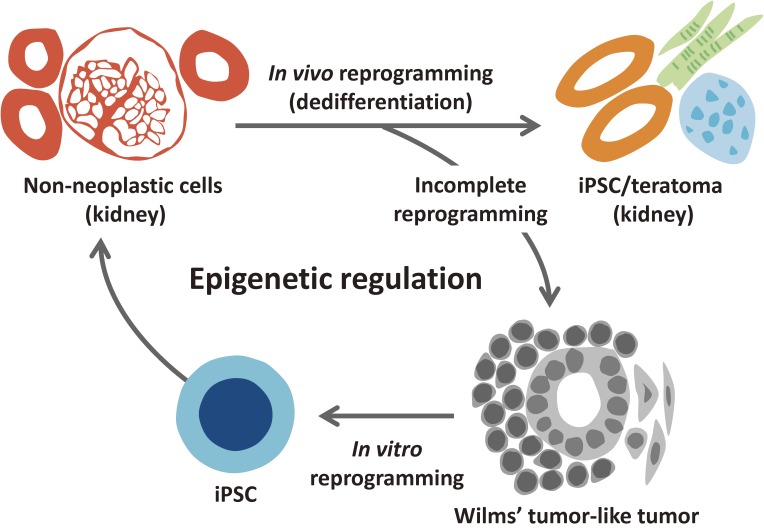
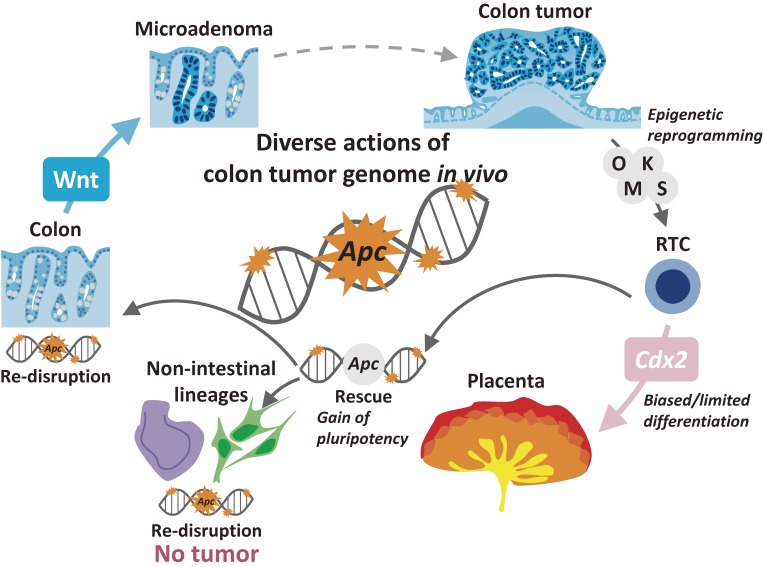
There is increasing evidence that cancer cells acquire epigenetic abnormalities as well as genetic mutations during cancer initiation, maintenance, and progression. However, the role of epigenetic regulation in cancer development, especially at the organismal level, remains to be elucidated. Here, we describe the causative role of epigenetic abnormalities in cancer, referring to our in vivo studies using induced pluripotent stem cell technology. We first summarize epigenetic reorganization during cellular reprogramming and introduce our in vivo reprogramming system for investigating the impact of dedifferentiation-driven epigenetic disruption in cancer development. Accordingly, we propose that particular types of cancer, in which causative mutations are not often detectable, such as pediatric cancers like Wilms' tumor, may develop mainly through alterations in epigenetic regulation triggered by dedifferentiation. Finally, we discuss issues that still remain to be resolved, and propose possible future applications of in vivo reprogramming to study cancer and other biological phenomena including organismal aging.
Keywords: cancer; epigenetics; iPS cell; in vivo reprogramming.
Figures
References
-
- Fearon E.R., Vogelstein B. (1990) A genetic model for colorectal tumorigenesis. Cell 61, 759–767. - PubMed
-
- Moser A.R., Pitot H.C., Dove W.F. (1990) A dominant mutation that predisposes to multiple intestinal neoplasia in the mouse. Science 247, 322–324. - PubMed
-
- Wu C., Morris J.R. (2001) Genes, genetics, and epigenetics: a correspondence. Science 293, 1103–1105. - PubMed
-
- Feinberg A.P., Vogelstein B. (1983) Hypomethylation distinguishes genes of some human cancers from their normal counterparts. Nature 301, 89–92. - PubMed
Publication types
MeSH terms
LinkOut - more resources
Full Text Sources
Other Literature Sources
