


Correlation of Pattern of Spread and Outcomes in Advanced Epithelial Ovarian Cancers
- PMID: 29887688
- PMCID: PMC5984838
- DOI: 10.1007/s13193-017-0618-5
Correlation of Pattern of Spread and Outcomes in Advanced Epithelial Ovarian Cancers
Abstract
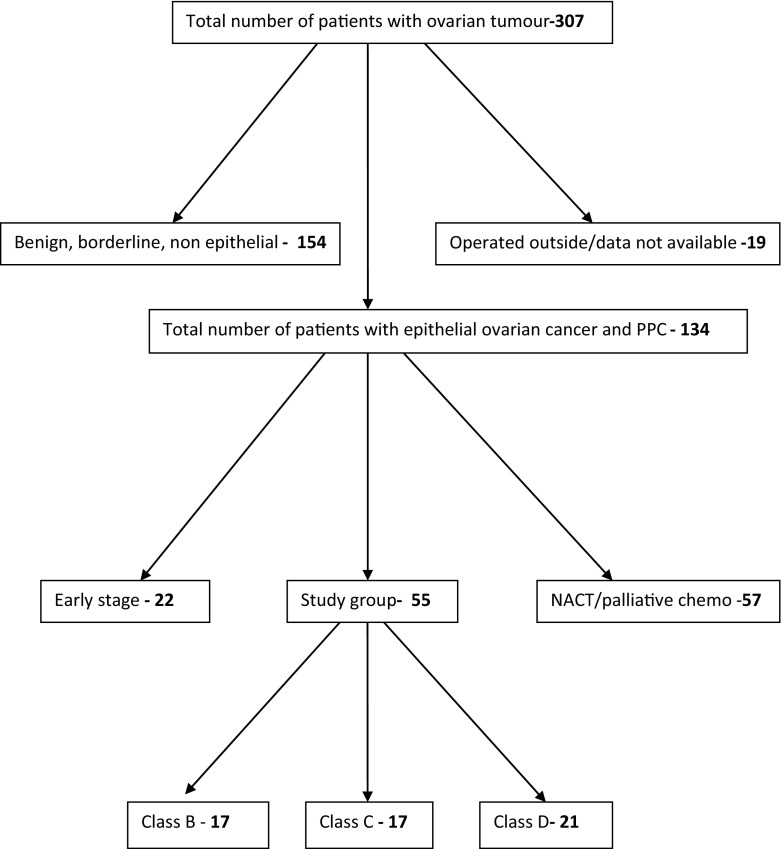
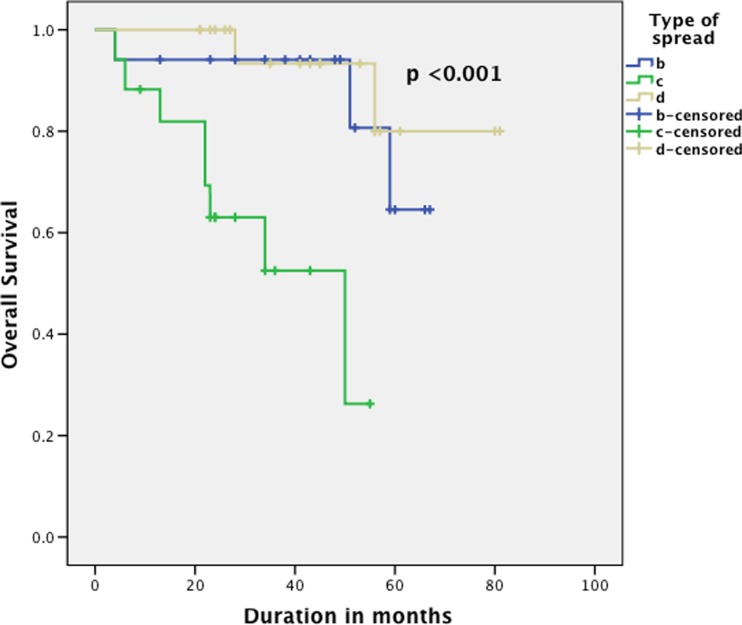
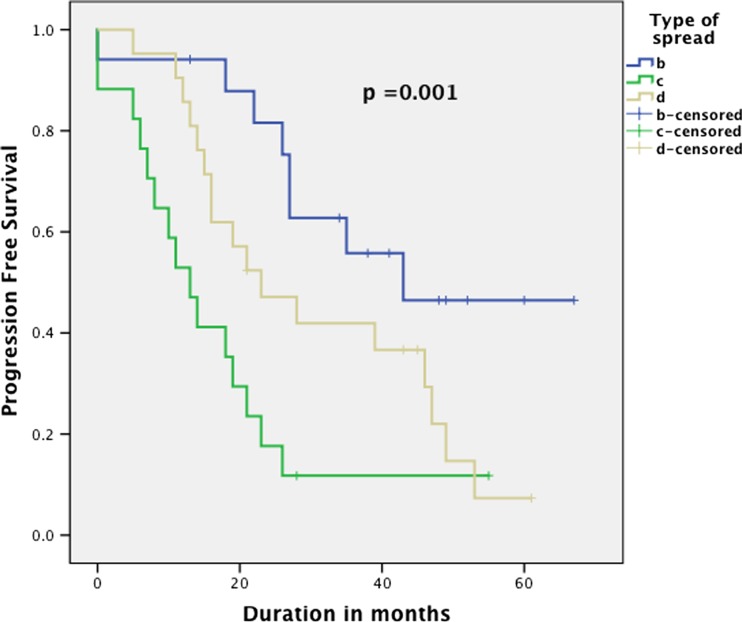
The purpose of this study was to correlate the pattern of spread with oncological outcomes in advanced ovarian cancer patients. This is a retrospective analysis of 55 consecutive patients who had advanced epithelial ovarian cancer or primary peritoneal carcinomatosis (stages 3C and 4) with primary surgical intervention as the initial modality of treatment. Based on the spread of disease, they were further classified into class A: disease confined to the pelvis (excluded); class B: disease extending to the lower abdomen and omentum; class C: diffuse small-bowel disease with or without A, B, or D; and class D: disease in the upper abdomen. There were 17 patients (30.9%) in class B, 17 (30.9%) in class C, and 21 (38.2%) in class D. The number of patients with suboptimal cytoreduction was highest in class C (six patients). At the end of follow-up (median 38.6 months), 16 patients had no evidence of disease and 26 patients were alive with disease. The 3-year overall survival rates in classes B, C, and D were 94.1, 52.5, and 93.3%, respectively. The 3-year progression-free survival rates were 55.8, 11.8, and 41.9%, respectively. The rates were lowest for class C. The differences in the overall survival rate (p < 0.001) and progression-free survival rate (p = 0.001) were statistically significant. In advanced ovarian cancer patients, the presence of disease in the small-bowel serosa and mesentery results in poorer outcomes in terms of overall and progression-free survival. The number of patients with suboptimal cytoreduction was also highest in this group.
Keywords: Advanced ovarian cancer; Epithelial ovarian cancers; Optimal cytoreduction; Pattern of spread; Survival.
Conflict of interest statement
Compliance with Ethical StandardsNone
Figures
References
-
- Ferlay J, Soerjomataram I, Dikshit R, Eser S, Mathers C, Rebelo M, Parkin DM, Forman D, Bray F. Cancer incidence and mortality worldwide: sources, methods and major patterns in GLOBOCAN 2012. Int J Cancer. 2015;1(5):136. - PubMed
-
- Heintz AP, Odicino F, Maisonneuve P, Quinn MA, Benedet JL, Creasman WT, Ngan HY, Pecorelli S, Beller U. Carcinoma of the ovary. FIGO 26th annual report on the results of treatment in gynecological cancer. Int J Gynaecol Obstet. 2006;95(Suppl 1):S161–S192. doi: 10.1016/S0020-7292(06)60033-7. - DOI - PubMed
-
- Chi DS, Eisenhauer EL, Lang J, Huh J, Haddad L, Abu-Rustum NR, Sonoda Y, Levine DA, Hensley M, Barakat RR. What is the optimal goal of primary cytoreductive surgery for bulky stage IIIC epithelial ovarian carcinoma (EOC)? Gynecol Oncol. 2006;103(2):559–564. doi: 10.1016/j.ygyno.2006.03.051. - DOI - PubMed
LinkOut - more resources
Full Text Sources
Other Literature Sources