Enhanced Genome Editing with Cas9 Ribonucleoprotein in Diverse Cells and Organisms
- PMID: 29889198
- PMCID: PMC6101420
- DOI: 10.3791/57350
Enhanced Genome Editing with Cas9 Ribonucleoprotein in Diverse Cells and Organisms
Abstract
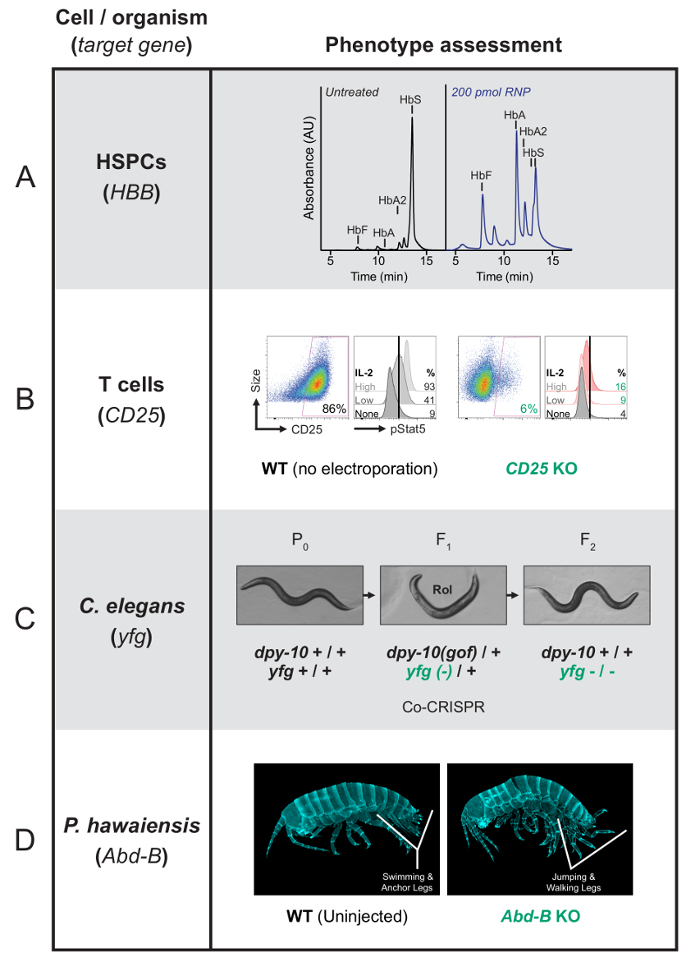
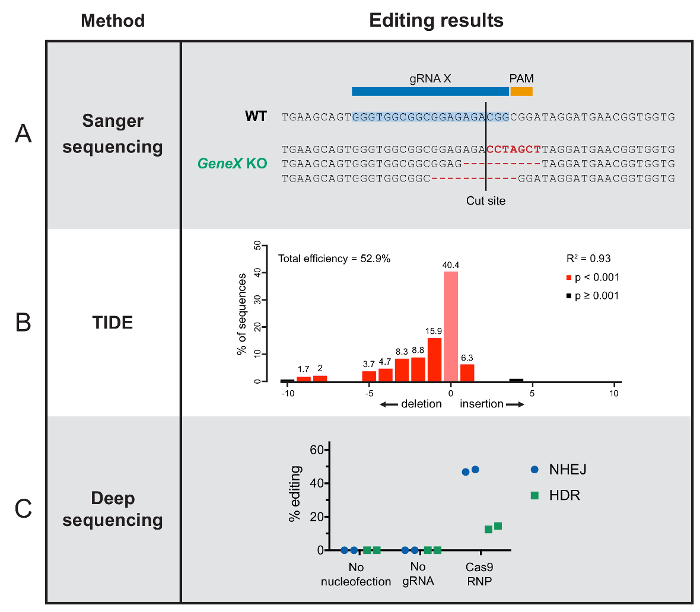
Site-specific eukaryotic genome editing with CRISPR (clustered regularly interspaced short palindromic repeats)-Cas (CRISPR-associated) systems has quickly become a commonplace amongst researchers pursuing a wide variety of biological questions. Users most often employ the Cas9 protein derived from Streptococcus pyogenes in a complex with an easily reprogrammed guide RNA (gRNA). These components are introduced into cells, and through a base pairing with a complementary region of the double-stranded DNA (dsDNA) genome, the enzyme cleaves both strands to generate a double-strand break (DSB). Subsequent repair leads to either random insertion or deletion events (indels) or the incorporation of experimenter-provided DNA at the site of the break. The use of a purified single-guide RNA and Cas9 protein, preassembled to form an RNP and delivered directly to cells, is a potent approach for achieving highly efficient gene editing. RNP editing particularly enhances the rate of gene insertion, an outcome that is often challenging to achieve. Compared to the delivery via a plasmid, the shorter persistence of the Cas9 RNP within the cell leads to fewer off-target events. Despite its advantages, many casual users of CRISPR gene editing are less familiar with this technique. To lower the barrier to entry, we outline detailed protocols for implementing the RNP strategy in a range of contexts, highlighting its distinct benefits and diverse applications. We cover editing in two types of primary human cells, T cells and hematopoietic stem/progenitor cells (HSPCs). We also show how Cas9 RNP editing enables the facile genetic manipulation of entire organisms, including the classic model roundworm Caenorhabditis elegans and the more recently introduced model crustacean, Parhyale hawaiensis.

References
-
- Barrangou R, Horvath P. A decade of discovery: CRISPR functions and applications. Nature Microbiology. 2017;2:1–9. - PubMed
-
- Martin A, Serano JM, et al. CRISPR/Cas9 mutagenesis reveals versatile roles of Hox genes in crustacean limb specification and evolution. Current Biology. 2016;26(1):14–26. - PubMed
Publication types
MeSH terms
Substances
Grants and funding
LinkOut - more resources
Full Text Sources
Other Literature Sources