


The initiation of cannabis use in adolescence is predicted by sex-specific psychosocial and neurobiological features
- PMID: 29889330
- PMCID: PMC7444673
- DOI: 10.1111/ejn.13989
The initiation of cannabis use in adolescence is predicted by sex-specific psychosocial and neurobiological features
Abstract
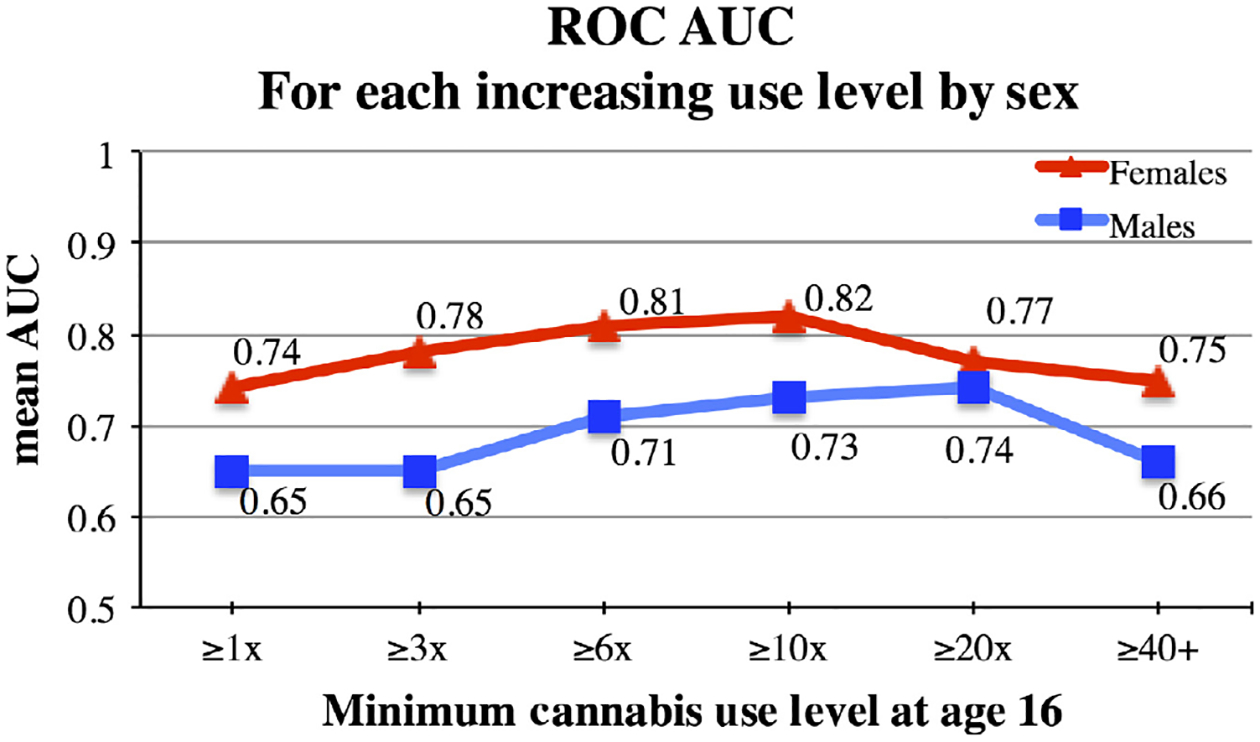
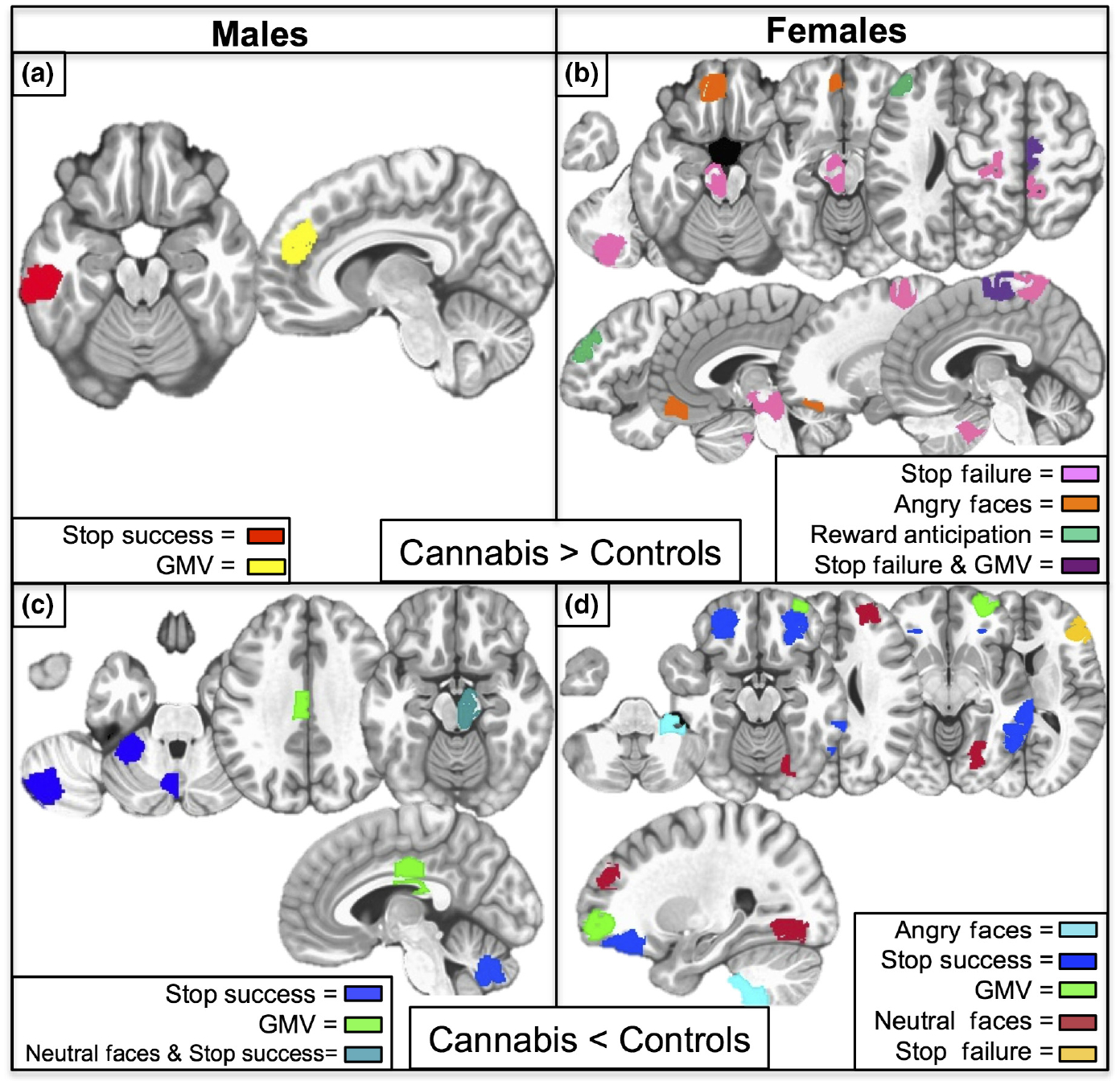
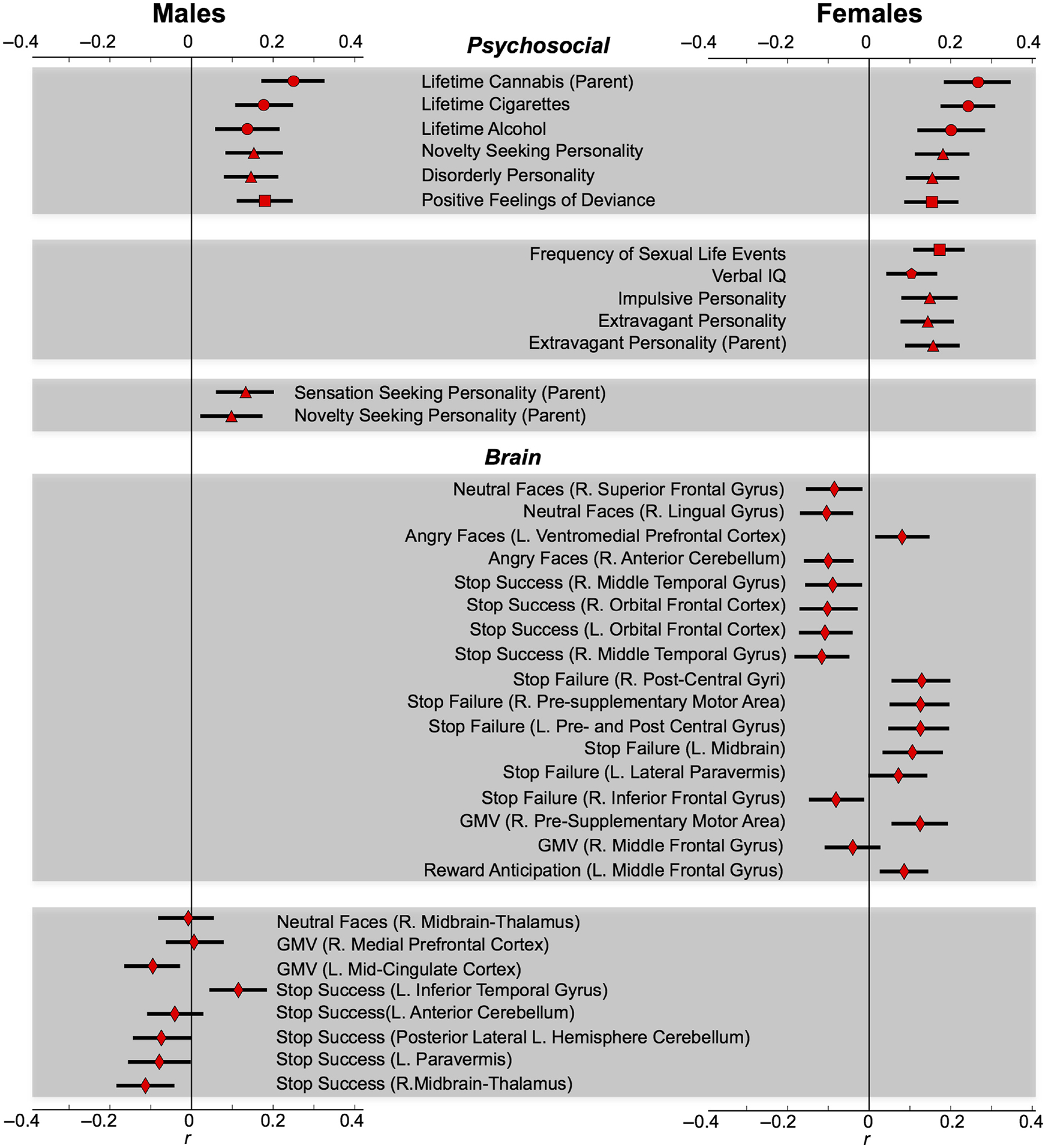
Cannabis use initiated during adolescence might precipitate negative consequences in adulthood. Thus, predicting adolescent cannabis use prior to any exposure will inform the aetiology of substance abuse by disentangling predictors from consequences of use. In this prediction study, data were drawn from the IMAGEN sample, a longitudinal study of adolescence. All selected participants (n = 1,581) were cannabis-naïve at age 14. Those reporting any cannabis use (out of six ordinal use levels) by age 16 were included in the outcome group (N = 365, males n = 207). Cannabis-naïve participants at age 14 and 16 were included in the comparison group (N = 1,216, males n = 538). Psychosocial, brain and genetic features were measured at age 14 prior to any exposure. Cross-validated regularized logistic regressions for each use level by sex were used to perform feature selection and obtain prediction error statistics on independent observations. Predictors were probed for sex- and drug-specificity using post-hoc logistic regressions. Models reliably predicted use as indicated by satisfactory prediction error statistics, and contained psychosocial features common to both sexes. However, males and females exhibited distinct brain predictors that failed to predict use in the opposite sex or predict binge drinking in independent samples of same-sex participants. Collapsed across sex, genetic variation on catecholamine and opioid receptors marginally predicted use. Using machine learning techniques applied to a large multimodal dataset, we identified a risk profile containing psychosocial and sex-specific brain prognostic markers, which were likely to precede and influence cannabis initiation.
Keywords: marijuana; neuroimaging; prediction; specificity.
© 2018 Federation of European Neuroscience Societies and John Wiley & Sons Ltd.
Figures
References
-
- Akaike H (1974). A new look at the statistical model identification. IEEE Transactions on Automatic Control, 19, 716–723. 10.1109/TAC.1974.1100705 - DOI
Publication types
MeSH terms
Grants and funding
- 01EV0711/Bundesministerium fur Bildung und Forschung/International
- SFB 940/1/Reinhart-Koselleck/International
- MH082116/CENIR (Centre de NeuroImagerie de Recherche, Pr. S. Lehe ricy) within the ICM institute and the National Institute of Mental Health/International
- 602450/IMAging GEnetics for MENtal Disorders/International
- King's College London/International
- K08 MH082116/MH/NIMH NIH HHS/United States
- P20 GM103644/GM/NIGMS NIH HHS/United States
- U54 EB020403/GF/NIH HHS/United States
- WT_/Wellcome Trust/United Kingdom
- Maudsley NHS Foundation Trust/International
- 115300-2/Innovative Medicine Initiative Project EU-AIMS/International
- 603016/MATRICS/International
- Deutsche Forschungsgemeinschaft (DFG)/International
- French MILDT (Mission Interministe rielle de Lutte contre la Drogue et la Toxicomanie)/International
- U54 EB020403/EB/NIBIB NIH HHS/United States
- German Federal Ministry of Education and Research/International
- 01GS08152/Bundesministerium fur Bildung und Forschung/International
- National Institute for Health Research (NIHR) Biomedical Research Centre at SouthLondon/International
- G0901858/MRC_/Medical Research Council/United Kingdom
- cross-NIH alliance that funds Big Data to Knowledge Centers of Excellence/International
- LSHM-CT- 2007-037286/European Union-funded FP6 Integrated Project IMAGEN (Reinforcement-related behaviour in normal brain function and psychopathology)/International
- 93558/Medical Research Council Programme Grant "Developmental pathways into adolescent substance abuse"/International
- Swedish funding agency FORMAS/International
- SP 383/5-1/Reinhart-Koselleck/International
- SM 80/7-1/Reinhart-Koselleck/International
- P20GM103644/National Institutes of Health Center of Biomedical Research Excellence/International
- FOR 1617/Reinhart-Koselleck/International
LinkOut - more resources
Full Text Sources
Other Literature Sources
Medical
