


High-Risk Human Papillomaviral Oncogenes E6 and E7 Target Key Cellular Pathways to Achieve Oncogenesis
- PMID: 29890655
- PMCID: PMC6032416
- DOI: 10.3390/ijms19061706
High-Risk Human Papillomaviral Oncogenes E6 and E7 Target Key Cellular Pathways to Achieve Oncogenesis
Abstract
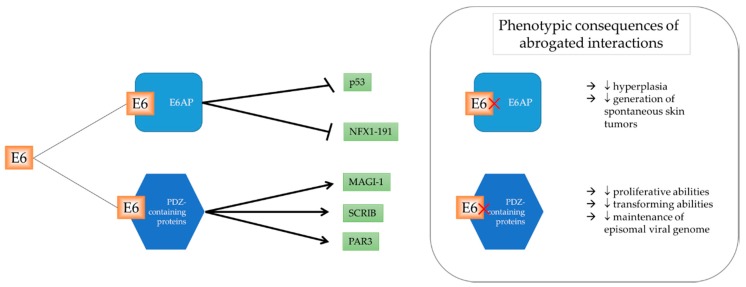
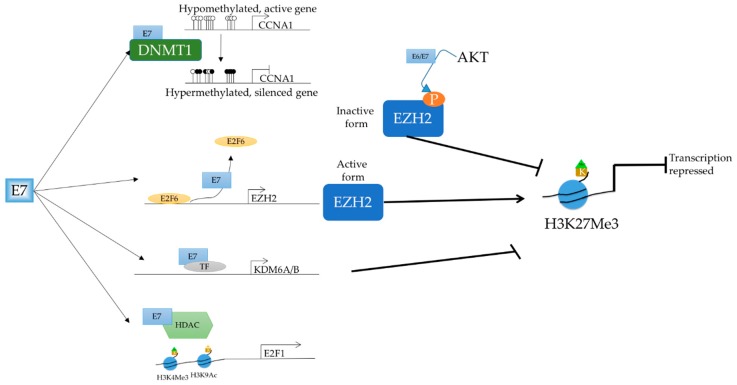
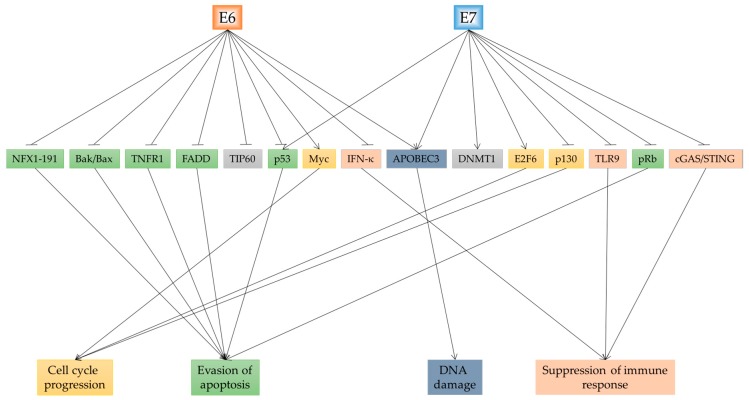
Infection with high-risk human papillomavirus (HPV) has been linked to several human cancers, the most prominent of which is cervical cancer. The integration of the viral genome into the host genome is one of the manners in which the viral oncogenes E6 and E7 achieve persistent expression. The most well-studied cellular targets of the viral oncogenes E6 and E7 are p53 and pRb, respectively. However, recent research has demonstrated the ability of these two viral factors to target many more cellular factors, including proteins which regulate epigenetic marks and splicing changes in the cell. These have the ability to exert a global change, which eventually culminates to uncontrolled proliferation and carcinogenesis.
Keywords: E6; E7; HPV; cervical cancer; human papillomavirus; viral oncogenes; viral-induced cancers.
Conflict of interest statement
The authors declare no conflict of interest.
Figures
References
Publication types
MeSH terms
Substances
LinkOut - more resources
Full Text Sources
Other Literature Sources
Research Materials
Miscellaneous
