


Emerging trends in childhood blindness and ocular morbidity in India: the Pavagada Pediatric Eye Disease Study 2
- PMID: 29891899
- PMCID: PMC6189103
- DOI: 10.1038/s41433-018-0142-z
Emerging trends in childhood blindness and ocular morbidity in India: the Pavagada Pediatric Eye Disease Study 2
Abstract
Aim: To discuss the aims, methods, and results of a population-based cross-sectional prevalence survey of children ≤15 years, in South India and compare it with a study conducted earlier, in the same area. We also discuss the changing trends in the domain of childhood blindness in India.
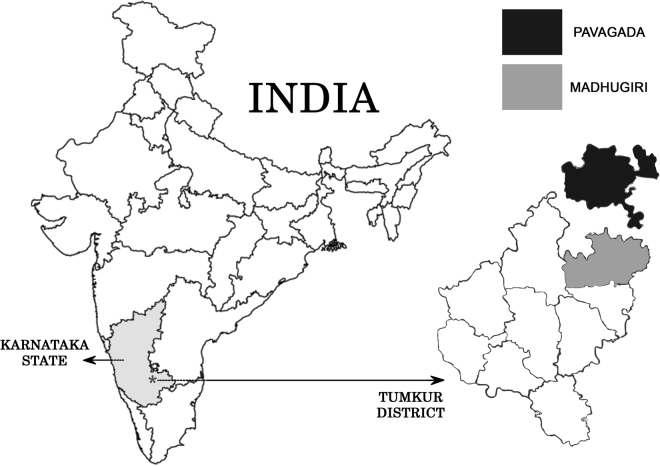
Methods: A population-based cross-sectional prevalence survey of children ≤15 years, in Pavagada and Madhugiri taluks of Tumkur district in Karnataka state in south India, was conducted in 2 phases. One trained medical-social-worker and one field-investigator identified eligible children and brought them to a makeshift clinic in the village school, where they were examined by an ophthalmologist. Children with minor problems were treated on the field and those with major conditions were referred to the pediatric ophthalmologist in the tertiary hospital. The prevalence of specific diseases were calculated in percentages.
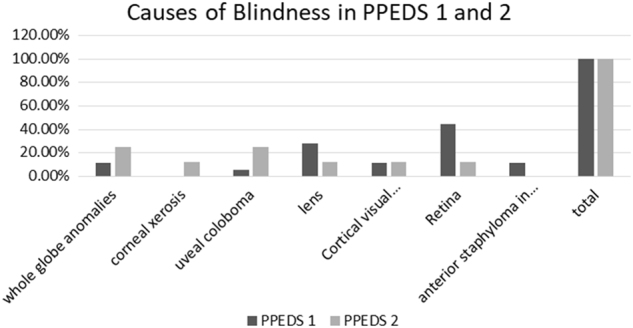
Results: The prevalence of childhood ocular morbidity (COM) was 6.54%. Refractive errors (2.77%) constituted the major cause of COM. The prevalence of blindness (best corrected visual acuity of <3/60 in the better eye) was 0.09%. Whole-globe anomalies (25%) and uveal coloboma (25%) constituted the main cause of blindness.
Conclusion: A major proportion of the blindness was due to unavoidable causes. Unlike several earlier studies, corneal blindness is no longer the main cause of blindness. This shows that there is a changing trend in the pattern of childhood blindness in India. The current data demonstrate the need for low vision rehabilitative services and a review of public health strategy in India.
Conflict of interest statement
The authors declare that they have no conflict of interest.
Figures
References
-
- World Health Organisation. Visual impairment and blindness. 2014. Accessed 29 November 2017. http://www.who.int/mediacentre/factsheets/fs282/en/
MeSH terms
LinkOut - more resources
Full Text Sources
Other Literature Sources
Medical
