


Fibrinogen - A Practical and Cost Efficient Biomarker for Detecting Periprosthetic Joint Infection
- PMID: 29892047
- PMCID: PMC5995862
- DOI: 10.1038/s41598-018-27198-3
Fibrinogen - A Practical and Cost Efficient Biomarker for Detecting Periprosthetic Joint Infection
Erratum in
-
Author Correction: Fibrinogen - A Practical and Cost Efficient Biomarker for Detecting Periprosthetic Joint Infection.Sci Rep. 2020 Aug 11;10(1):13795. doi: 10.1038/s41598-020-70336-z. Sci Rep. 2020. PMID: 32782328 Free PMC article.
Abstract
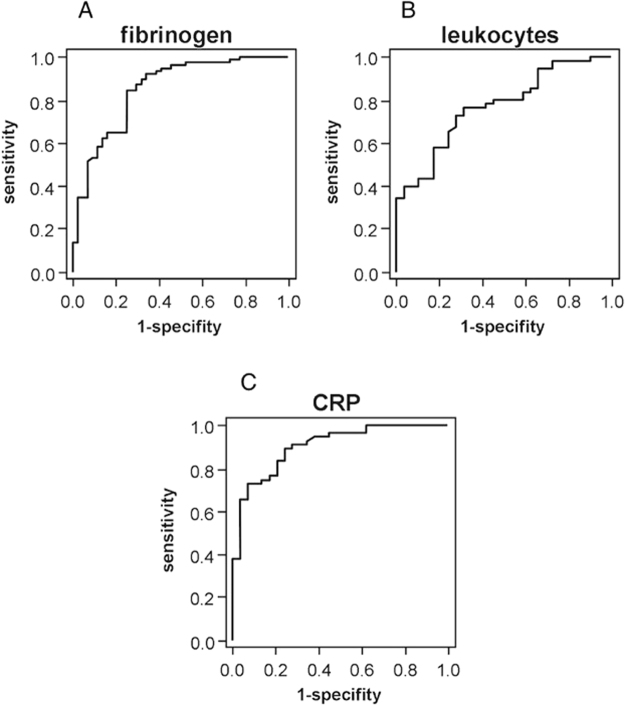
The early and accurate diagnosis of periprosthetic joint infection (PJI) can be challenging. Fibrinogen plays an important role in mediating inflammation of bacterial infections and therefore could be a valuable biomarker for PJI. The purpose of this study was to investigate the sensitivity and specificity of serum levels of fibrinogen in detecting PJI, and to compare the results with the established PJI biomarkers C-reactive protein (CRP) and leukocyte count. Eighty-four patients (124 surgeries) were prospectively included. The preoperatively analyzed parameters were fibrinogen, CRP and leukocyte count. The sensitivity and specificity of the biomarkers were calculated and compared. Fibrinogen (p < 0.001), CRP (p < 0.001) and leukocyte count (p < 0.001) had a statistically significant correlation with the criteria defining the presence of PJI. For fibrinogen, the value of 519 mg/dl had a sensitivity of 0.90 and a specificity of 0.34. The CRP cut-off point of 11.00 mg/dl had a sensitivity of 0.90 and a specificity of 0.74. The leukocyte count of 5.68 G/l had a sensitivity of 0.90 and a specificity of 0.39. Our results indicated that fibrinogen is a significant biomarker for detecting a bacterial PJI. It has shown to be a cost-efficient diagnostic support with high sensitivity and specificity.
Conflict of interest statement
The authors declare no competing interests.
Figures

References
-
- de Vries L, et al. The Effectiveness of Debridement, Antibiotics and Irrigation for Periprosthetic Joint Infections after Primary Hip and Knee Arthroplasty. A 15 Years Retrospective Study in Two Community Hospitals in the Netherlands. J Bone Jt Infect. 2016;1:20–24. doi: 10.7150/jbji.14075. - DOI - PMC - PubMed
Publication types
MeSH terms
Substances
LinkOut - more resources
Full Text Sources
Other Literature Sources
Medical
Research Materials
Miscellaneous
