


Clinical and epidemiologic profile and predictors of outcome of poisonous snake bites - an analysis of 1,500 cases from a tertiary care center in Malabar, North Kerala, India
- PMID: 29892202
- PMCID: PMC5993036
- DOI: 10.2147/IJGM.S136153
Clinical and epidemiologic profile and predictors of outcome of poisonous snake bites - an analysis of 1,500 cases from a tertiary care center in Malabar, North Kerala, India
Abstract
Background: Snake bites are a neglected public health problem in all tropical countries, and particularly in Malabar region of Kerala, India. Demographic characteristics and clinical parameters vary in this part of the world, and studies based on them are scarce. Increased incidence of capillary leak syndrome (CLS) in hemotoxic snake bites and emergence of cases of hump-nosed pit viper (HNPV, Hypnale hypnale) envenomation are some notable features seen here.
Objectives: The study was conducted to assess the epidemiological profile and clinical features to identify factors contributing to outcome in patients with venomous snakebites.
Materials and methods: An observational cross-sectional study was done among patients with snakebite envenomation, admitted to Government Medical College, Kozhikode, Kerala, from January 2012 to October 2016.
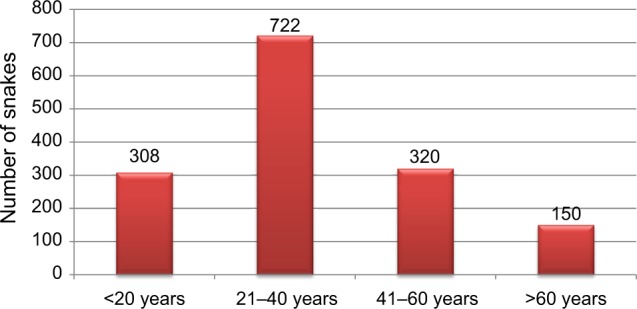
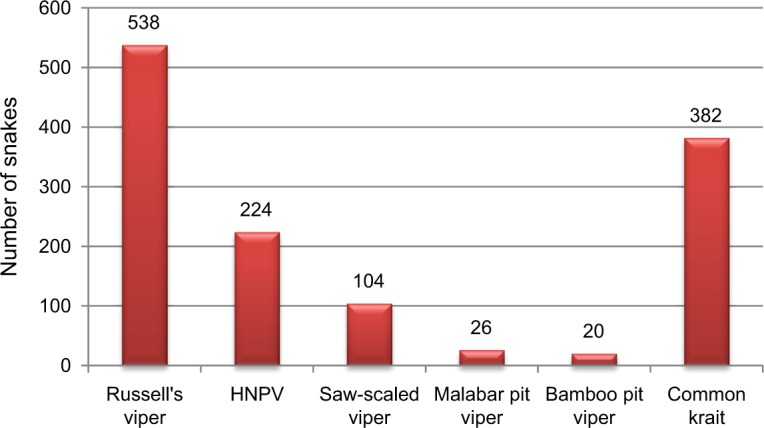
Results: There were 1,500 cases of toxic snake bites, of which 65% of these cases were males. Forty eight percent of them were aged between 21 and 40 years. Hemotoxic snake bites predominated, accounting for 912 cases. Viperine bite was the most commonly observed snakebite, and 70% of this was due to Russell's viper and 25% due to HNPV. Among the neurotoxic bites, common krait bites predominated. Overall mortality was 8.8%. CLS was the major cause of death (80%). The mean dose of antivenom given for neuroparalytic snakebite was 10.25 vials, and 18.5 vials for hemotoxic bites. Albuminuria, neutrophilic leucocytosis, thrombocytopenia, acute kidney injury (AKI), and early onset of symptoms were associated with poor outcome.
Conclusion: This study emphasizes the importance of snakebite as a significant threat to the community in the tropics. CLS in hemotoxic snake bites is the leading cause of mortality and is often refractory to any treatment measures. This study also brings to light the graveness of complications caused by HNPV envenomation. Anti-snake venom with activity against HNPV venom needs to be manufactured. Lack of awareness, delayed presentation to the hospital, and treatment by nonmedical personnel also add to the risk of mortality.
Keywords: Russell’s viper; antivenom; capillary leak; hemotoxic; hump-nosed pit viper; neurotoxic; snake bite.
Conflict of interest statement
Disclosure The authors report no conflicts of interest in this work.
Figures
Comment in
-
Clinical profile of viper envenomations in Kerala, India: some unanswered questions.Int J Gen Med. 2018 Oct 3;11:391-392. doi: 10.2147/IJGM.S177509. eCollection 2018. Int J Gen Med. 2018. PMID: 30323646 Free PMC article. No abstract available.
References
-
- Inamdar IF, Aswar NR, Ubaidulla M, Dalvi SD. Snakebite: admissions at a tertiary health care centre in Maharashtra, India. S Afr Med J. 2010;100(7):456–458. - PubMed
-
- Kalantri S, Singh A, Joshi R, et al. Clinical predictors of in-hospital mortality in patients with snakebite: a retrospective study from a rural hospital in central India. Trop Med Int Health. 2006;11(1):22–30. - PubMed
-
- Suchithra N, Pappachan JM, Sujathan P. Snakebite envenoming in Kerala, South India: clinical profile and factors involved in adverse outcomes. Emerg Med J. 2008;25(4):200–204. - PubMed
LinkOut - more resources
Full Text Sources
Other Literature Sources
Medical
