doi: 10.3346/jkms.2018.33.e169.
eCollection 2018 Jun 11.
Correlation between Pneumonia Severity and Pulmonary Complications in Middle East Respiratory Syndrome
Affiliations
- PMID: 29892209
- PMCID: PMC5990444
- DOI: 10.3346/jkms.2018.33.e169
Item in Clipboard
Correlation between Pneumonia Severity and Pulmonary Complications in Middle East Respiratory Syndrome
J Korean Med Sci.
.
Abstract
This nationwide, prospective cohort study evaluated pulmonary function and radiological sequelae according to infection severity in 73 survivors from the 2015 Middle East respiratory syndrome (MERS) outbreak in Korea. Patients with severe pneumonia in MERS-coronavirus infection had more impaired pulmonary function than those with no or mild pneumonia at the 1-year follow-up, which was compatible with the radiological sequelae. Severe pneumonia significantly impairs pulmonary function and makes long radiological sequelae in MERS.
Keywords: Complication; Coronavirus; MERS; Outbreak.
Conflict of interest statement
Disclosure: The authors have no potential conflicts of interest to disclose.
Figures
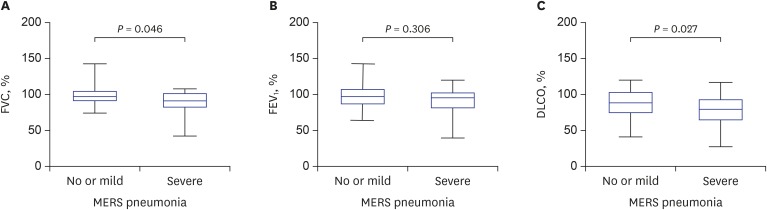
FVC = forced volume vital capacity, FEV1 = forced expiratory volume in 1 second, DLCO = diffusing capacity, MERS = Middle East respiratory syndrome.
References
MeSH terms
LinkOut - more resources
Full Text Sources
Other Literature Sources
Medical