


The crystal structure of the Helicobacter pylori LlaJI.R1 N-terminal domain provides a model for site-specific DNA binding
- PMID: 29895618
- PMCID: PMC6066307
- DOI: 10.1074/jbc.RA118.001888
The crystal structure of the Helicobacter pylori LlaJI.R1 N-terminal domain provides a model for site-specific DNA binding
Abstract
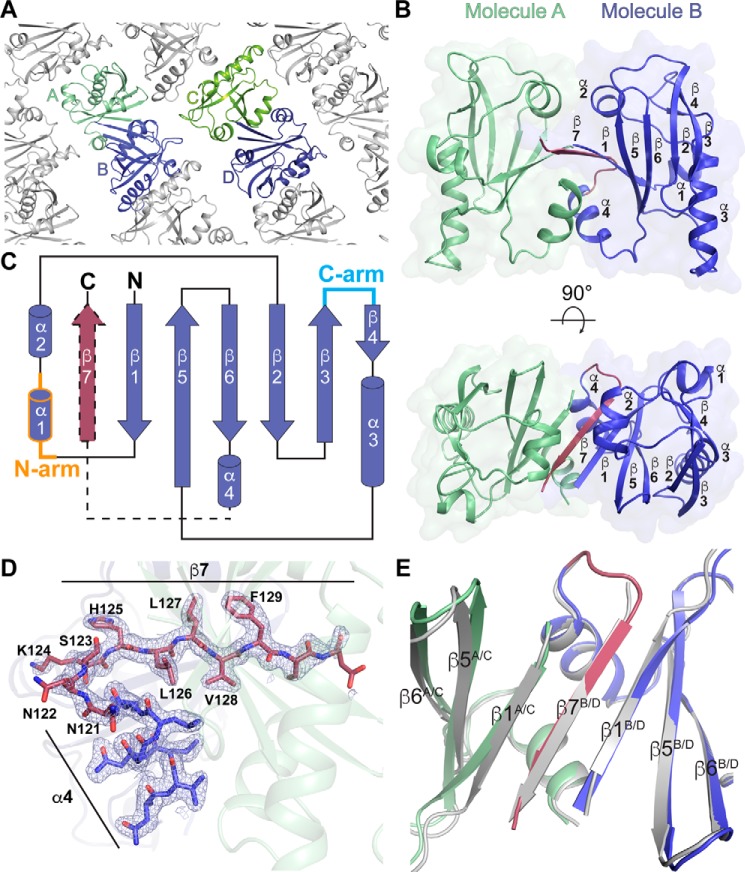
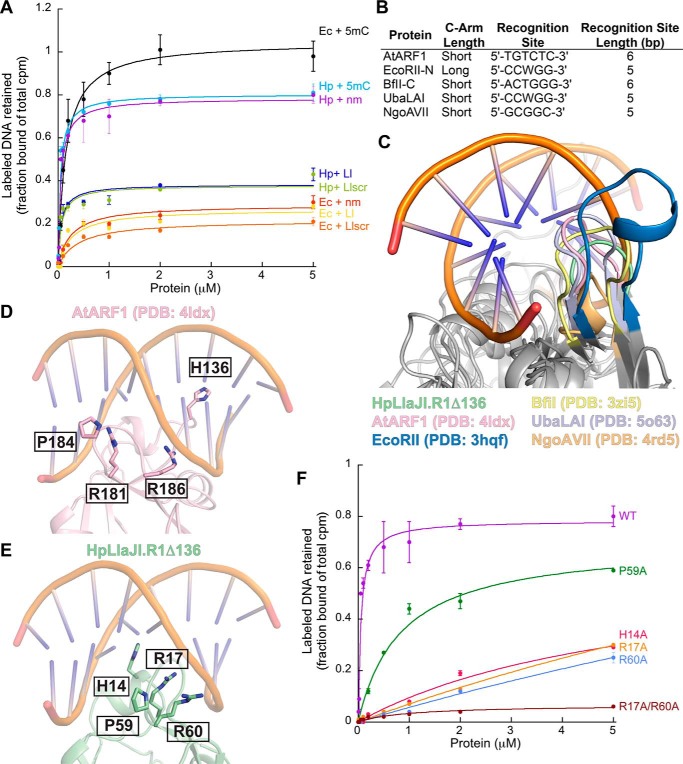
Restriction modification systems consist of an endonuclease that cleaves foreign DNA site-specifically and an associated methyltransferase that protects the corresponding target site in the host genome. Modification-dependent restriction systems, in contrast, specifically recognize and cleave methylated and/or glucosylated DNA. The LlaJI restriction system contains two 5-methylcytosine (5mC) methyltransferases (LlaJI.M1 and LlaJI.M2) and two restriction proteins (LlaJI.R1 and LlaJI.R2). LlaJI.R1 and LlaJI.R2 are homologs of McrB and McrC, respectively, which in Escherichia coli function together as a modification-dependent restriction complex specific for 5mC-containing DNA. Lactococcus lactis LlaJI.R1 binds DNA site-specifically, suggesting that the LlaJI system uses a different mode of substrate recognition. Here we present the structure of the N-terminal DNA-binding domain of Helicobacter pylori LlaJI.R1 at 1.97-Å resolution, which adopts a B3 domain fold. Structural comparison to B3 domains in plant transcription factors and other restriction enzymes identifies key recognition motifs responsible for site-specific DNA binding. Moreover, biochemistry and structural modeling provide a rationale for how H. pylori LlaJI.R1 may bind a target site that differs from the 5-bp sequence recognized by other LlaJI homologs and identify residues critical for this recognition activity. These findings underscore the inherent structural plasticity of B3 domains, allowing recognition of a variety of substrates using the same structural core.
Keywords: DNA binding protein; DNA endonuclease; DNA enzyme; X-ray crystallography; protein structure; restriction system.
© 2018 Hosford and Chappie.
Conflict of interest statement
The authors declare that they have no conflicts of interest with the contents of this article
Figures



References
Publication types
MeSH terms
Substances
Associated data
- Actions
- Actions
- Actions
Grants and funding
LinkOut - more resources
Full Text Sources
Other Literature Sources
Molecular Biology Databases
