


Premenopausal breast cancer: potential clinical utility of a multi-omics based machine learning approach for patient stratification
- PMID: 29896316
- PMCID: PMC5972143
- DOI: 10.1007/s13167-018-0131-0
Premenopausal breast cancer: potential clinical utility of a multi-omics based machine learning approach for patient stratification
Abstract
Background: The breast cancer (BC) epidemic is a multifactorial disease attributed to the early twenty-first century: about two million of new cases and half a million deaths are registered annually worldwide. New trends are emerging now: on the one hand, with respect to the geographical BC prevalence and, on the other hand, with respect to the age distribution. Recent statistics demonstrate that young populations are getting more and more affected by BC in both Eastern and Western countries. Therefore, the old rule "the older the age, the higher the BC risk" is getting relativised now. Accumulated evidence shows that young premenopausal women deal with particularly unpredictable subtypes of BC such as triple-negative BC, have lower survival rates and respond less to conventional chemotherapy compared to the majority of postmenopausal BC.
Working hypothesis: Here we hypothesised that a multi-level diagnostic approach may lead to the identification of a molecular signature highly specific for the premenopausal BC. A multi-omic approach using machine learning was considered as a potent tool for stratifying patients with benign breast alterations into well-defined risk groups, namely individuals at high versus low risk for breast cancer development.
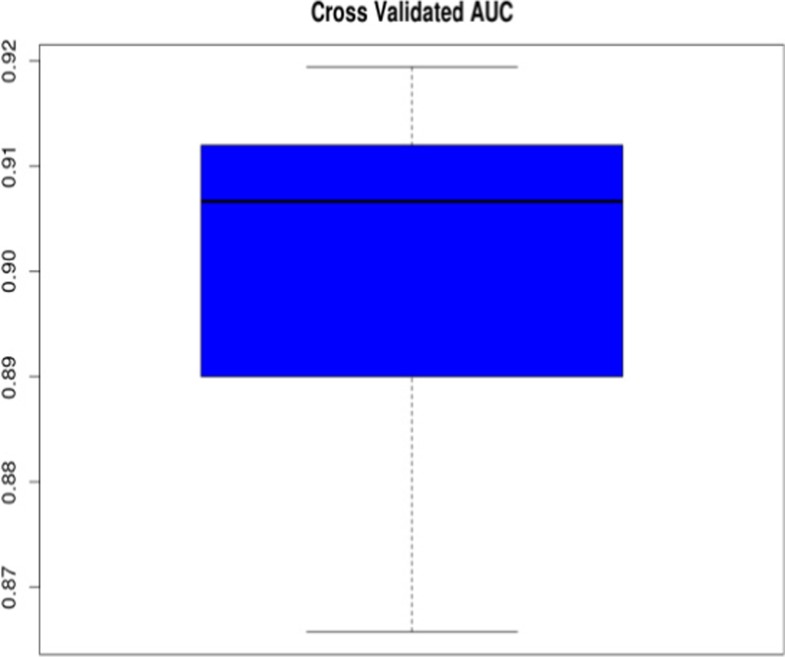
Results and conclusions: The study resulted in identifying multi-omic signature specific for the premenopausal BC that can be used for stratifying patients with benign breast alterations. Our predictive model is capable of discriminating individually between high and low BC-risk with high confidence (>90%) and considered of potential clinical utility. Novel risk assessment approaches and advanced screening programmes-as the long-term target of this project-are of particular importance for predictive, preventive and personalised medicine as the medicine of the future, due to the expected health benefits for young subpopulations and the healthcare system as a whole.
Keywords: Bioinformatics; Biomarker panel; Breast cancer; Laboratory medicine; Machine learning; Menopause; Multi-level diagnostics; Patient stratification; Predictive preventive personalised medicine.
Conflict of interest statement
Compliance with ethical standardsThe authors declare that they have no competing interests.Not applicable.All the patient investigations conformed to the principles outlined in the Declaration of Helsinki and have been performed with the permission (Nr. 148/05) released by the responsible Ethic’s Committee of the Medical Faculty, Rheinische Friedrich-Wilhelms-University of Bonn. Human rights have been obligatory protected during the entire duration of the project according to the European standards. All the patients were informed about the purposes of the study and have signed their “consent of the patient”. This article does not contain any studies with animals performed by any of the authors.
Figures
References
-
- Golubnitschaja O, Debald M, Yeghiazaryan K, Kuhn W, Pešta M, Costigliola V, Grech G. Breast cancer epidemic in the early 21st century: evaluation of risk factors, cumulative questionnaires and recommendations for preventive measures. Tumor Biol. 2016;37(10):12941–12957. doi: 10.1007/s13277-016-5168-x. - DOI - PubMed
-
- American Cancer Society . Global cancer facts & figures. 2. Atlanta: American Cancer Society; 2011.
LinkOut - more resources
Full Text Sources
Other Literature Sources
