


Is Bhutan destined for 100% organic? Assessing the economy-wide effects of a large-scale conversion policy
- PMID: 29897989
- PMCID: PMC5999226
- DOI: 10.1371/journal.pone.0199025
Is Bhutan destined for 100% organic? Assessing the economy-wide effects of a large-scale conversion policy
Abstract
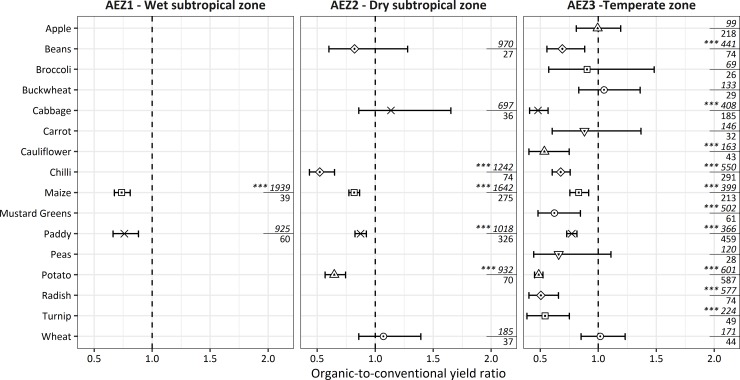
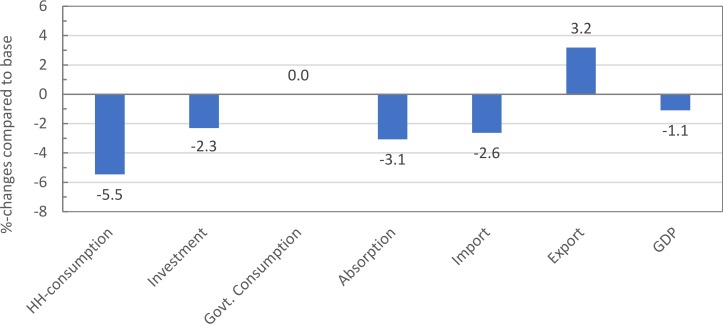
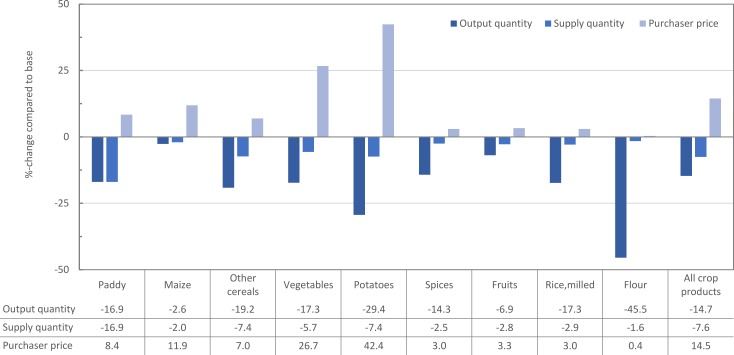
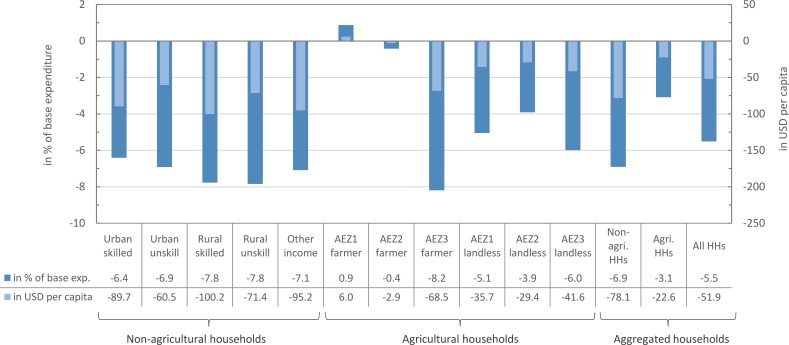
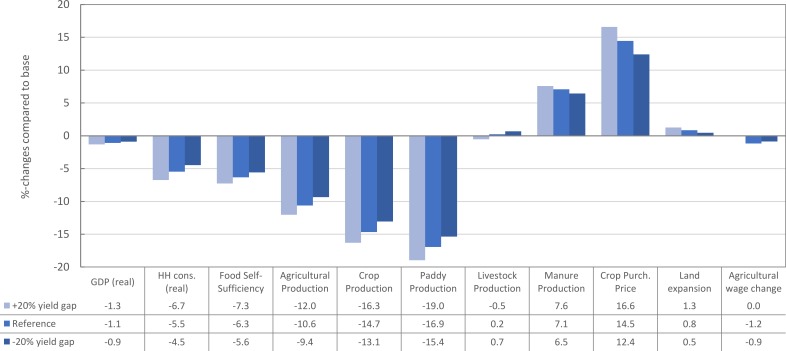
Organic agriculture (OA) is considered a strategy to make agriculture more sustainable. Bhutan has embraced the ambitious goal of becoming the world's first 100% organic nation. By analysing recent on-farm data in Bhutan, we found organic crop yields on average to be 24% lower than conventional yields. Based on these yield gaps, we assess the effects of the 100% organic conversion policy by employing an economy-wide computable general equilibrium (CGE) model with detailed representation of Bhutan's agricultural sector incorporating agroecological zones, crop nutrients, and field operations. Despite a low dependency on agrochemicals from the onset of this initiative, we find a considerable reduction in Bhutan's GDP, substantial welfare losses, particularly for non-agricultural households, and adverse impacts on food security. The yield gap is the main driver for a strong decline in domestic agricultural production, which is largely compensated by increased food imports, resulting in a weakening of the country's cereal self-sufficiency. Current organic by default farming practices in Bhutan are still underdeveloped and do not apply the systems approach of organic farming as defined in the IFOAM organic farming standards. This is reflected in the strong decline of nitrogen (N) availability to crops in our simulation and bears potential for increased yields in OA. Improvement of soil-fertility practices, e.g., the adoption of N-fixing crops, improved animal husbandry systems with increased provision of animal manure and access to markets with price premium for organic products could help to lower the economic cost of the large-scale conversion.
Conflict of interest statement
The authors have declared that no competing interests exist.
Figures
References
-
- NRC. Toward sustainable agricultural systems in the 21st. century Washington DC, USA: The National Academies Press; 2010.
-
- Ponisio LC, M'Gonigle LK, Mace KC, Palomino J, Valpine Pd, Kremen C. Diversification practices reduce organic to conventional yield gap. Proc. R. Soc. B 2015; 282(1799):20141396 doi: 10.1098/rspb.2014.1396 - DOI - PMC - PubMed
-
- Connor DJ. Organic agriculture cannot feed the world. Field Crops Research 2008; 106(2):187–90.
-
- Muller A, Schader C, Scialabba NE-H, Brüggemann J, Isensee A, Erb K-H et al. Strategies for feeding the world more sustainably with organic agriculture. Nature Communications; 8(1):1290 doi: 10.1038/s41467-017-01410-w - DOI - PMC - PubMed
-
- Seufert V, Ramankutty N, Foley JA. Comparing the yields of organic and conventional agriculture. Nature 2012; 485(7397):229–32. doi: 10.1038/nature11069 - DOI - PubMed
Publication types
MeSH terms
Substances
LinkOut - more resources
Full Text Sources
Other Literature Sources
Miscellaneous
