


Genome-wide association study of habitual physical activity in over 377,000 UK Biobank participants identifies multiple variants including CADM2 and APOE
- PMID: 29899525
- PMCID: PMC6195860
- DOI: 10.1038/s41366-018-0120-3
Genome-wide association study of habitual physical activity in over 377,000 UK Biobank participants identifies multiple variants including CADM2 and APOE
Abstract
Background/objectives: Physical activity (PA) protects against a wide range of diseases. Habitual PA appears to be heritable, motivating the search for specific genetic variants that may inform efforts to promote PA and target the best type of PA for each individual.
Subjects/methods: We used data from the UK Biobank to perform the largest genome-wide association study of PA to date, using three measures based on self-report (nmax = 377,234) and two measures based on wrist-worn accelerometry data (nmax = 91,084). We examined genetic correlations of PA with other traits and diseases, as well as tissue-specific gene expression patterns. With data from the Atherosclerosis Risk in Communities (ARIC; n = 8,556) study, we performed a meta-analysis of our top hits for moderate-to-vigorous PA (MVPA).
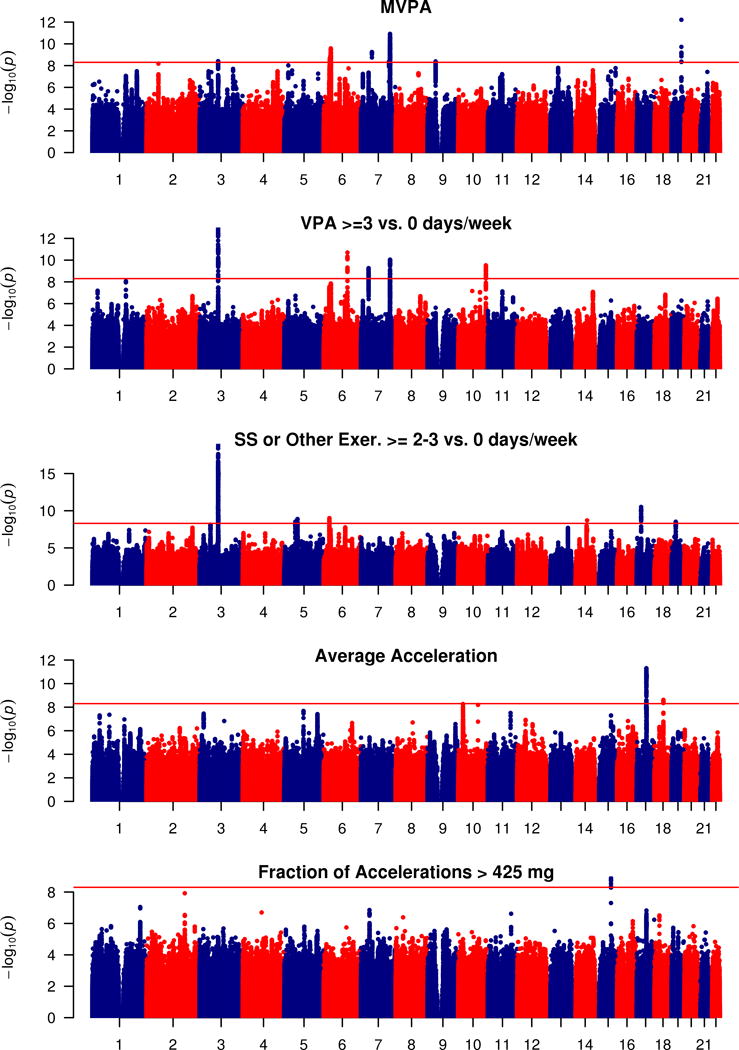
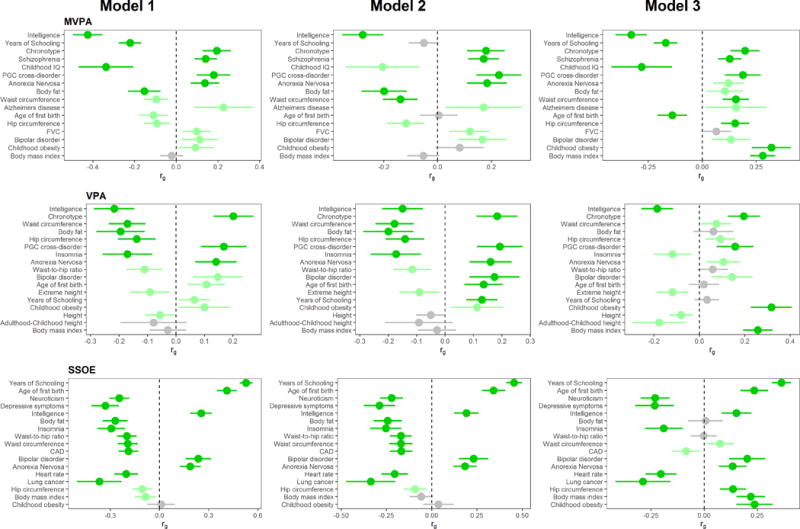
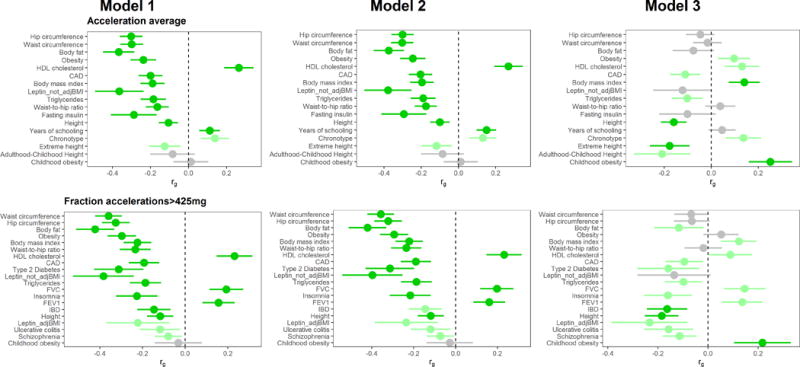
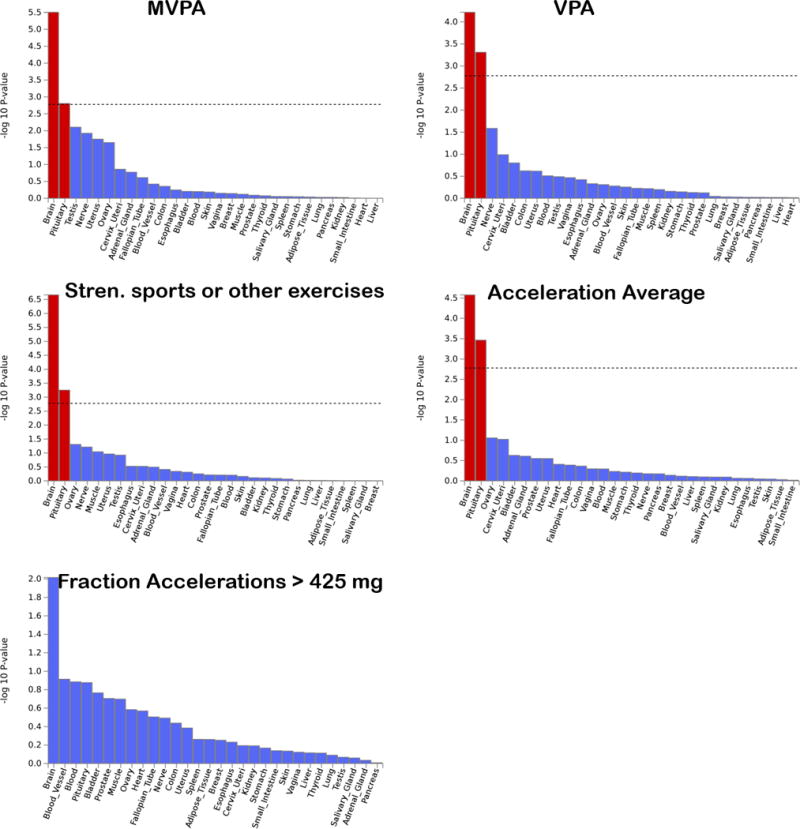
Results: We identified ten loci across all PA measures that were significant in both a basic and a fully adjusted model (p < 5 × 10⁻⁹). Upon meta-analysis of the nine top hits for MVPA with results from ARIC, eight were genome-wide significant. Interestingly, among these, the rs429358 variant in the APOE gene was the most strongly associated with MVPA, whereby the allele associated with higher Alzheimer's risk was associated with greater MVPA. However, we were not able to rule out possible selection bias underlying this result. Variants in CADM2, a gene previously implicated in obesity, risk-taking behavior and other traits, were found to be associated with habitual PA. We also identified three loci consistently associated (p < 5 × 10⁻⁵) with PA across both self-report and accelerometry, including CADM2. We found genetic correlations of PA with educational attainment, chronotype, psychiatric traits, and obesity-related traits. Tissue enrichment analyses implicate the brain and pituitary gland as locations where PA-associated loci may exert their actions.
Conclusions: These results provide new insight into the genetic basis of habitual PA, and the genetic links connecting PA with other traits and diseases.
Conflict of interest statement
Figures
Comment in
-
Information bias in measures of self-reported physical activity.Int J Obes (Lond). 2018 Dec;42(12):2062-2063. doi: 10.1038/s41366-018-0223-x. Epub 2018 Oct 9. Int J Obes (Lond). 2018. PMID: 30301965 No abstract available.
References
-
- Fiuza-Luces C, Garatachea N, Berger NA, Lucia A. Exercise is the real polypill. Physiol. 2013 - PubMed
-
- US Surgeon General. Physical Activity and Health: A Report of the Surgeon General. S/N 017-023-00196-5. 1996
-
- Blair SN. Physical inactivity: the biggest public health problem of the 21st century. Br J Sports Med [Internet] 2009 Jan 9;43(1):1 LP-2. - PubMed
-
- Kaplan GA, Strawbridge WJ, Cohen RD, Hungerford LR. Natural history of leisure-time physical activity and its correlates: associations with mortality from all causes and cardiovascular disease over 28 years. Am J Epidemiol. 1996 - PubMed
-
- Bauman AE, Reis RS, Sallis JF, Wells JC, Loos RJF, Martin BW. Correlates of physical activity: Why are some people physically active and others not? Lancet. 2012:258–71. - PubMed
Publication types
MeSH terms
Substances
Grants and funding
LinkOut - more resources
Full Text Sources
Other Literature Sources
Medical
Miscellaneous
