Review
. 2018 May 25;9(40):26259-26278.
doi: 10.18632/oncotarget.25447.

Role of p27Kip1 as a transcriptional regulator

Affiliations
Review

Role of p27Kip1 as a transcriptional regulator

Oriol Bachs et al. Oncotarget. .

Abstract

The protein p27Kip1 is a member of the Cip/Kip family of cyclin-dependent kinase (Cdk) inhibitors. It interacts with both the catalytic and the regulatory subunit (cyclin) and introduces a region into the catalytic cleave of the Cdk inducing its inactivation. Its inhibitory capacity can be modulated by specific tyrosine phosphorylations. p27Kip1 also behaves as a transcriptional regulator. It associates with specific chromatin domains through different transcription factors. ChIP on chip, ChIP-seq and expression microarray analysis allowed the identification of the transcriptional programs regulated by p27Kip1. Thus, important cellular functions as cell division cycle, respiration, RNA processing, translation and cell adhesion, are under p27Kip1 regulation. Moreover, genes involved in pathologies as cancer and neurodegeneration are also regulated by p27Kip1, suggesting its implication in these pathologies. The carboxyl moiety of p27Kip1 can associate with different proteins, including transcriptional regulators. In contrast, its NH2-terminal region specifically interacts with cyclin-Cdk complexes. The general mechanistic model of how p27Kip1 regulates transcription is that it associates by its COOH region to the transcriptional regulators on the chromatin and by the NH2-domain to cyclin-Cdk complexes. After Cdk activation it would phosphorylate the specific targets on the chromatin leading to gene expression. This model has been demonstrated to apply in the transcriptional regulation of p130/E2F4 repressed genes involved in cell cycle progression. We summarize in this review our current knowledge on the role of p27Kip1 in the regulation of transcription, on the transcriptional programs under its regulation and on its relevance in pathologies as cancer and neurodegeneration.

Keywords: cancer; neurodegeneration; p27Kip1; transcriptional regulation.


Conflict of interest statement

CONFLICTS OF INTEREST The authors declare no conflicts of interest.

Figures
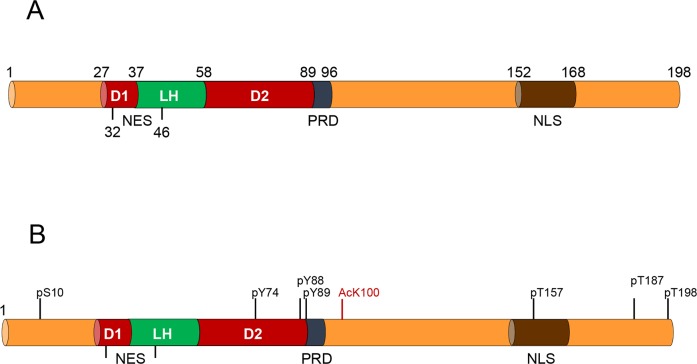
Figure 1
Figure 1. Representation of the key functional domains of p27 along with the most relevant post-translational modifications
(A) The N-terminal domain of p27 includes the kinase inhibitory domain (KID) that consists of three subdomains: the cyclin-binding subdomain (D1), the Cdk-binding subdomain (D2) and a linker subdomain that joins D1 and D2 (LH). This region also includes a nuclear export signal (NES). In the region subsequent to the KID domain there is a proline rich domain (PRD) (aa 89-96). The C-terminal domain of p27 is an intrinsically disordered region that contains a nuclear localization signal (NLS). (B) The most relevant sites of phosphorylation are represented in black. The specific site of acetylation (K100) is marked in red.
Figure 2
Figure 2. Regulation of p27 activity by phosphorylation
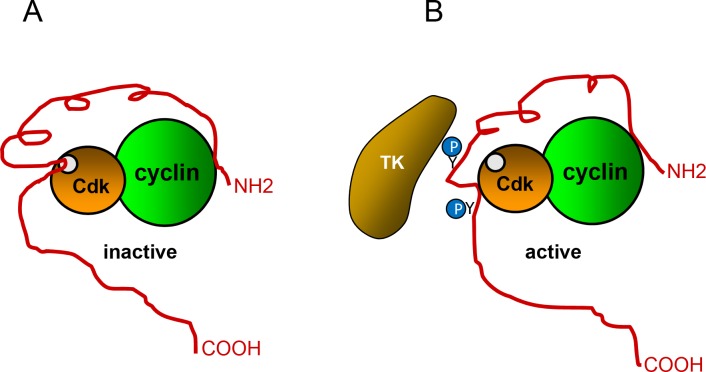
(A) To inhibit cyclin-Cdk activity, p27 associates with both, the cyclin subunit and the Cdk. A p27 portion is introduced into the catalytic center of the Cdk, This portion competes with ATP thus, blocking the transfer of phosphate to the substrates. (B) Phosphorylation of specific tyrosine (Y74 and Y88) residues of p27 by different tyrosine kinases (TK) generates a conformational change that separates the inhibitory region from the catalytic cleavage of the Cdk, leading to its partial activation.
Figure 3
Figure 3. Gene ontology analysis of protein encoding genes with p27-BSs in their proximity
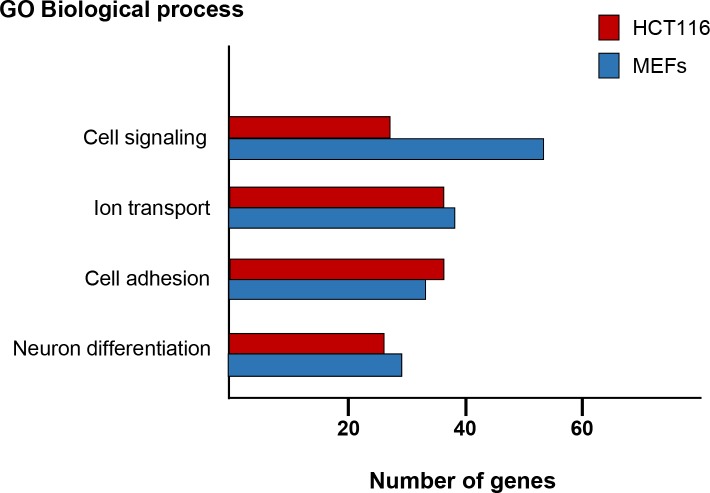
ChIP-seq analysis using p27-antibodies were performed in HCT116 and MEFs cells. The Database for Annotation, Visualization and Integrated Discovery (DAVID) program was used to define biological processes enriched in the protein encoding genes putatively regulated by p27. The number of genes included in each biological process is represented.
Figure 4
Figure 4. Regulation of transcriptional activity by p27 is mediated by its association with different transcriptional regulators
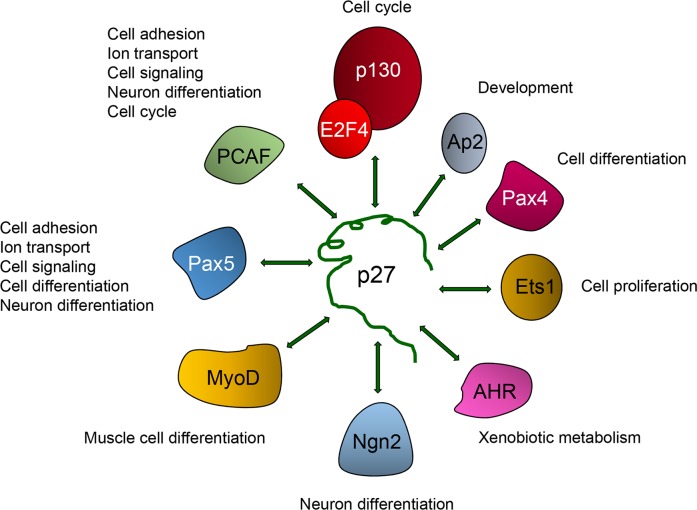
To regulate transcription p27 associates with different transcriptional regulators including TFs as p130/E2F4 complexes, Ap2, Pax4, Ets1, AHR, Neurogenein-2 (Ngn2), MyoD and Pax5. It also interacts with the transcriptional co-activator and acetyltransferase p300/CBP associating factor (PCAF). The biological functions putatively regulated by these TFs and p27 are indicated.
Figure 5
Figure 5. Model of the role of p27 and p21 in the transcriptional regulation of p130/E2F4 repressed genes
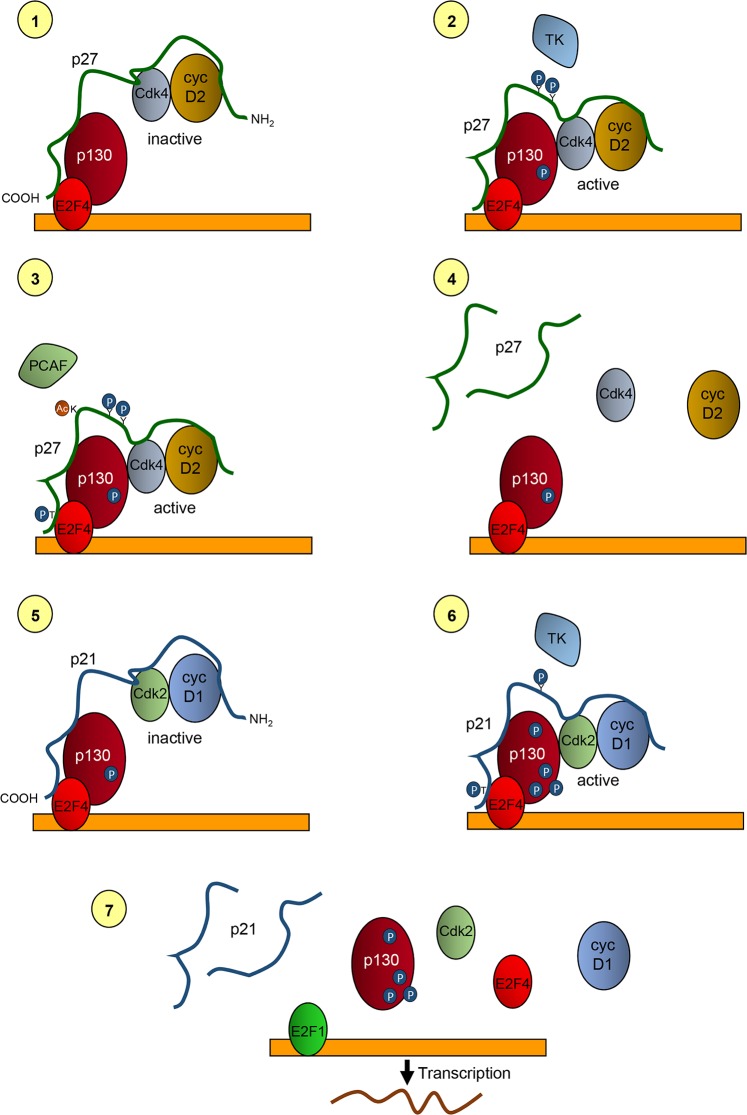
In quiescent cells p27 is associated with p130 and E2F4 on the promoters of target genes by its COOH- moiety. It is also bound to cyclin D2/3 and Cdk4 by is NH2-half. At this stage, Cdk4 is inactive due to its inhibition by p27 (1). At early-mid G1 phase of the cell cycle p27 is phosphorylated by tyrosine kinases at residues Y74 and Y88. These phosphorylations allow retrieving Cdk activity and thus Cdk4 can phosphorylate p130 (2). Moreover, Cdk4 phosphorylate T187 of p27 facilitating its degradation. Degradation is also stimulated by the acetylation of K100 by the acetyltransferase and transcriptional co-activator PCAF (3). Degradation of p27 leads to the removal of cyclin D2/3 and Cdk4 from the promoters (4). After that, p21 associates with p130/E2F4 by its carboxyl terminus and recruits to the promoters cyclin D1-Cdk2 complexes that are associated with its NH2-moiety (5). After phosphorylation of the Y77 (in human) of p21, Cdk2 becomes activated and able to multi-phosphorylate p130. Cdk2 also phosphorylates S130 of p21 leading to its degradation (6). Phosphorylation of p130 and degradation of p21 disrupt the repressive complexes thus, allowing the action of activator transcription factors as E2F1 that initiate transcription of target genes (7).
Figure 6
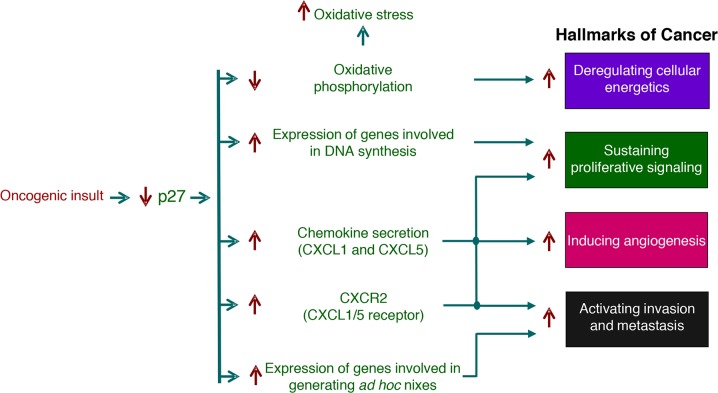
Figure 6. Role of the transcriptional regulatory function of p27 in cancer
This scheme summarizes how the decrease of p27 levels observed in many different types of human tumors participates in tumor progression and malignancy. The decrease of p27 produced by oncogenic stimuli induce the deregulation of the expression of genes involved in cellular functions that facilitates the acquisition of tumor capabilities that are defined as Hallmarks of cancer. Specifically, by deregulating genes involved in oxidative phosphorylation and cell proliferation, genes encoding chemokines and their receptors and genes involved in the generation of ad hoc metastatic niches, p27 decrease in facilitates tumor progression and malignancy.
Figure 7
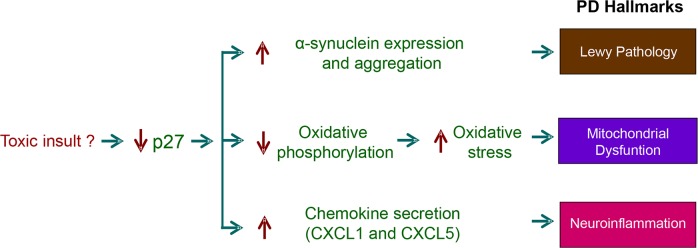
Figure 7. Role of the transcriptional regulatory function of Parkinson's disease (PD)
This scheme summarizes how the decrease of p27 levels induce molecular changes similar to those observed in neurons of patients affected by PD. The decrease of p27 induced by not well known mechanisms (environmental toxic agents?), can deregulate the expression of genes that participate in the induction of the main PD Hallmarks. Specifically, of alpha-synuclein (Lewy's pathology), mitochondrial subunits (mitochondrial dysfunction) and chemokines (neuroinflammation).

References

    1. Besson A, Dowdy SF, Roberts JM. CDK inhibitors: cell cycle regulators and beyond. Dev Cell. 2008;14:159–69. - PubMed
    1. Chang B, Zheng SL, Isaacs SD, Wiley KE, Turner A, Li G, Walsh PC, Meyers DA, Isaacs WB, Xu J. A polymorphism in the CDKN1B gene is associated with increased risk of hereditary prostate cancer. Cancer Res. 2004;64:1997–9. - PubMed
    1. Bencivenga D, Caldarelli I, Stampone E, Mancini FP, Balestrieri ML, Della Ragione F, Borriello A. p27 Kip1 and human cancers: A reappraisal of a still enigmatic protein. Cancer Lett. 2017;403:354–65. - PubMed
    1. Dyson HJ, Wright PE. Intrinsically unstructured proteins and their functions. Nat Rev Mol Cell Biol. 2005;6:197–208. - PubMed
    1. Uversky VN. What does it mean to be natively unfolded? Eur J Biochem. 2002;269:2–12. - PubMed