


Predictive factors of non-adherence to secondary preventative medication after stroke or transient ischaemic attack: A systematic review and meta-analyses
- PMID: 29900404
- PMCID: PMC5992740
- DOI: 10.1177/2396987316647187
Predictive factors of non-adherence to secondary preventative medication after stroke or transient ischaemic attack: A systematic review and meta-analyses
Abstract
Purpose: Non-adherence to secondary preventative medications after stroke is relatively common and associated with poorer outcomes. Non-adherence can be due to a number of patient, disease, medication or institutional factors. The aim of this review was to identify factors associated with non-adherence after stroke.
Method: We performed a systematic review and meta-analysis of studies reporting factors associated with medication adherence after stroke. We searched MEDLINE, EMBASE, CINAHL, PsycINFO, CENTRAL and Web of Knowledge. We followed PRISMA guidance. We assessed risk of bias of included studies using a pre-specified tool based on Cochrane guidance and the Newcastle-Ottawa scales. Where data allowed, we evaluated summary prevalence of non-adherence and association of factors commonly reported with medication adherence in included studies using random-effects model meta-analysis.
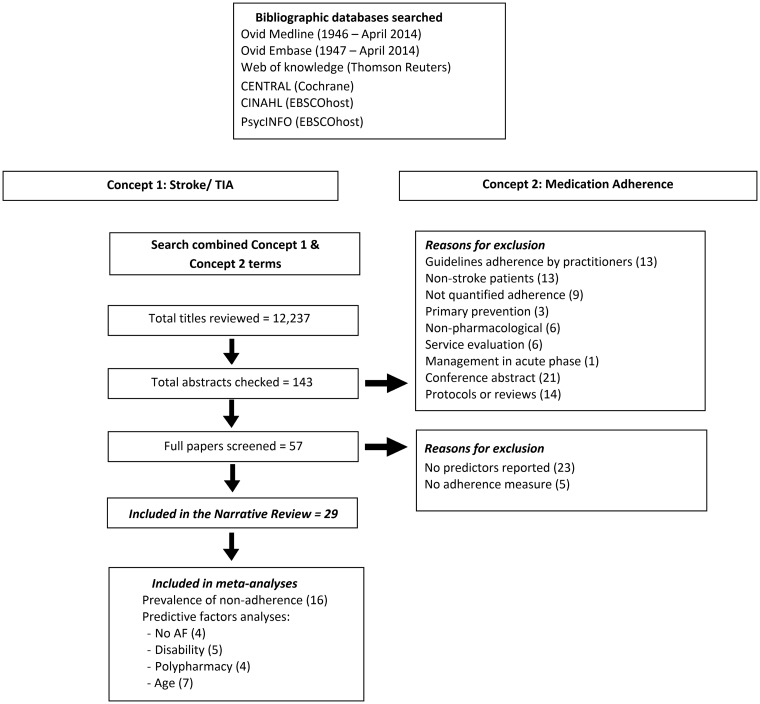
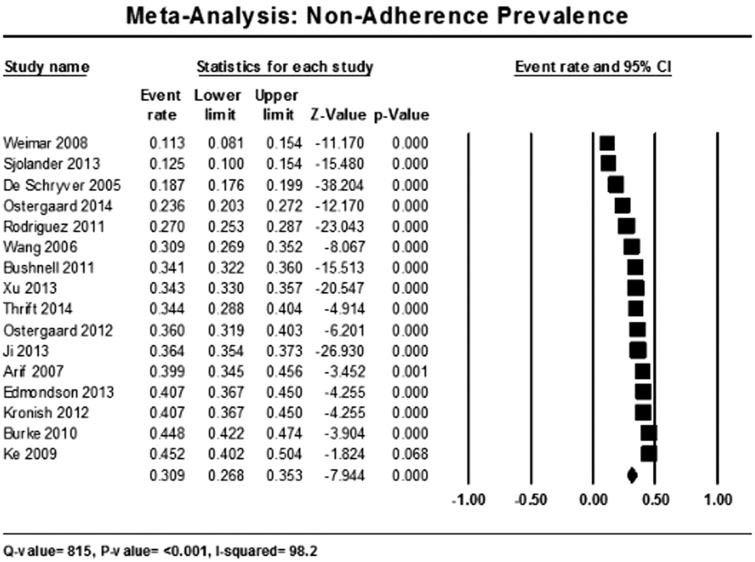
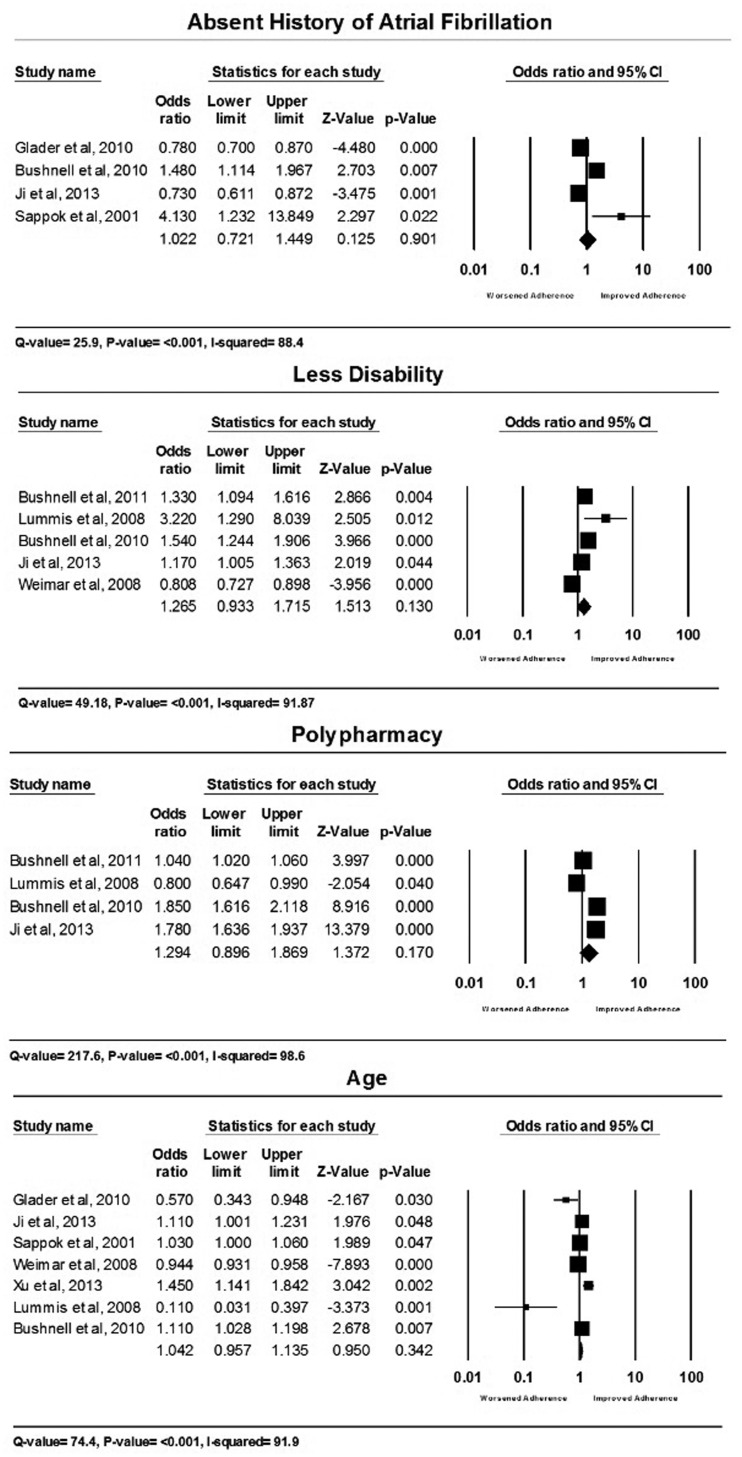
Findings: From 12,237 titles, we included 29 studies in our review. These included 69,137 patients. The majority of included studies (27/29) were considered to be at high risk of bias mainly due to performance bias. Non-adherence rate to secondary preventative medication reported by included studies was 30.9% (95% CI 26.8%-35.3%). Although many factors were reported as related to adherence in individual studies, on meta-analysis, absent history of atrial fibrillation (OR 1.02, 95% CI 0.72-1.5), disability (OR 1.27, 95% CI 0.93-1.72), polypharmacy (OR 1.29, 95% CI 0.9-1.9) and age (OR 1.04, 95% CI 0.96-1.14) were not associated with adherence.
Discussion: This review identified many factors related to adherence to preventative medications after stroke of which many are modifiable. Commonly reported factors included concerns about treatment, lack of support with medication intake, polypharmacy, increased disability and having more severe stroke.
Conclusion: Understanding factors associated with medication taking could inform strategies to improve adherence. Further research should assess whether interventions to promote adherence also improve outcomes.
Keywords: Stroke; adherence; medication; predictors; prevalence; transient ischaemic attack.
Conflict of interest statement
The author(s) declared the following potential conflicts of interest with respect to the research, authorship, and/or publication of this article: Dr Quinn is supported by a Joint Stroke Association and Chief Scientist Office Senior Clinical Lectureship.
Figures
References
-
- Glader EL, Sjolander M, Eriksson M, et al. Persistent use of secondary preventive drugs declines rapidly during the first 2 years after stroke. Stroke 2010; 41: 397–401. - PubMed
-
- Mouradian MS, Majumdar SR, Senthilselvan A, et al. How well are hypertension, hyperlipidemia, diabetes, and smoking managed after a stroke or transient ischemic attack? Stroke 2002; 33: 1656–1659. - PubMed
-
- Hackam DG, Spence JD. Combining multiple approaches for the secondary prevention of vascular events after stroke: A quantitative modeling study. Stroke 2007; 38: 1881–1885. - PubMed
Publication types
LinkOut - more resources
Full Text Sources
Other Literature Sources
