


Identification and validation of a novel panel of Plasmodium knowlesi biomarkers of serological exposure
- PMID: 29902183
- PMCID: PMC6001954
- DOI: 10.1371/journal.pntd.0006457
Identification and validation of a novel panel of Plasmodium knowlesi biomarkers of serological exposure
Abstract
Background: Plasmodium knowlesi is the most common cause of malaria in Malaysian Borneo, with reporting limited to clinical cases presenting to health facilities and scarce data on the true extent of transmission. Serological estimations of transmission have been used with other malaria species to garner information about epidemiological patterns. However, there are a distinct lack of suitable serosurveillance tools for this neglected disease.
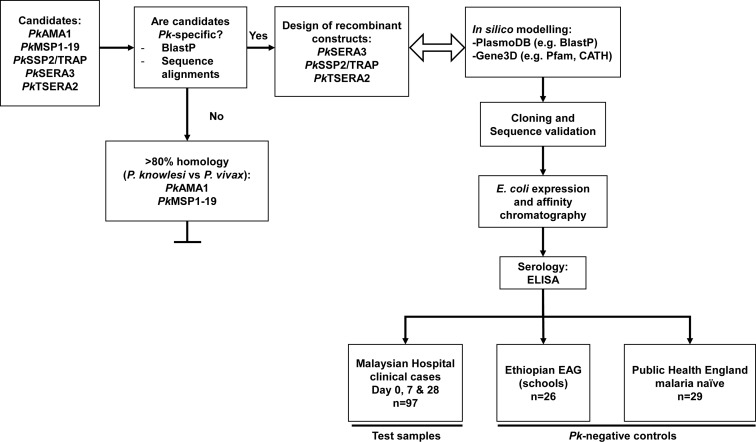
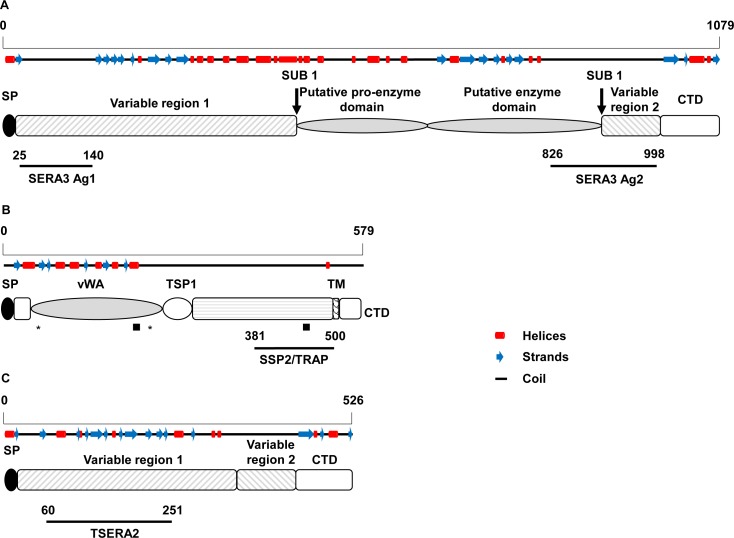
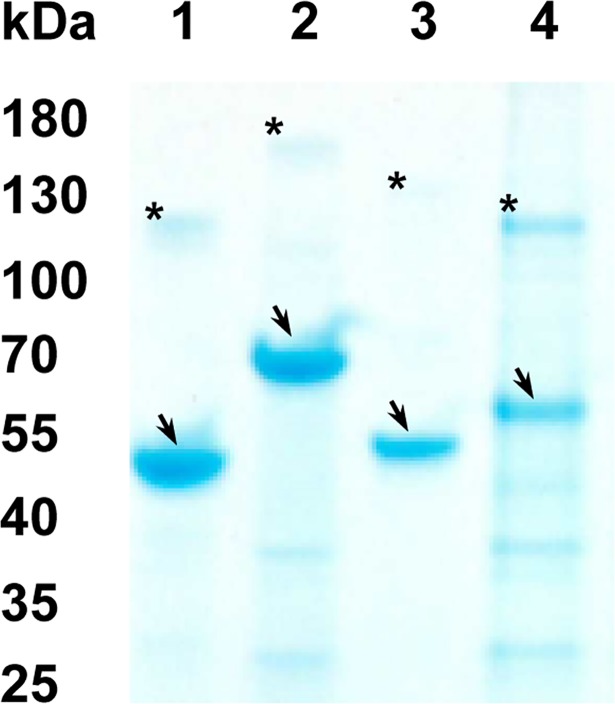
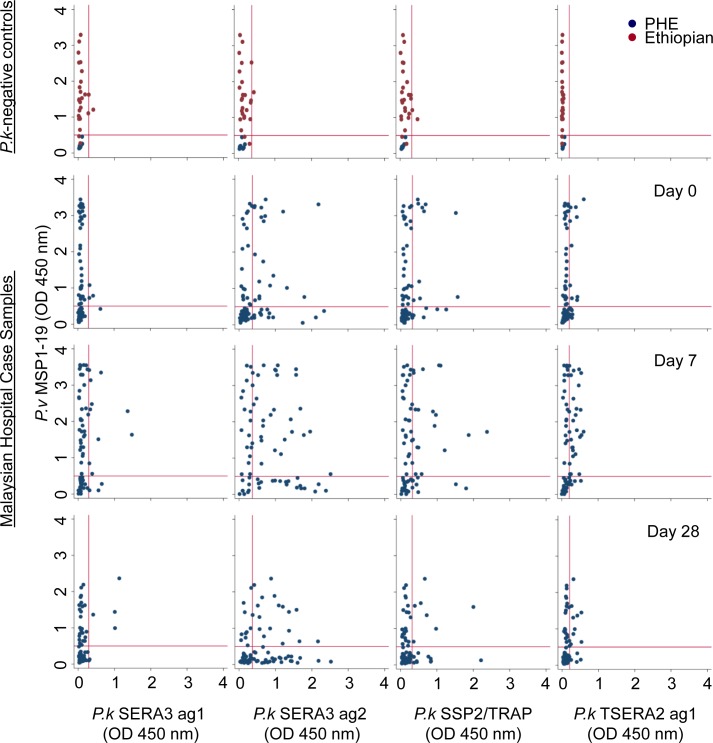
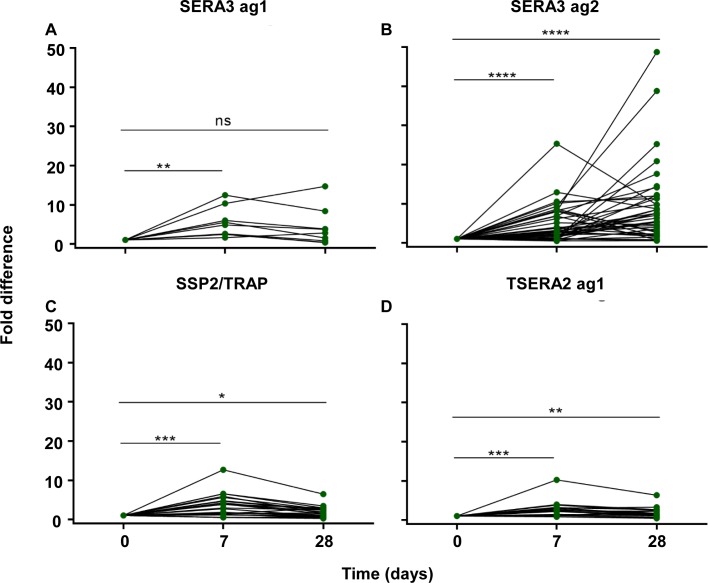
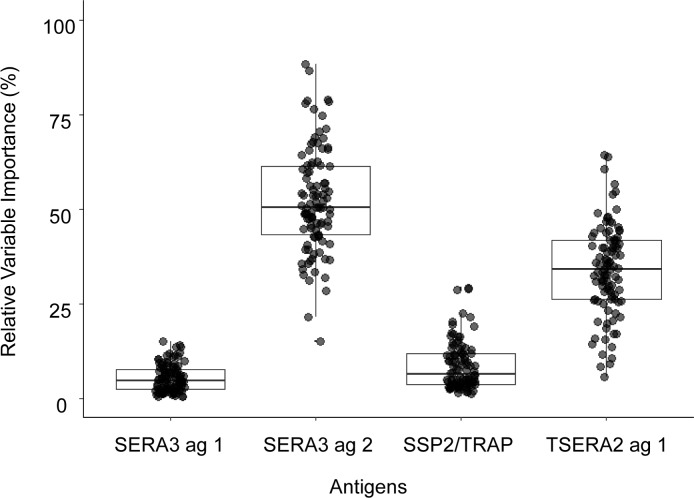
Methodology/principal findings: Using in silico tools, we designed and expressed four novel P. knowlesi protein products to address the distinct lack of suitable serosurveillance tools: PkSERA3 antigens 1 and 2, PkSSP2/TRAP and PkTSERA2 antigen 1. Antibody prevalence to these antigens was determined by ELISA for three time-points post-treatment from a hospital-based clinical treatment trial in Sabah, East Malaysia (n = 97 individuals; 241 total samples for all time points). Higher responses were observed for the PkSERA3 antigen 2 (67%, 65/97) across all time-points (day 0: 36.9% 34/92; day 7: 63.8% 46/72; day 28: 58.4% 45/77) with significant differences between the clinical cases and controls (n = 55, mean plus 3 SD) (day 0 p<0.0001; day 7 p<0.0001; day 28 p<0.0001). Using boosted regression trees, we developed models to classify P. knowlesi exposure (cross-validated AUC 88.9%; IQR 86.1-91.3%) and identified the most predictive antibody responses.
Conclusions/significance: The PkSERA3 antigen 2 had the highest relative variable importance in all models. Further validation of these antigens is underway to determine the specificity of these tools in the context of multi-species infections at the population level.
Conflict of interest statement
The authors have declared that no competing interests exist.
Figures
References
-
- White NJ. Plasmodium knowlesi: the fifth human malaria parasite. Clinical infectious diseases: an official publication of the Infectious Diseases Society of America. 2008;46(2):172–3. Epub 2008/01/04. doi: 10.1086/524889 . - DOI - PubMed
-
- Moyes CL, Henry AJ, Golding N, Huang Z, Singh B, Baird JK, et al. Defining the geographical range of the Plasmodium knowlesi reservoir. PLoS neglected tropical diseases. 2014;8(3):e2780 Epub 2014/03/29. doi: 10.1371/journal.pntd.0002780 ; PubMed Central PMCID: PMCPMC3967999. - DOI - PMC - PubMed
-
- Cox-Singh J, Davis TM, Lee KS, Shamsul SS, Matusop A, Ratnam S, et al. Plasmodium knowlesi malaria in humans is widely distributed and potentially life threatening. Clinical infectious diseases: an official publication of the Infectious Diseases Society of America. 2008;46(2):165–71. Epub 2008/01/04. doi: 10.1086/524888 ; PubMed Central PMCID: PMCPmc2533694. - DOI - PMC - PubMed
-
- Barber BE, William T, Jikal M, Jilip J, Dhararaj P, Menon J, et al. Plasmodium knowlesi malaria in children. Emerging infectious diseases. 2011;17(5):814–20. Epub 2011/05/03. doi: 10.3201/eid1705.101489 ; PubMed Central PMCID: PMCPmc3321776. - DOI - PMC - PubMed
-
- Garnham PCC. Malaria parasites and other haemosporidia: Blackwell Scientific; 1966.
Publication types
MeSH terms
Substances
Grants and funding
LinkOut - more resources
Full Text Sources
Other Literature Sources
Medical
