


One in five women suffer from pelvic floor disorders in Kersa district Eastern Ethiopia: a community-based study
- PMID: 29902997
- PMCID: PMC6003007
- DOI: 10.1186/s12905-018-0585-1
One in five women suffer from pelvic floor disorders in Kersa district Eastern Ethiopia: a community-based study
Abstract
Background: Hundreds of millions of women suffer from pelvic floor disorders globally, often in silence. Women in developing countries do not disclose their problems due to associated social stigma or lack of access to services. Thus, the extent of the problem remains largely unknown. This study was conducted to assess the magnitude of pelvic floor disorders in Kersa district Eastern Ethiopia.
Method: We conducted a community-based cross-sectional study among ever married women who reside in Kersa district, Eastern Ethiopia. The study subjects were selected through stratified multistage probability sampling. The data were collected using a structured questionnaire through face-to-face interviews. The prevalence of various pelvic floor disorders are presented along with the 95% Confidence Intervals (CI).
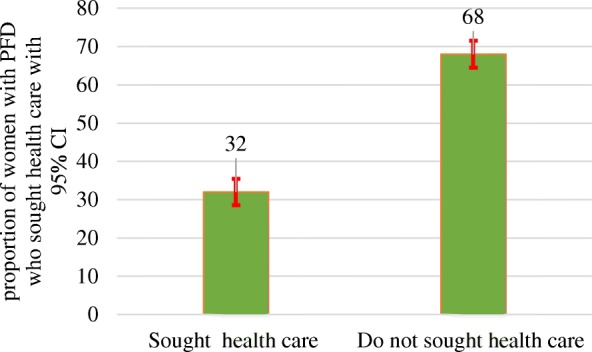
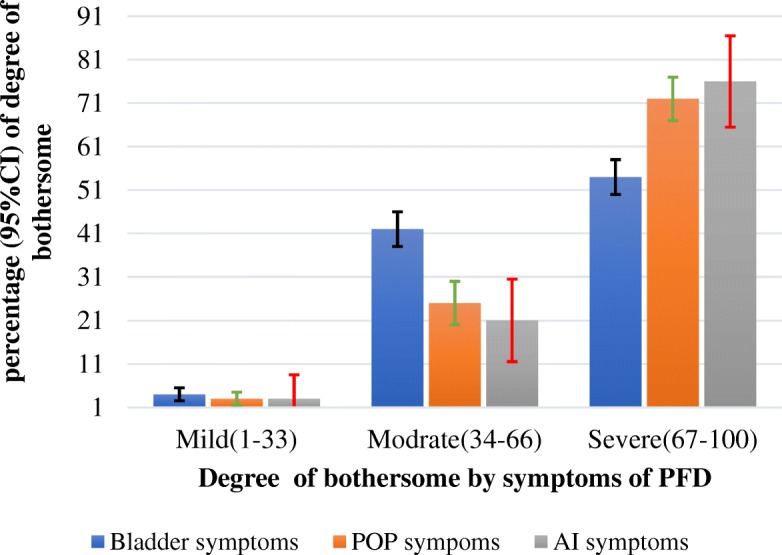
Results: A total of 3432 women participated in the study, of which 704 (20.5%; 95% CI; 19.2, 21.8) reported at least one type of pelvic floor disorder and 349 (49.6%; 95% CI: 46.0, 53.0) reported two or more pelvic floor disorders. The most common pelvic floor disorders included an over active bladder (15.5%; 95% CI: 14.4, 16.8), pelvic organ prolapse (9.5%; 95% CI: 8.5,10.4), stress urinary incontinence (8.3%; 95% CI: 7.4, 9.2) and anal incontinence (1.9%; 95% CI: 1.5, 2.4). More than two-thirds of the women with pelvic floor disorders (68.0%; 95% CI:64.4, 71.3) reported having severe distress but had never sought health care.
Conclusions: The magnitude of the health problem and the low level of health seeking behavior indicates the silent suffering of many women in the study area. Extrapolating these figure to national statistics would indicate the staggering number of women suffering from pelvic floor disorders in the country. This calls for urgent action to improve prevention, diagnosis and treatment services to mitigate the suffering of women from pelvic floor disorders.
Keywords: AI; Ethiopia; Kersa; OAB; POP; Pelvic Floor Disorder; SUI; Women.
Conflict of interest statement
Ethics approval and consent to participate
The study protocol was approved by Haramaya University Health and Medical Sciences College Institutional Health Research Ethics Review Committee. Written informed consent was obtained from each participant. Emancipated minors (married, and parenting minors) were allowed to give informed consent [39]. Thus, written informed consent was obtained from married and parenting minors. In order to protect the confidentiality of the information, names and ID were not included in the written questionnaires. Women identified with PFD during the study period were encouraged to visit a health facility.
Competing interests
The authors declare that they have no competing interests.
Publisher’s Note
Springer Nature remains neutral with regard to jurisdictional claims in published maps and institutional affiliations.
Figures
References
Publication types
MeSH terms
LinkOut - more resources
Full Text Sources
Other Literature Sources
Medical
