


Study protocol for a feasibility study of an internet-administered, guided, CBT-based, self-help intervention (ENGAGE) for parents of children previously treated for cancer
- PMID: 29903802
- PMCID: PMC6009624
- DOI: 10.1136/bmjopen-2018-023708
Study protocol for a feasibility study of an internet-administered, guided, CBT-based, self-help intervention (ENGAGE) for parents of children previously treated for cancer
Abstract
Introduction: A subgroup of parents of children previously treated for cancer report long-term psychological distress after end of treatment. However, needs for psychological support are commonly unmet and there is a lack of evidence-based treatments tailored to the specific needs of this population. An internet-administered, guided, cognitive-behavioural therapy-based, self-help intervention (ENGAGE) for parents of children previously treated for cancer may provide a solution. The aim is to examine the feasibility and acceptability of the intervention ENGAGE and the study procedures for a future controlled trial.
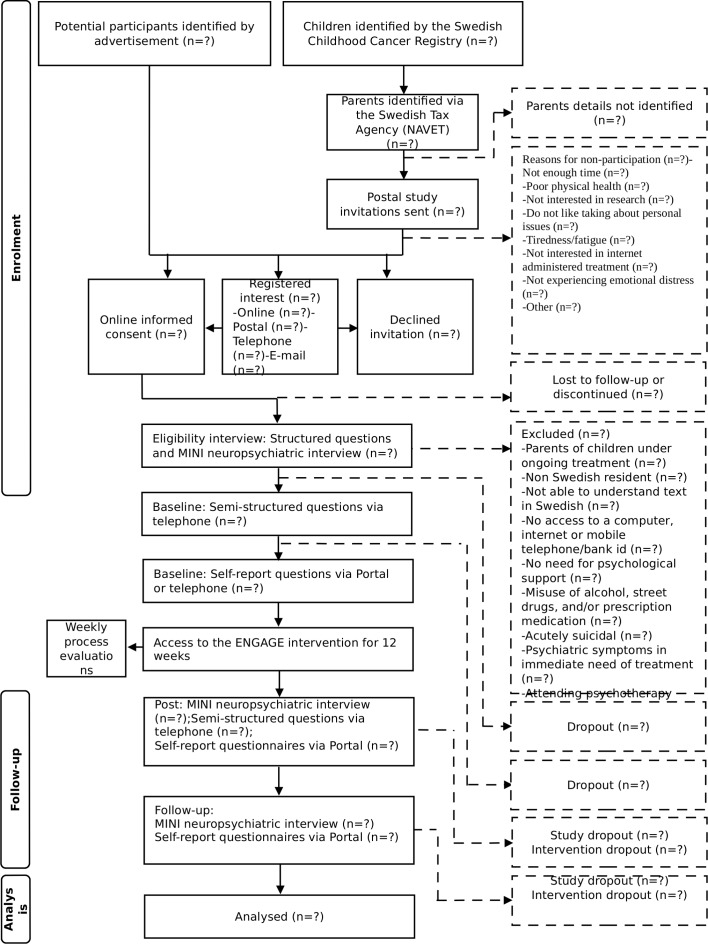
Methods and analysis: The study has an uncontrolled within-group design with an embedded qualitative and quantitative process evaluation. Potential participants are parents of children previously treated for cancer, living in Sweden, recruited via their child's personal identification number (via the Swedish Childhood Cancer Registry and the Swedish Tax Agency). Parents are invited randomly with information packs sent to home addresses. Further interest in participating can be registered via information on relevant websites. The study aims to recruit 50 parents who will receive the intervention ENGAGE which is designed to be delivered over a 10-week period, and comprises one introductory chapter followed by up to 10 intervention modules addressing key concerns identified for the population. Consistent with feasibility study objectives, primary outcomes relate to recruitment, attrition, data collection, study resources, intervention delivery and acceptability. Clinical outcomes (post-traumatic stress, depression, anxiety, fear of cancer recurrence, psychological inflexibility and experiential avoidance, depressed inactivity, fatigue, quality of life and self-compassion) will be measured at baseline, post-treatment (12 weeks) and 6-month follow-up.
Ethics and dissemination: The Regional Ethical Review Board in Uppsala, Sweden has granted approval for the study (Dnr: 2017/527). Results will be disseminated to relevant healthcare and patient communities, in peer-reviewed and popular science journals, and at scientific and clinical conferences.
Trial registration number: ISRCTN57233429; Pre-results.
Keywords: anxiety; clinical trial; depression; eHealth; parents.
© Article author(s) (or their employer(s) unless otherwise stated in the text of the article) 2018. All rights reserved. No commercial use is permitted unless otherwise expressly granted.
Conflict of interest statement
Competing interests: None declared.
Figures
References
-
- Gustafsson G, Kogner P, Heyman M. Childhood cancer incidence and survival in Sweden 1984-2010. Swedish Childhood Cancer Registry. 2013. http://www.forskasverige.se/wp-content/uploads/ChildhoodCancerIncidencea... (accessed 9 Nov 2017).
Publication types
MeSH terms
Associated data
LinkOut - more resources
Full Text Sources
Other Literature Sources
