


Quantifying the Responses of Three Bacillus cereus Strains in Isothermal Conditions and During Spray Drying of Different Carrier Agents
- PMID: 29904375
- PMCID: PMC5991168
- DOI: 10.3389/fmicb.2018.01113
Quantifying the Responses of Three Bacillus cereus Strains in Isothermal Conditions and During Spray Drying of Different Carrier Agents
Erratum in
-
Corrigendum: Quantifying the Responses of Three Bacillus cereus Strains in Isothermal Conditions and During Spray Drying of Different Carrier Agents.Front Microbiol. 2018 Nov 28;9:2876. doi: 10.3389/fmicb.2018.02876. eCollection 2018. Front Microbiol. 2018. PMID: 30542334 Free PMC article.
Abstract
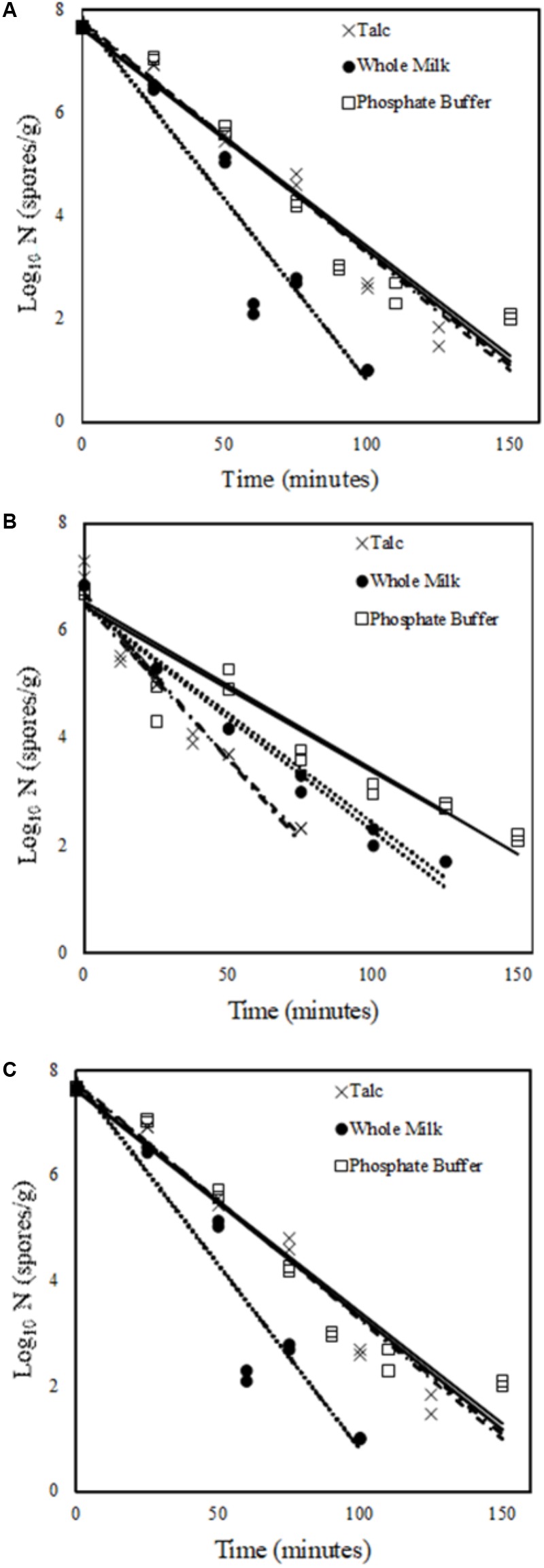
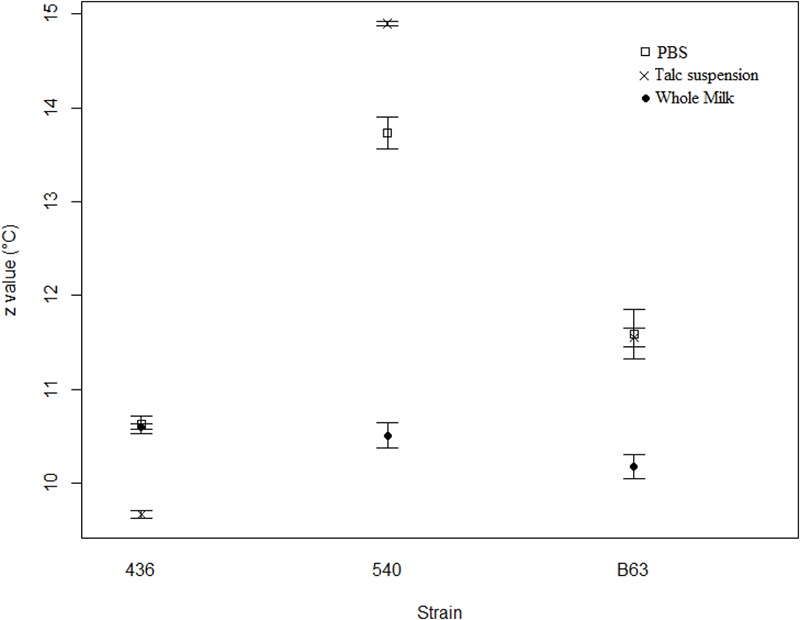
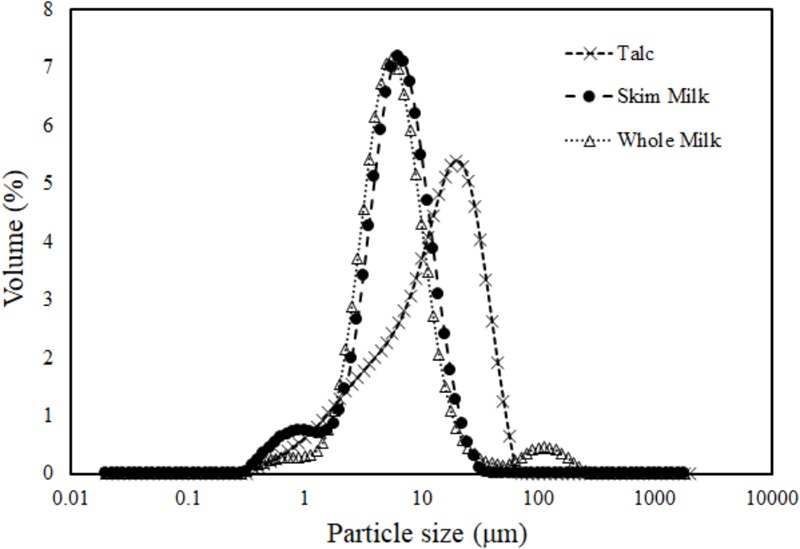
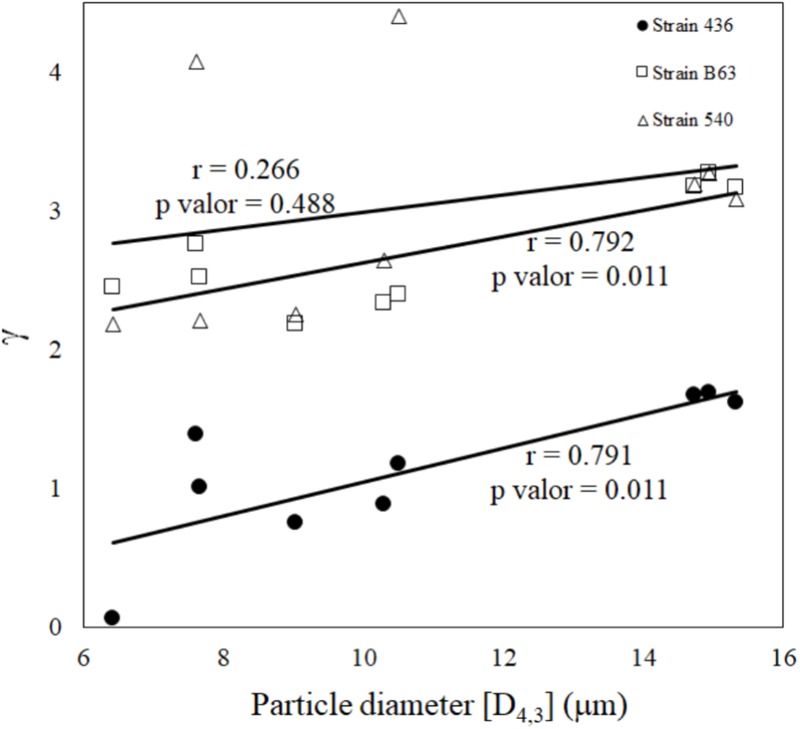
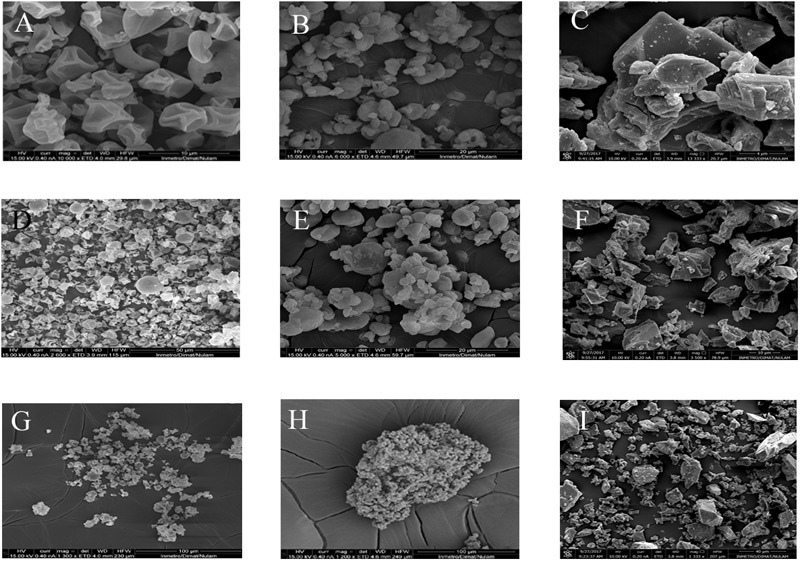
Spray drying is a widely used method for producing milk powder. This process is not aimed to cause microbial inactivation, thus sporeforming bacteria may be abundant in the microbiota of milk powder. The first aim of this study was to determine the inactivation kinetics parameters in capillary tubes of three Bacillus cereus strains (436, B63, 540) in three menstrua (whole milk, phosphate buffer, and talc suspension) at 90, 100, and 110°C. D-values for B. cereus in the three menstrua were not significantly different at the highest tested temperature (p > 0.05). Thus, talc was chosen as a carrier agent to allow the recovery of B. cereus from spray dried materials given its low interference on inactivation kinetics. B. cereus spores were also inoculated in whole milk and skim milk following spray drying at 95, 105, and 110°C (outlet temperature). After the spray drying runs, B. cereus spores were counted and the number of decimal reductions (γ) calculated. A correlation between the small diameter of the particles with the survival of spores of three B. cereus strains was found, and B. cereus 436 presented consistently the lowest γ no matter temperature and a carrier agent. The highest γ was found when talc powder was used, which suggest that this carrier agent does not protect B. cereus spores during spray drying. Spray drying of milk can lead to up to 4 γ (strain 540) of B. cereus spores but depending on the strain less than one γ (strain 436) could be observed. This study contributes to the knowledge on the microbiology of low water activity foods by providing novel findings regarding the fate of three B. cereus strains to different spray drying conditions. Acknowledging the variability of inactivation of B. cereus during spray drying is key in the current context of food safety in which the quantification of effects of unit operations must be known for the validation of processes and development of more robust formulations.
Keywords: dairy products; dried foods; foodborne pathogens; low water activity; milk; sporeforming bacteria; spores; thermal processing.
Figures
References
-
- Alves N. N., Messaoud G., Ben Desobry S., Costa J. M. C., Rodrigues S. (2016). Effect of drying technique and feed flow rate on bacterial survival and physicochemical properties of a non-dairy fermented probiotic juice powder. J. Food Eng. 189 45–54. 10.1016/j.jfoodeng.2016.05.023 - DOI
-
- Anandharamakrishnan C., Ishwarya P. (2015). “Introduction to spray drying,” in Spray Drying Techniques for Food Ingredient Encapsulation eds Anandharamakrishnan C., Ishwarya P. (Chicago, IL: Willey; ). 10.1002/9781118863985 - DOI
-
- Anonymous (2018). PubChem Compound Database, CID = 16211421. Natl. Cent. Biotechonolgy Informations. Available at: https://pubchem.ncbi.nlm.nih.gov/compound/talc#section=Top [Accessed January 15, 2018].
-
- Arslan S., Erbas M., Tontul I., Topuz A. (2015). Microencapsulation of probiotic Saccharomyces cerevisiae var. boulardii with different wall materials by spray drying. LWT - Food Sci. Technol. 63 685–690. 10.1016/j.lwt.2015.03.034 - DOI
LinkOut - more resources
Full Text Sources
Other Literature Sources
