Advanced imaging improves the diagnosis of infective endocarditis
- PMID: 29904579
- PMCID: PMC5974588
- DOI: 10.12688/f1000research.13791.1
Advanced imaging improves the diagnosis of infective endocarditis
Abstract
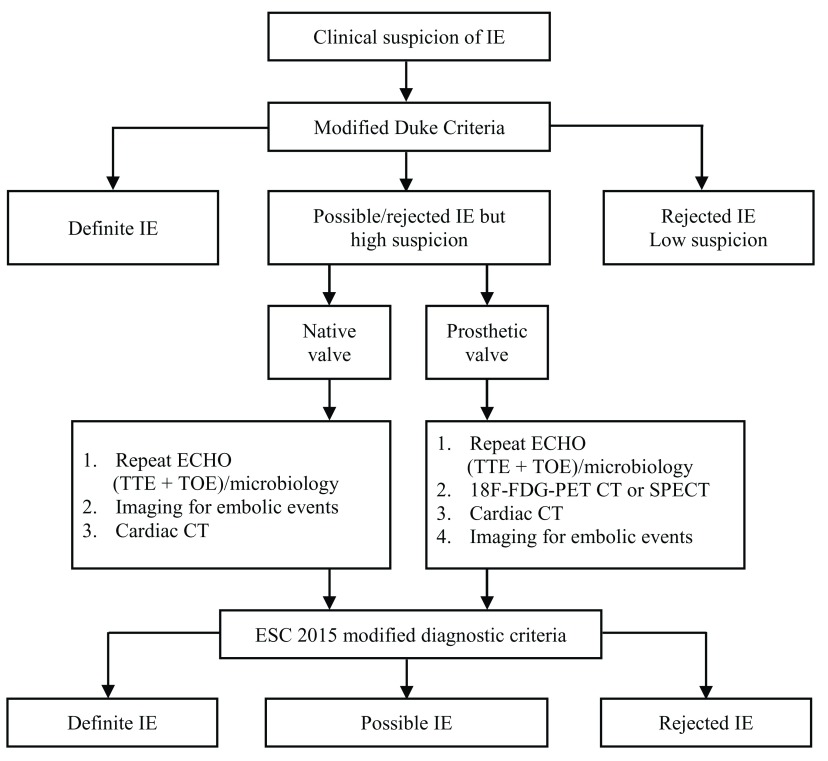
Infective endocarditis is a heterogeneous condition whose incidence is rising. Despite advances in surgery and diagnostic methods, one-year mortality has not changed and it remains at 30%. Patients with prosthetic valve and intra-cardiac device-related endocarditis are being seen more frequently and this condition is difficult to diagnose with conventional microbiological and imaging techniques. The modified Duke criteria lack sensitivity in this group and should be supplemented with newer imaging techniques, including 18F-fluorodeoxyglucose positron emission tomography (18F-FDG-PET) and single-photon emission computed tomography (SPECT). In this article, we discuss these techniques and their role in the diagnosis of infective endocarditis.
Keywords: Cardiology; Infective endocarditis; Nuclear Imgaing; PET; SPECT.
Conflict of interest statement
No competing interests were disclosed.No competing interests were disclosed.No competing interests were disclosed.
Figures
References
-
- Ludman PF, Moat N, de Belder MA, et al. : Transcatheter aortic valve implantation in the United Kingdom: temporal trends, predictors of outcome, and 6-year follow-up: a report from the UK Transcatheter Aortic Valve Implantation (TAVI) Registry, 2007 to 2012. 2015;131(13):1181–90. 10.1161/CIRCULATIONAHA.114.013947 - DOI - PubMed
-
- Research NIoCO: National Audit of Cardiac Rhythm Management Devices. 2015-2016. Reference Source
Publication types
LinkOut - more resources
Full Text Sources
Other Literature Sources