. 2019 Apr:160:48-57.
doi: 10.1016/j.nlm.2018.06.005. Epub 2018 Jun 12.

Do different salience cues compete for dominance in memory over a daytime nap?

Affiliations

Do different salience cues compete for dominance in memory over a daytime nap?

Sara E Alger et al. Neurobiol Learn Mem. 2019 Apr.

Abstract

Information that is the most salient and important for future use is preferentially preserved through active processing during sleep. Emotional salience is a biologically adaptive cue that influences episodic memory processing through interactions between amygdalar and hippocampal activity. However, other cues that influence the importance of information, such as the explicit direction to remember or forget, interact with the inherent salience of information to determine its fate in memory. It is unknown how sleep-based processes selectively consolidate this complex information. The current study examined the development of memory for emotional and neutral information that was either cued to-be-remembered (TBR) or to-be-forgotten (TBF) across a daytime period including either napping or wakefulness. Baseline memory revealed dominance of the TBR cue, regardless of emotional salience. As anticipated, napping was found to preserve memory overall significantly better than remaining awake. Furthermore, we observed a trending interaction indicating that napping specifically enhanced the discrimination between the most salient information (negative TBR items) over other information. We found that memory for negative items was positively associated with the percentage of SWS obtained during a nap. Furthermore, the magnitude of the difference in memory between negative TBR items and negative TBF items increased with greater sleep spindle activity. Taken together, our results suggest that although the cue to actively remember or intentionally forget initially wins out, active processes during sleep facilitate the competition between salience cues to promote the most salient information in memory.

Keywords: Directed forgetting; Emotion; Hippocampus; Memory; Napping; Selective consolidation.


Figures

Figure 1
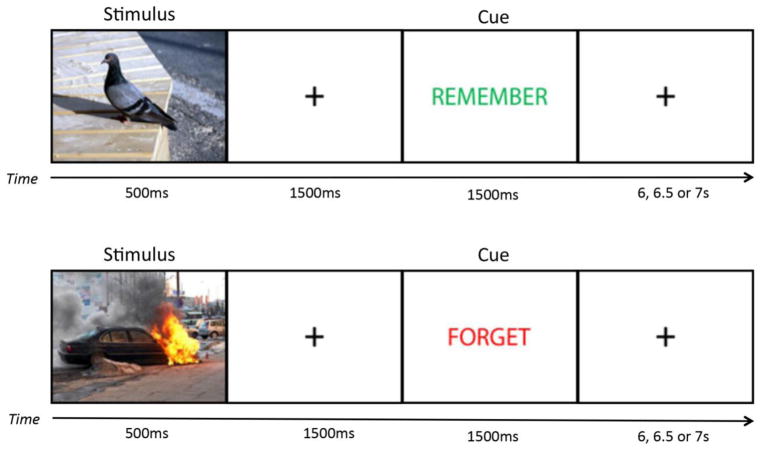
Figure 1. Emotional Directed Forgetting Task
During the encoding phase, participants encoded 60 negative and 60 neutral images, with half of each valence cued as to-be-remembered (TBR) or to-be-forgotten (TBF). Each image was displayed for 500ms, followed by a 1500ms fixation crosshair, followed by the direction to REMEMBER in green or FORGET in red, presented for 1500ms. The post-cue fixation crosshair is presented pseudo-randomly with equal probability across all trials for 6000, 6500, or 7000ms.
Figure 2
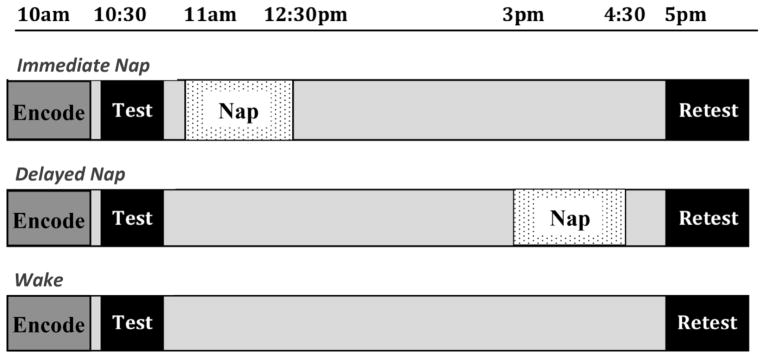
Figure 2. Protocol
All participants encoded the stimuli and were tested at the same time of day as one another, with encoding of the images at 10am, followed by baseline testing, and retest occurring at 5pm. Nap groups had a 90-minute nap opportunity either at 11am (immediate nap condition) or 3pm (delayed nap condition).
Figure 3
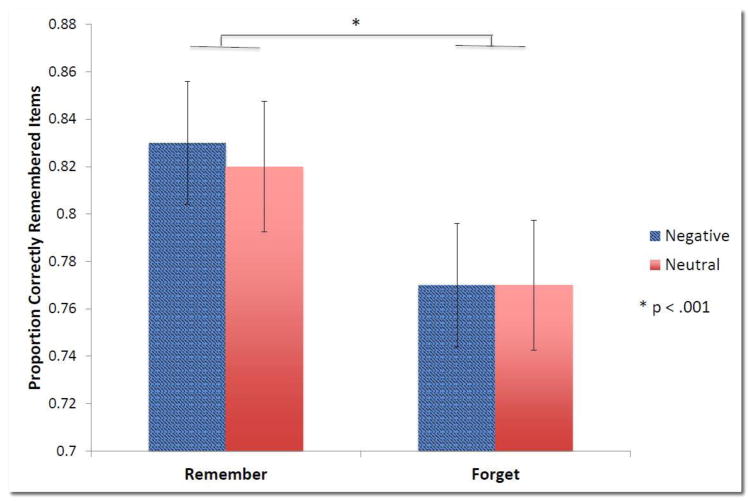
Figure 3. Hierarchy of memory at baseline
Baseline performance shows the hierarchy of remembering based on salience cues. The cue to remember or forget clearly took precedence over the emotional salience cue, with negative and neutral items being remembered similarly within each task cue to remember or forget. To-be-remembered (TBR) items are remembered significantly better than to-be-forgotten (TBF) items (p < 0.001). Error bars reflect SEM.
Figure 4
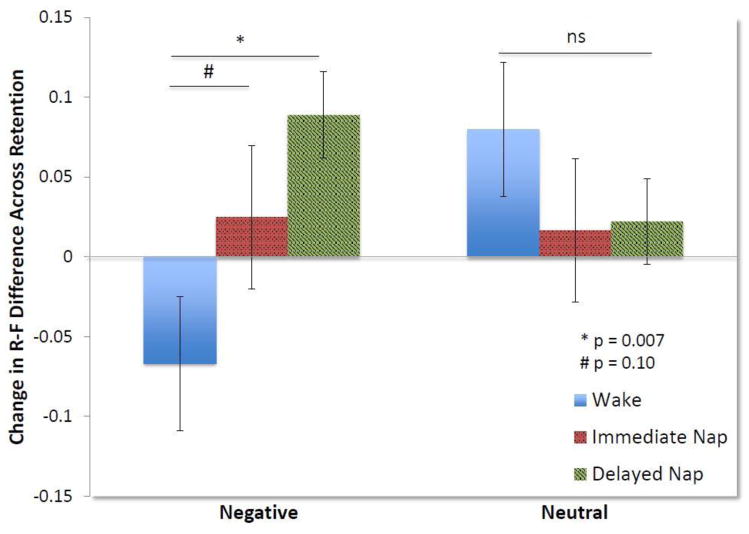
Figure 4. Change in the difference between memory for TBR and TBF items across the retention period
The R-F difference was calculated as a measure of the efficiency of the forgetting effect. A positive change in the magnitude of this difference across the nap/wake retention period indicates better retention of the TBR items and more decay of TBF items. For neutral items, on the right of the figure, there was no significant difference between conditions in increase of the magnitude of the R-F difference over time. However, for negative items, napping facilitated a greater increase in the R-F difference, while the wake condition showed reduced R-F difference, indicating more decay of negative TBR compared to TBF items. The wake condition was significantly, or nearly significantly, different from both the delayed (p = 0.007) and immediate nap conditions (p = 0.10). Error bars reflect SEM.
Figure 5
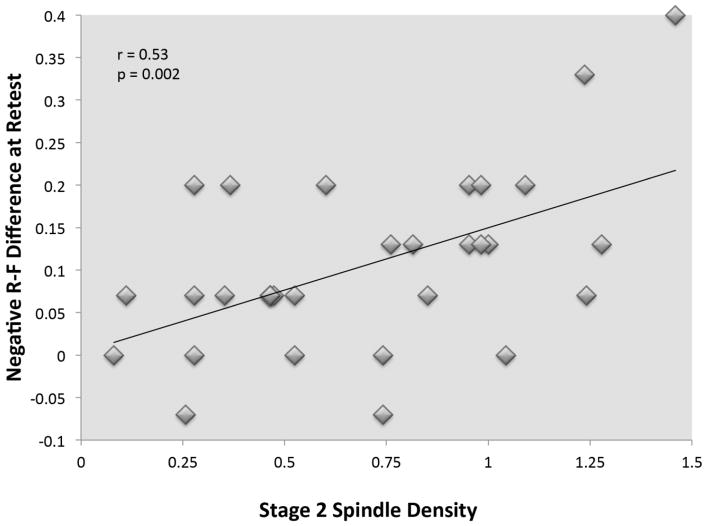
Figure 5. Relationship between sleep spindle density and the negative R-F difference at retest
The magnitude of the difference between memory for TBR and TBF negative scenes increased relative to the density of sleep spindle activity in Stage 2 sleep. This indicates that sleep spindles are associated with the discrimination of memory for salient items, specifically the preferential preservation of items cued TBR over those cued TBF.

References

    1. Alger SE, Lau H, Fishbein W. Delayed onset of a daytime nap facilitates retention of declarative memory. PLoS One. 2010;5(8):e12131. - PMC - PubMed
    1. Alger SE, Kensinger EA, Payne JD. Preferential consolidation of emotionally salient information during a nap is preserved in middle Age. Neurobiology of Aging 2018 - PMC - PubMed
    1. Anderson MC, Hanslmayr S. Neural mechanisms of motivated forgetting. Trends in cognitive sciences. 2014;18(6):279–292. - PMC - PubMed
    1. Anderson MC, Ochsner KN, Kuhl B, Cooper J, Robertson E, Gabrieli SW, … Gabrieli JD. Neural systems underlying the suppression of unwanted memories. Science. 2004;303(5655):232–235. - PubMed
    1. Basner M, Dinges DF. An adaptive-duration version of the PVT accurately tracks changes in psychomotor vigilance induced by sleep restriction. Sleep. 2012;35(2):193–202. - PMC - PubMed

Publication types