


Acceptability of placebo multiparticulate formulations in children and adults
- PMID: 29907752
- PMCID: PMC6003938
- DOI: 10.1038/s41598-018-27446-6
Acceptability of placebo multiparticulate formulations in children and adults
Abstract
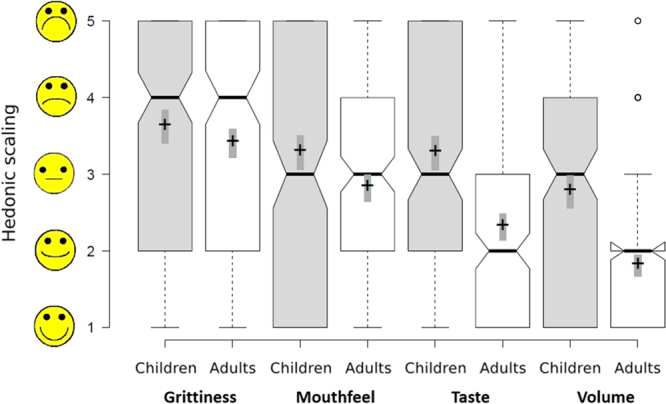
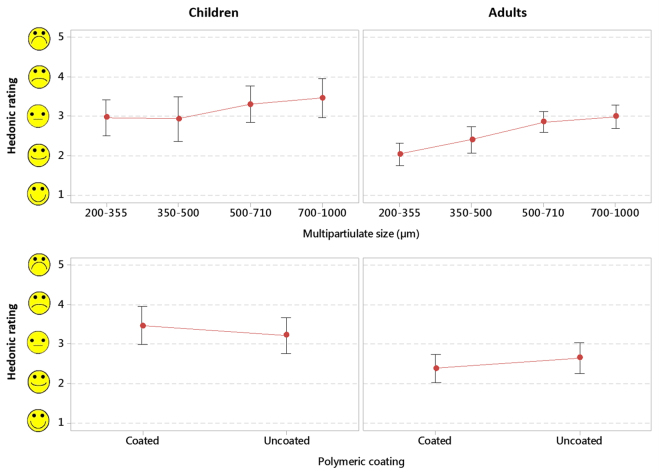
Patient acceptability is an important consideration in the design of medicines for children. The aim of this study was to investigate acceptability of multiparticulates in healthy children and adults. A randomised, single-blind acceptability testing was performed involving 71 children (4-12 years) and 61 adults (18-37 years). Each participant received three 500 mg samples of microcrystalline cellulose pellets administered on a medicine spoon with water at 5-10 minutes intervals. Acceptability was measured based on voluntary intake of the samples, facial expressions, ratings on hedonic scales and reported willingness to take multiparticulates everyday as a medicine. Multiparticulates were voluntarily swallowed by 92% of children and 100% of adults. However, palatability issues were identified, with emphasis on textural aspects. Grittiness perception received negative ratings on hedonic scales by 60% of children and 51% of adults. Researcher observations revealed that 72% of children and 42% of adults displayed negative facial expressions towards the samples. Children reported their willingness to take multiparticulates as a medicine in 30% of the cases, compared to 74% in adults. This study demonstrates that multiparticulates may be a suitable formulation platform for children and adults, although palatability concerns have been highlighted. Additional work is required to define acceptability criteria and to standardise methodologies.
Conflict of interest statement
This work was supported by the CDT in Targeted Therapeutics and Formulation Sciences, which is funded by the EPSRC (EP/I01375X/1); and SPaeDD-UK (Accelerating Paediatric Formulation Development through Smart Design and Predictive Science), an Innovate UK Formulated Products Collaborative R&D project (Ref: 101709), which is co-funded by Innovate UK and the contributing companies of AstraZeneca, Bristol Myers Squibb, GlaxoSmithKline, Juniper Pharma Services and Pfizer. The authors declare no financial and/or non-financial conflict of interest other than their disclosed affiliations and acknowledged funding.
Figures


References
-
- EMA. Guideline on pharmaceutical development of medicines for paediatric use. at http://www.ema.europa.eu/docs/en_GB/document_library/Scientific_guidelin... (2013). - PubMed
-
- Mistry, P. & Batchelor, H. Evidence of acceptability of oral paediatric medicines: a review. J. Pharm. Pharmacol. 10.1111/jphp.12610 (2016). - PubMed
-
- WHO. Development of paediatric medicines: points to consider in formulation (2012). - PubMed
-
- Klingmann, V. et al. Acceptability of Uncoated Mini-Tablets in Neonates—A Randomized Controlled Trial. J. Pediatr. 10.1016/j.jpeds.2015.07.010 (2015). - PubMed
Publication types
MeSH terms
LinkOut - more resources
Full Text Sources
Other Literature Sources
