


Haploidentical Bone Marrow Transplantation with Post-Transplant Cyclophosphamide/Bendamustine in Pediatric and Young Adult Patients with Hematologic Malignancies
- PMID: 29908231
- PMCID: PMC7556327
- DOI: 10.1016/j.bbmt.2018.06.007
Haploidentical Bone Marrow Transplantation with Post-Transplant Cyclophosphamide/Bendamustine in Pediatric and Young Adult Patients with Hematologic Malignancies
Abstract
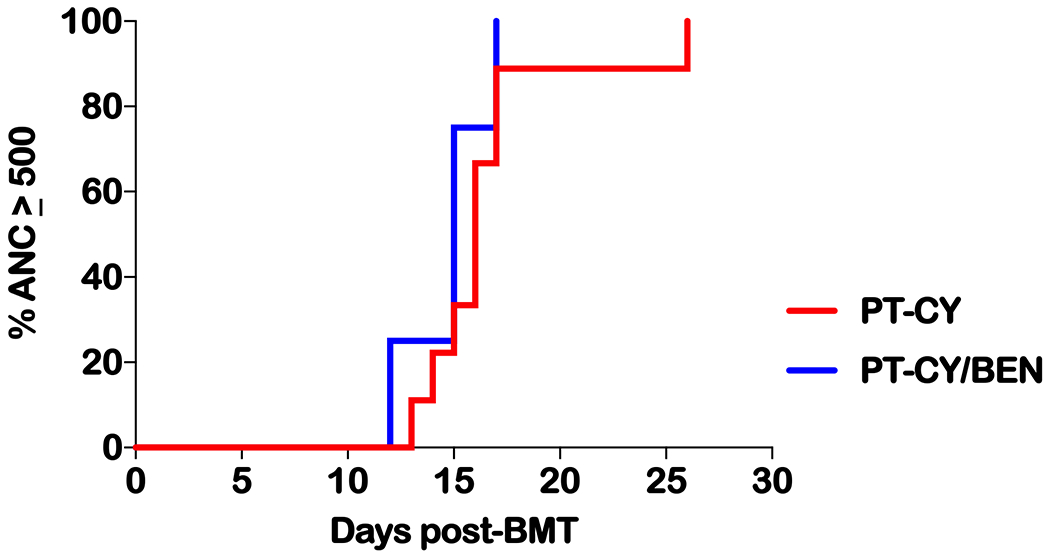
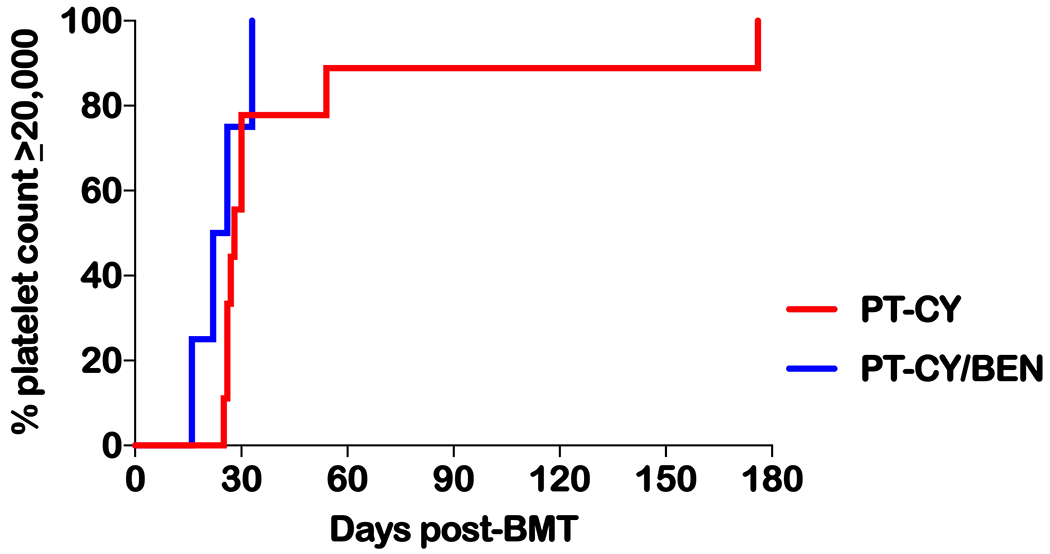
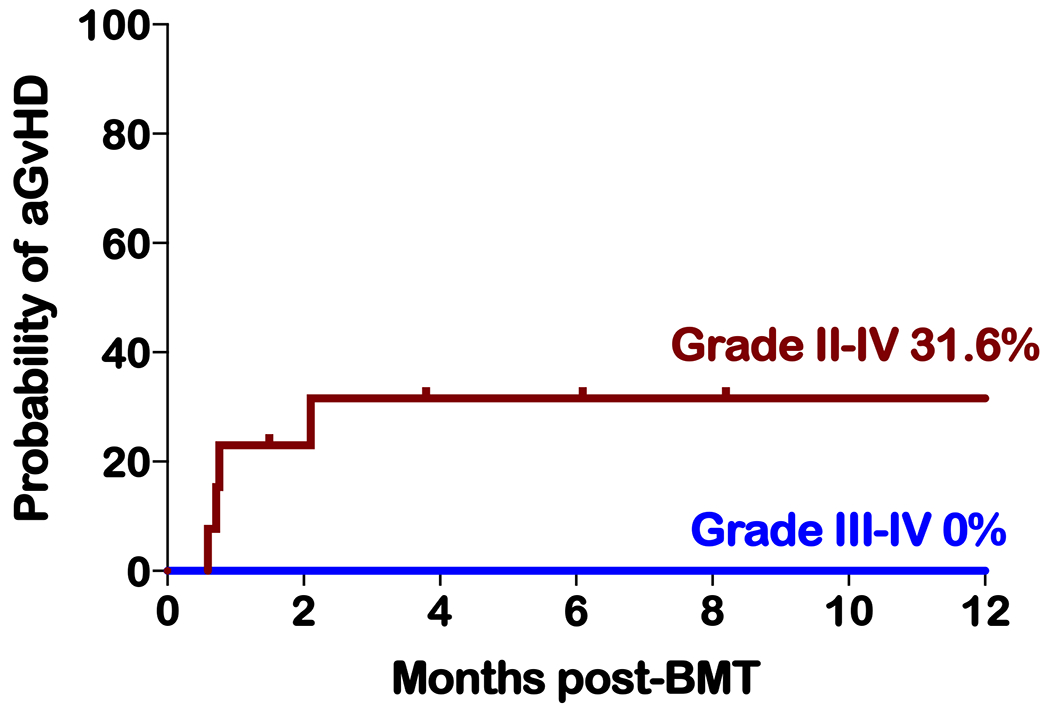
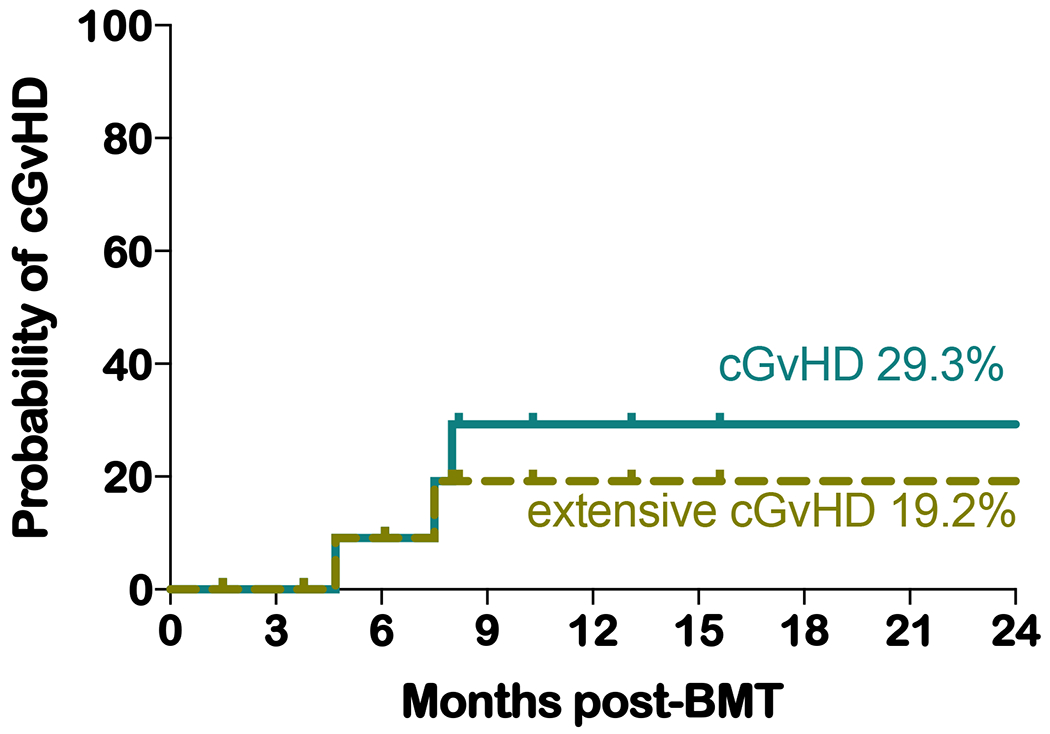
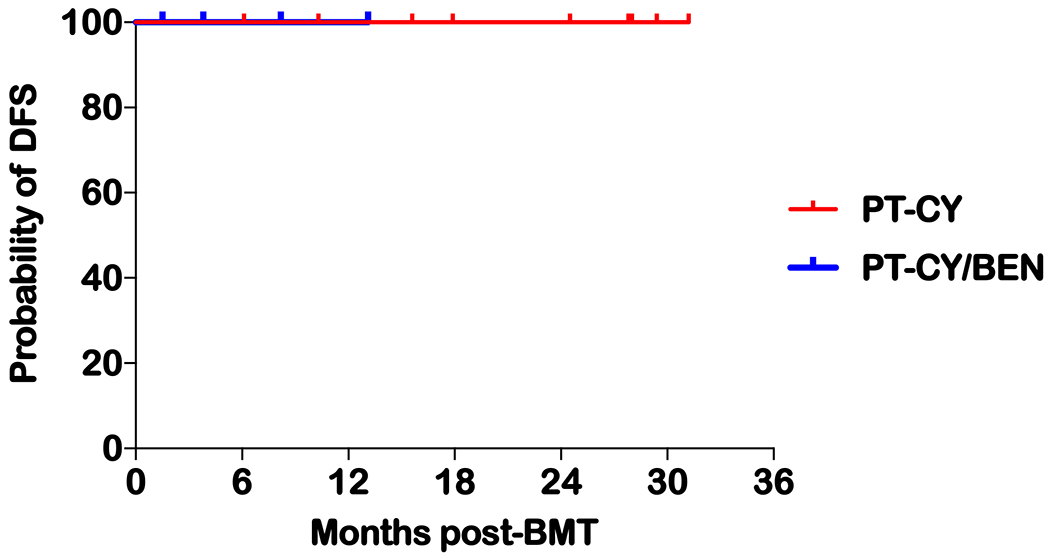
More than half of patients undergoing hematopoietic cell transplantation at our institution are ethnic or racial minorities, making the search for matched unrelated donors more challenging. Since the introduction of haploidentical bone marrow transplant (haplo-BMT) into our pediatric BMT program in 2015, 69.2% of recipients have been minorities. Herein, we describe our experience with the first 13 pediatric and young adult patients with hematologic malignancies who have undergone T cell-replete haplo-BMT after myeloablative conditioning (MAC) at our institution. We have previously documented that in experimental haplo-BMT, post-transplant bendamustine (PT-BEN) is at least as effective as post-transplant cyclophosphamide (PT-CY) against graft-versus-host disease (GVHD) and elicits superior graft-versus-leukemia (GVL) effects. We report on, for the first time in humans, 4 patients treated with PT-CY and PT-BEN after haplo-BMT as part of our ongoing institutional phase I/II study (NCT02996773). The remaining 9 patients reviewed in this report received PT-CY. Our findings indicate that MAC haplo-BMT is well tolerated by children and young adults with advanced hematologic malignancies with no observed nonrelapse mortality or grades III to IV GVHD. All patients who underwent haplo-BMT remain alive and disease-free with a median follow-up of 15.6 months (range, 1.5 to 31.2). Preliminary findings from our ongoing clinical trial demonstrate that partial substitution of PT-BEN for PT-CY is feasible and safe after haplo-BMT as an immune modulatory strategy to alleviate GVHD and potentially more effectively preserve GVL.
Keywords: Haploidentical BMT; PT-bendamustine; PT-cyclophosphamide.
Copyright © 2018. Published by Elsevier Inc.
Conflict of interest statement
Conflict of interest disclosure
There are no conflicts of interest, financial or otherwise, involving any of the authors regarding the submission or publication of this manuscript.
Figures
References
-
- Bacigalupo A, Dominietto A, Ghiso A, Di Grazia C, Lamparelli T, Gualandi F, Bregante S, Van Lint MT, Geroldi S, Luchetti S, Grasso R, Pozzi S, Colombo N, Tedone E, Varaldo R, Raiola AM. Unmanipulated haploidentical bone marrow transplantation and post-transplant cyclophosphamide for hematologic malignanices following a myeloablative conditioning: an update. Bone Marrow Transplant. 2015;50 Suppl 2:S37–39. - PubMed
-
- Bashey A, Zhang X, Jackson K, Brown S, Ridgeway M, Solh M, Morris LE, Holland HK, Solomon SR. Comparison of Outcomes of Hematopoietic Cell Transplants from T-Replete Haploidentical Donors Using Post-Transplantation Cyclophosphamide with 10 of 10 HLA-A, -B, -C, -DRB1, and -DQB1 Allele-Matched Unrelated Donors and HLA-Identical Sibling Donors: A Multivariable Analysis Including Disease Risk Index. Biol Blood Marrow Transplant. 2016;22(1):125–133. - PubMed
-
- Ciurea SO, Zhang MJ, Bacigalupo AA, Bashey A, Appelbaum FR, Aljitawi OS, Armand P, Antin JH, Chen J, Devine SM, Fowler DH, Luznik L, Nakamura R, O'Donnell PV, Perales MA, Pingali SR, Porter DL, Riches MR, Ringden OT, Rocha V, Vij R, Weisdorf DJ, Champlin RE, Horowitz MM, Fuchs EJ, Eapen M. Haploidentical transplant with posttransplant cyclophosphamide vs matched unrelated donor transplant for acute myeloid leukemia. Blood. 2015;126(8):1033–1040. - PMC - PubMed
-
- Luznik L, O'Donnell PV, Symons HJ, Chen AR, Leffell MS, Zahurak M, Gooley TA, Piantadosi S, Kaup M, Ambinder RF, Huff CA, Matsui W, Bolanos-Meade J, Borrello I, Powell JD, Harrington E, Warnock S, Flowers M, Brodsky RA, Sandmaier BM, Storb RF, Jones RJ, Fuchs EJ. HLA-haploidentical bone marrow transplantation for hematologic malignancies using nonmyeloablative conditioning and high-dose, posttransplantation cyclophosphamide. Biol Blood Marrow Transplant. 2008;14(6):641–650. - PMC - PubMed
-
- McCurdy SR, Kanakry JA, Showel MM, Tsai HL, Bolanos-Meade J, Rosner GL, Kanakry CG, Perica K, Symons HJ, Brodsky RA, Gladstone DE, Huff CA, Pratz KW, Prince GT, Dezern AE, Gojo I, Matsui WH, Borrello I, McDevitt MA, Swinnen LJ, Smith BD, Levis MJ, Ambinder RF, Luznik L, Jones RJ, Fuchs EJ, Kasamon YL. Risk-stratified outcomes of nonmyeloablative HLA-haploidentical BMT with high-dose posttransplantation cyclophosphamide. Blood. 2015;125(19):3024–3031. - PMC - PubMed
Publication types
MeSH terms
Substances
Associated data
Grants and funding
LinkOut - more resources
Full Text Sources
Other Literature Sources
Medical
