


Inhibitors of protein-protein interactions (PPIs): an analysis of scaffold choices and buried surface area
- PMID: 29908451
- PMCID: PMC6066447
- DOI: 10.1016/j.cbpa.2018.06.004
Inhibitors of protein-protein interactions (PPIs): an analysis of scaffold choices and buried surface area
Abstract
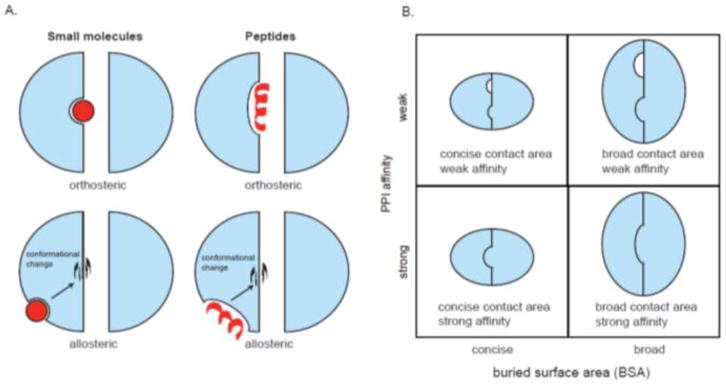
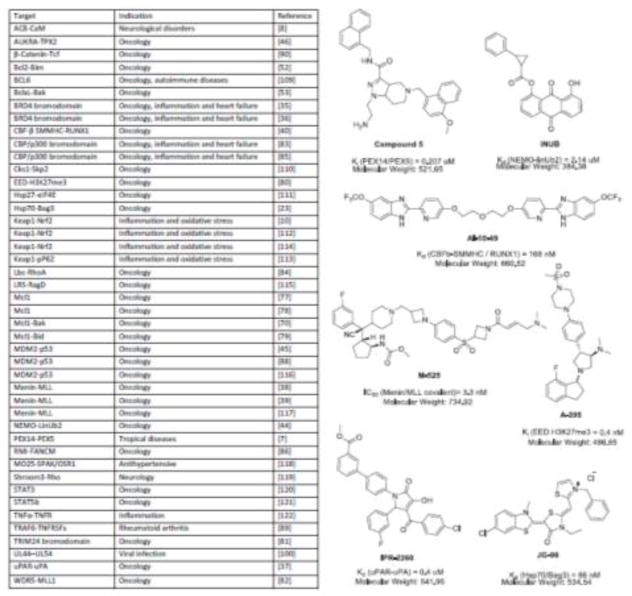
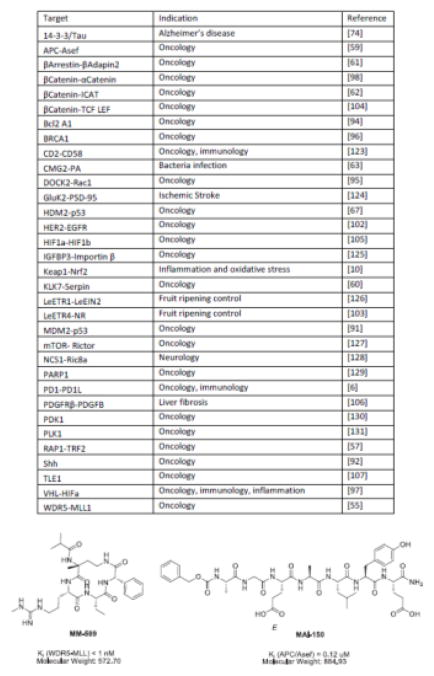
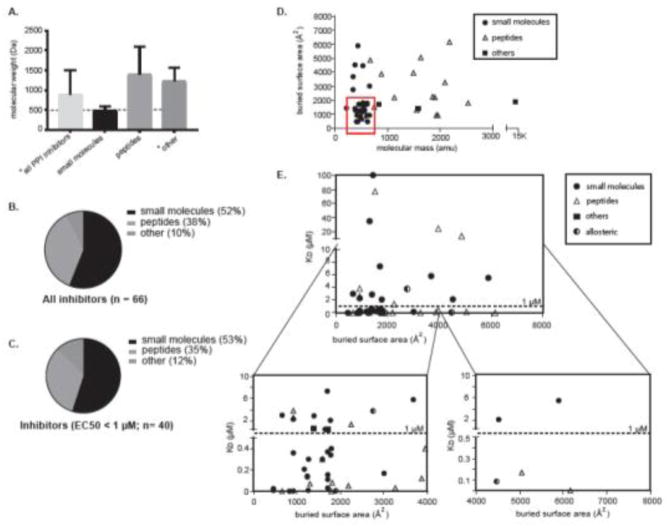
Protein-protein interactions (PPI) were once considered 'undruggable', but clinical successes, driven by advanced methods in drug discovery, have challenged that notion. Here, we review the last three years of literature on PPI inhibitors to understand what is working and why. From the 66 recently reported PPI inhibitors, we found that the average molecular weight was significantly greater than 500Da, but that this trend was driven, in large part, by the contribution of peptide-based compounds. Despite differences in average molecular weight, we found that compounds based on small molecules or peptides were almost equally likely to be potent inhibitors (KD<1μM). Finally, we found PPIs with buried surface area (BSA) less than 2000Å2 were more likely to be inhibited by small molecules, while PPIs with larger BSA values were typically inhibited by peptides. PPIs with BSA values over 4000Å2 seemed to create a particular challenge, especially for orthosteric small molecules. Thus, it seems important to choose the inhibitor scaffold based on the properties of the target interaction. Moreover, this survey suggests a (more nuanced) conclusion to the question of whether PPIs are good drug targets; namely, that some PPIs are readily 'druggable' given the right choice of scaffold, while others still seem to deserve the 'undruggable' moniker.
Copyright © 2018 Elsevier Ltd. All rights reserved.
Figures
References
-
- Arrowsmith CH, Bountra C, Fish PV, Lee K, Schapira M. Epigenetic protein families: a new frontier for drug discovery. Nature Reviews Drug Discovery. 2012;11:384–400. - PubMed
-
- Nero TL, Morton CJ, Holien JK, Wielens J, Parker MW. Oncogenic protein interfaces: small molecules, big challenges. Nat Rev Cancer. 2014;14:248–262. A comprehensive review on small-molecule drugs targeting PPIs with oncological significance. - PubMed
-
- Arkin MR, Whitty A. The road less traveled: modulating signal transduction enzymes by inhibiting their protein-protein interactions. Curr Opin Chem Biol. 2009;13:284–290. - PubMed
-
- Arkin MR, Tang Y, Wells JA. Small-molecule inhibitors of protein-protein interactions: progressing toward the reality. Chem Biol. 2014;21:1102–1114. A seminal review of PPI inhibitors, which includes categorization based on the conformation of the binding moieties. A great place to start for those new to the field. - PMC - PubMed
Publication types
MeSH terms
Substances
Grants and funding
LinkOut - more resources
Full Text Sources
Other Literature Sources
