


Impact of early institutionalization on attention mechanisms underlying the inhibition of a planned action
- PMID: 29908954
- PMCID: PMC6205198
- DOI: 10.1016/j.neuropsychologia.2018.06.008
Impact of early institutionalization on attention mechanisms underlying the inhibition of a planned action
Abstract
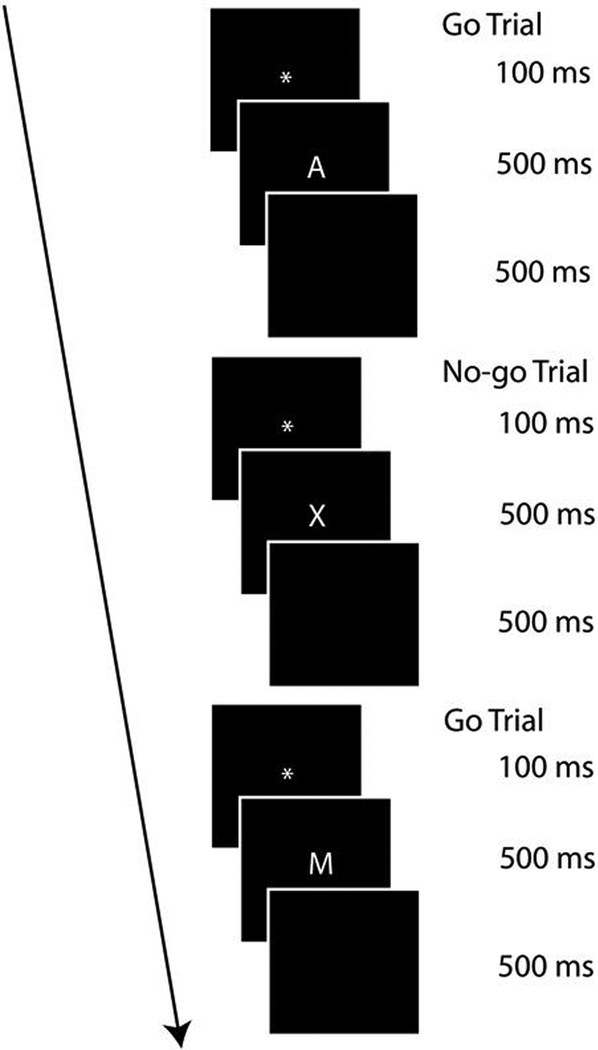
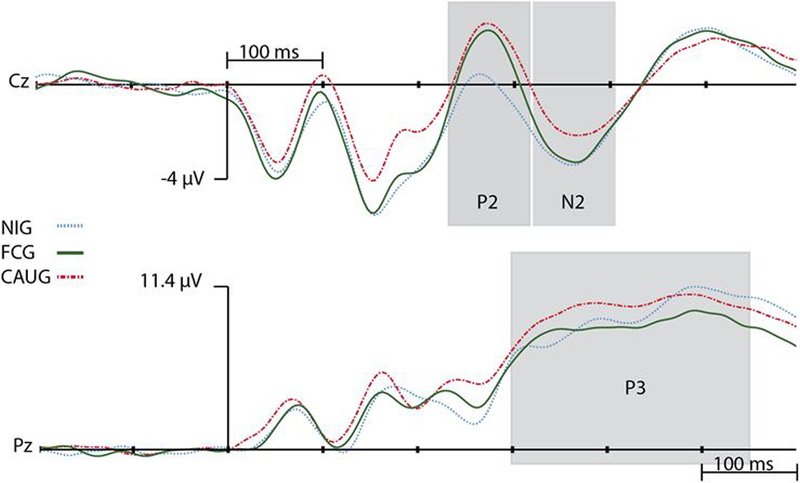
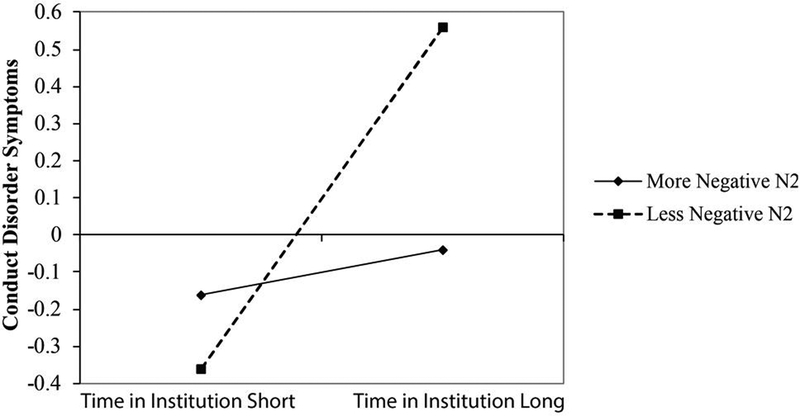
Institutional rearing is associated with deficits in executive functions, such as inhibitory control, and may contribute to later externalizing behavior problems. In the current study, we explored the impact of institutional rearing on attention in the context of inhibiting a planned action. As part of the Bucharest Early Intervention Project (BEIP), children were randomized to either remain in the institutions in which they lived (Care as Usual Group) or be placed into foster family homes (Foster Care Group). We also recruited age and gender matched never-institutionalized (NIG) children from the Bucharest community. We examined differences in behavioral and Event Related Potentials (ERPs) during a go-no-go task when children were 12 years old. Results revealed that the ever-institutionalized group (CAUG and FCG combined) showed slower reaction times, worse performance accuracy, larger P2 activation, and smaller (less negative) N2 activation than the NIG group. Results of a moderation analysis revealed that children who spent more time in institutions and had small N2s showed more externalizing symptoms. These results have implications for the design of treatment approaches for previously institutionalized children with externalizing behavior problems.
Keywords: BEIP; Early institutionalization; Event-related potentials; Externalizing behavior; Inhibiting a planned action.
Copyright © 2018 Elsevier Ltd. All rights reserved.
Figures
References
-
- Aiken LS, West SG, & Reno RR (1991). Multiple regression: Testing and interpreting interactions. Sage.
-
- Bocquillon P, Bourriez JL, Palmero-Soler E, Molaee-Ardekani B, Derambure P, & Dujardin K (2014). The spatiotemporal dynamics of early attention processes: a high-resolution electroencephalographic study of N2 subcomponent sources. Neuroscience, 271, 9–22. - PubMed
-
- Bartholow BD, Pearson MA, Dickter CL, Sher KJ, Fabiani M, & Gratton G (2005). Strategic control and medial frontal negativity: Beyond errors and response conflict. Psychophysiology, 42(1), 33–42. - PubMed
Publication types
MeSH terms
Grants and funding
LinkOut - more resources
Full Text Sources
Other Literature Sources
Research Materials
