


Intrinsic functional neurocircuitry associated with treatment response to transdiagnostic CBT in bipolar disorder with anxiety
- PMID: 29909301
- PMCID: PMC7980284
- DOI: 10.1016/j.jad.2018.06.002
Intrinsic functional neurocircuitry associated with treatment response to transdiagnostic CBT in bipolar disorder with anxiety
Abstract
Background: Anxiety in bipolar disorder (BD) exacerbates emotion dysregulation and reduces treatment response. We recently conducted a pilot trial of transdiagnostic CBT to target anxiety and emotion dysregulation in BD adjunctive to pharmacotherapy. Reductions in depression and anxiety symptoms were significantly predicted by baseline levels of neuroticism and perceived affective control, as well as changes over time in emotion regulation skills. The present study investigates mechanism of treatment response by examining the relationship between baseline emotion regulation-related neural circuitry and trial outcomes.
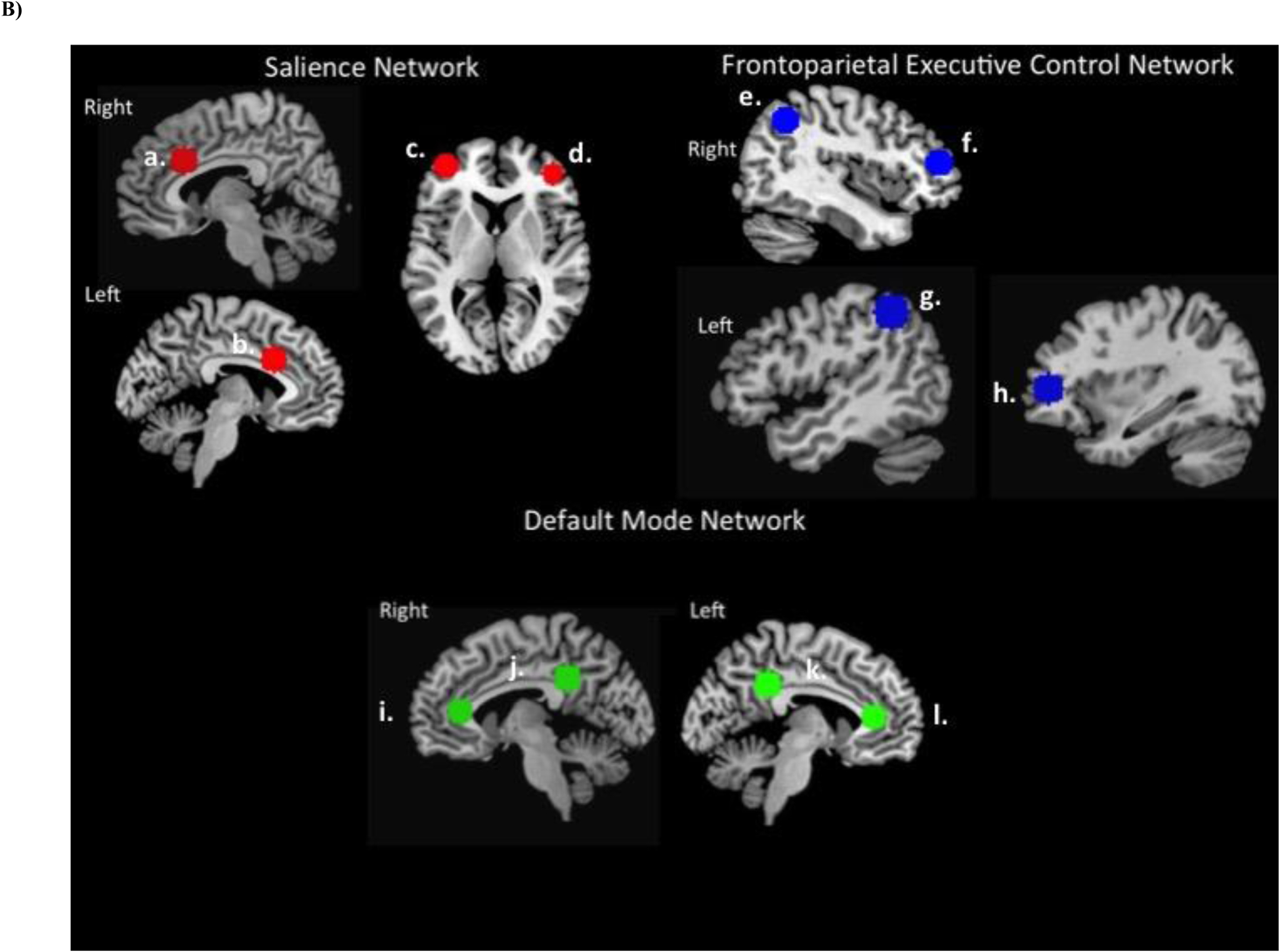
Methods: Nineteen patients completed baseline resting state fMRI scans prior to treatment randomization. Functional connectivity between the anterior insula (AI) and regions in the salience network (SN), default mode network (DMN), and executive control network (ECN) were examined as predictors of baseline and treatment-related changes in emotion regulation.
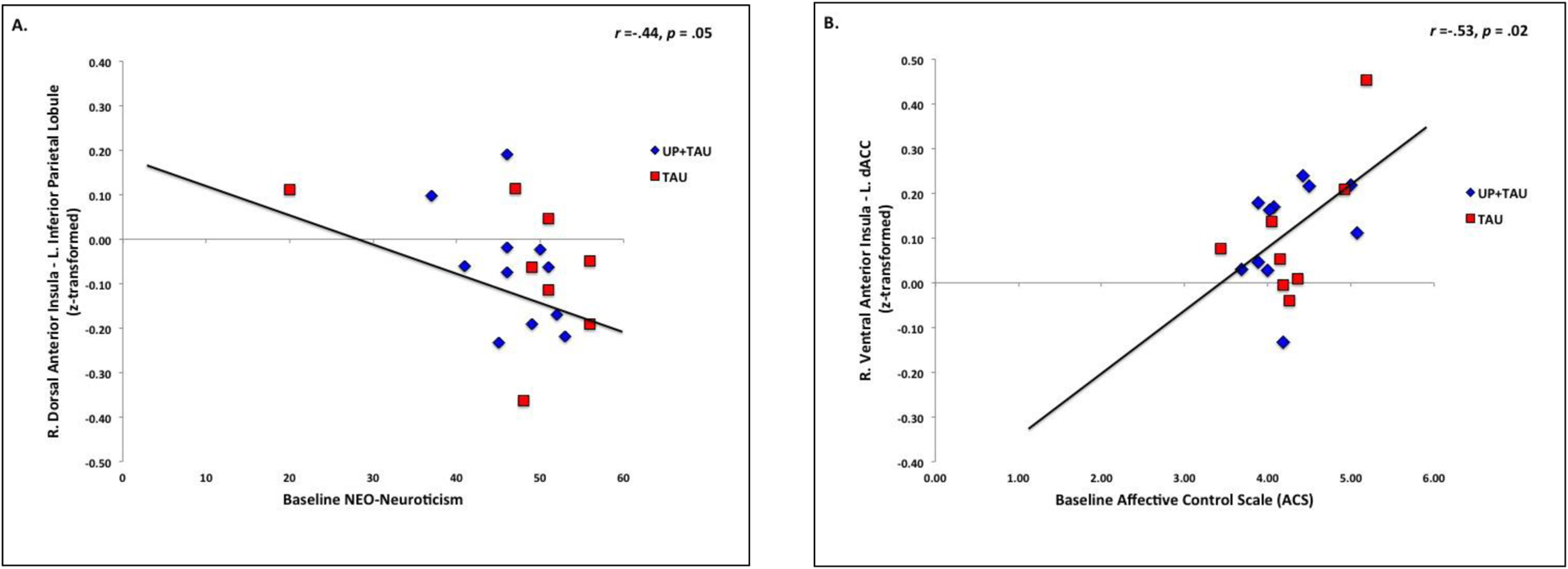
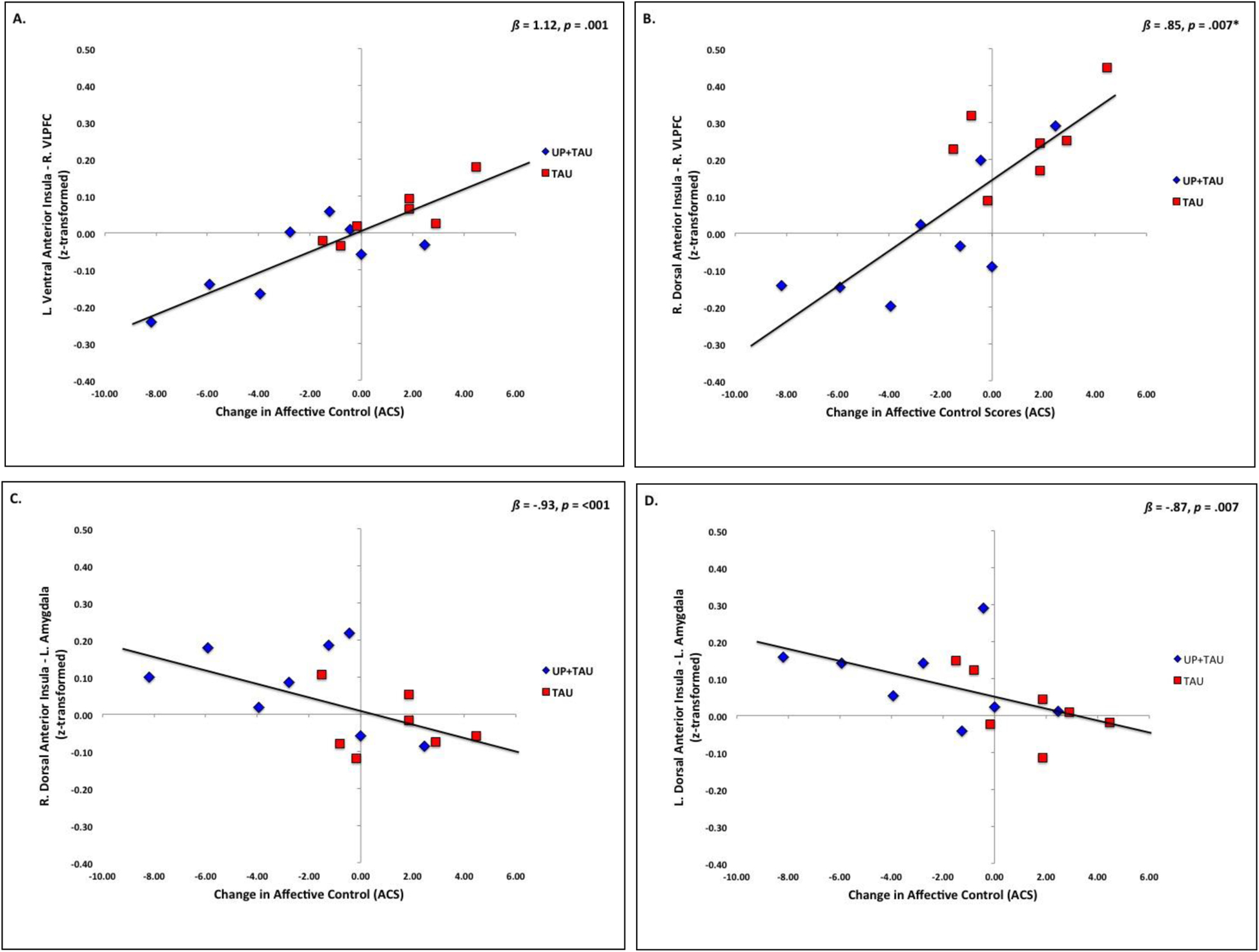
Results: Greater improvements in emotion regulation were predicted by weaker right dorsal AI - right ventrolateral prefrontal cortex (VLPFC; SN) and stronger bilateral dorsal AI - bilateral amygdala functional connectivity. Baseline neuroticism was negatively correlated with right dorsal AI- inferior parietal lobule (ECN) functional connectivity, and baseline deficits in perceived affective control were positively associated with ventral AI - bilateral dACC (SN) connectivity.
Limitations: Small sample limits interpretability of treatment-specific effects.
Conclusion: Baseline functional connectivity of emotion-regulation related neural circuitry significantly predicted change in emotion regulation-related dimensions associated with anxiety and depression symptom reduction. Future studies are needed to determine if employing methods such as neuromodulation to rehabilitate relevant neural circuitry may improve ultimate treatment outcomes of transdiagnostic CBT for BD and anxiety.
Keywords: Anterior insula; Anxiety disorders; Bipolar disorder; Emotion regulation; Functional connectivity networks.
Copyright © 2018 Elsevier B.V. All rights reserved.
Figures

References
-
- Aldao A, Sheppes G, Gross JJ, 2015. Emotion regulation flexibility. Cognitive Therapy and Research 39, 263–278.
-
- Aron AR, 2007. The neural basis of inhibition in cognitive control. Neuroscientist 13, 214–228. - PubMed
-
- Barlow D, Farchione T, Fairholme C, Ellard K, Boisseau C, Allen L, May J, 2010a. Unified protocol for transdiagnostic treatment of emotional disorders: Therapist guide: Oxford University Press. USA.
-
- Barlow DH, Ellard K, Fairholme C, Farchione T, Boisseau C, Allen L, Ehrenreich-May J, 2010b. The unified protocol for transdiagnostic treatment of emotional disorders: Client workbook. New York: Oxford University Press. Accessed on April 24, 2014.
-
- Barlow DH, Ellard KK, Sauer-Zavala S, Bullis JR, Carl JR, 2014. The Origins of Neuroticism. Perspect Psychol Sci 9, 481–496. - PubMed
Publication types
MeSH terms
Substances
Grants and funding
LinkOut - more resources
Full Text Sources
Other Literature Sources
Medical
