The prevalence of autism spectrum disorders in China: a comprehensive meta-analysis
- PMID: 29910682
- PMCID: PMC6001678
- DOI: 10.7150/ijbs.24063
The prevalence of autism spectrum disorders in China: a comprehensive meta-analysis
Abstract
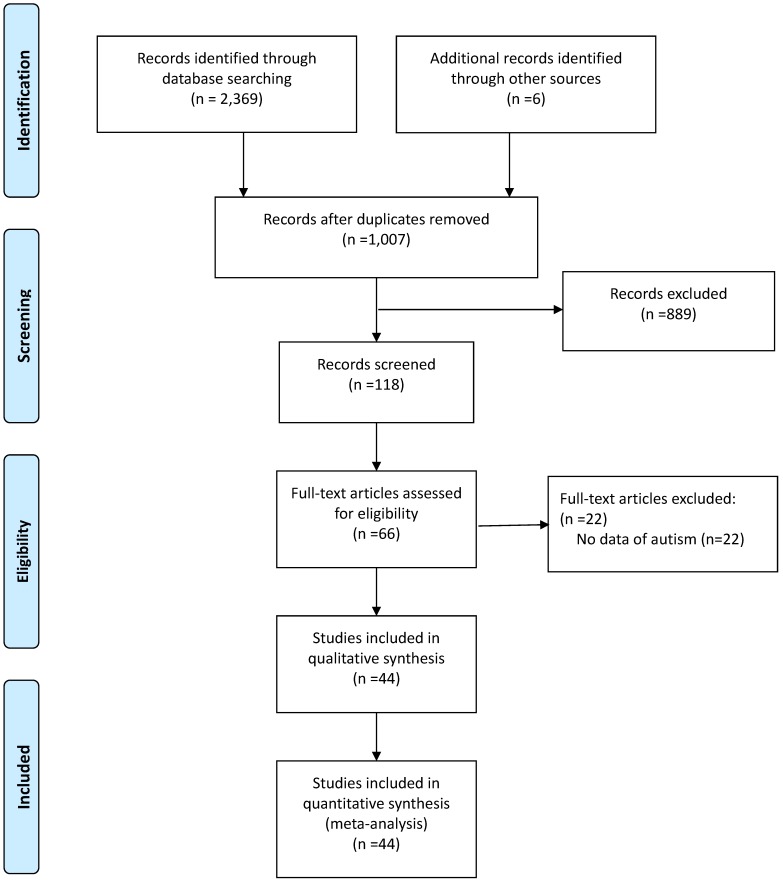
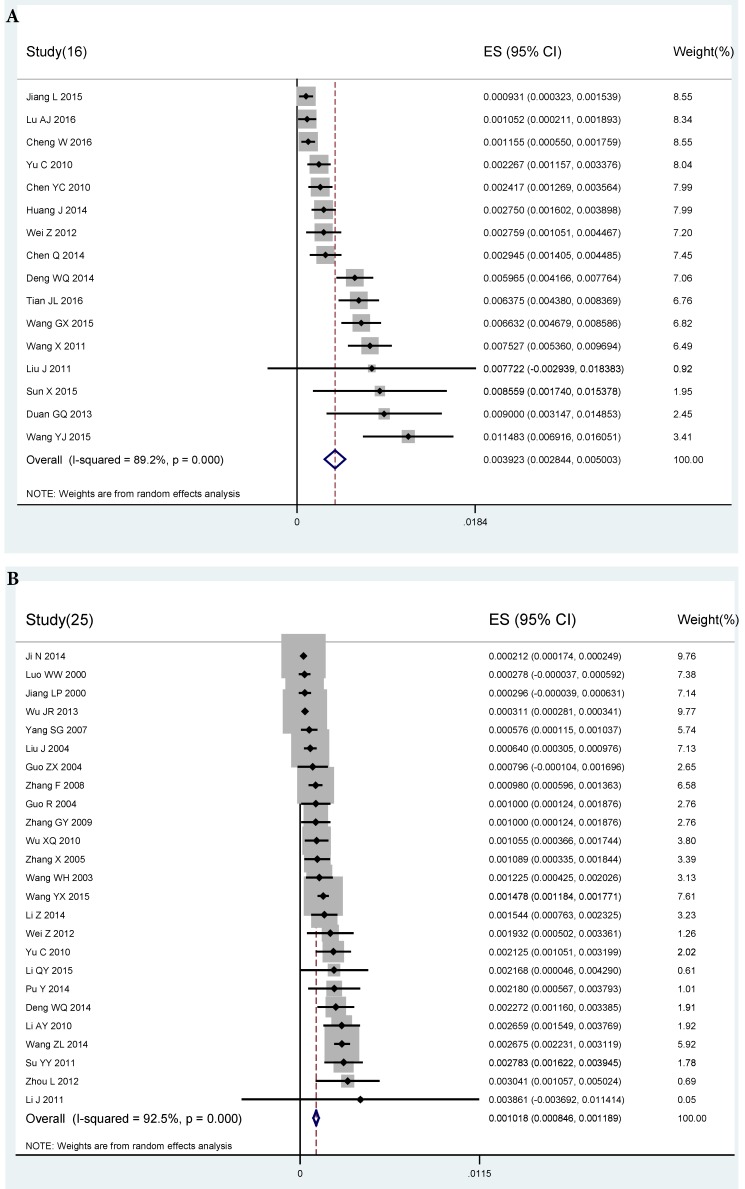
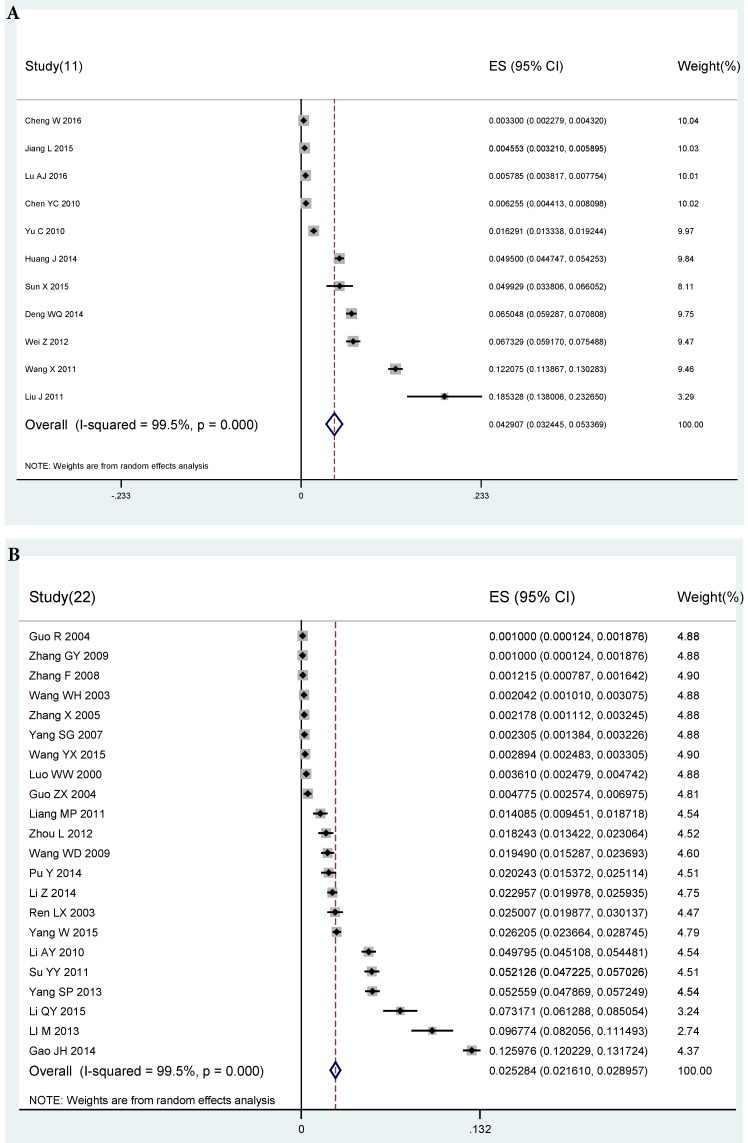
There are conflicting prevalence estimates of autism spectrum disorders (ASDs) in mainland China (China thereafter). This study is a comprehensive meta-analysis of the pooled prevalence of ASDs in the general population in China. Study investigators independently conducted a systematic literature search of the following databases: PubMed, EMBASE, PsycINFO, China National Knowledge Infrastructure, Chinese biomedical literature service system, and Wan Fang. Studies reporting prevalence of ASDs and autism in Chinese population were identified and analysed using the Comprehensive Meta-Analysis program with the random effects model. Forty-four studies were included in the meta-analysis comprising 2,337,321 subjects of whom 46.66 % were females. The mean age of subjects ranged from 1.6 to 8 years. Based on diagnostic criteria the pooled prevalence of ASDs was 39.23 per 10,000 (95% CI: 28.44-50.03 per 10,000, I2=89.2%); specifically, the prevalence of autism was 10.18 per 10,000 (95% CI: 8.46-11.89 per 10,000, I2=92.5%). Subgroup analyses revealed significant difference in the prevalence of ASDs between genders (72.77 per 10,000 in males vs. 16.45 per 10,000 in females). In conclusion, the prevalence of ASDs and autism in China was found generally lower than those reported in other countries. Further studies are needed to clarify the variation in prevalence.
Keywords: Autism spectrum disorder; China; meta-analysis; prevalence.
Conflict of interest statement
Competing Interests: The authors have declared that no competing interest exists.
Figures
References
-
- Howlin P, Goode S, Hutton J, Rutter M. Adult outcome for children with autism. J Child Psychol Psychiatry. 2004;45:212–29. - PubMed
-
- Lord C, Risi S, Lambrecht L, Cook EH Jr, Leventhal BL, DiLavore PC. et al. The autism diagnostic observation schedule-generic: a standard measure of social and communication deficits associated with the spectrum of autism. J Autism Dev Disord. 2000;30:205–23. - PubMed
-
- Rapin I, Dunn M. Update on the language disorders of individuals on the autistic spectrum. Brain Dev. 2003;25:166–72. - PubMed
-
- Wingate M, Mulvihill B, Kirby RS, Pettygrove S, Cunniff C, Meaney F. et al. Prevalence of autism spectrum disorders-Autism and Developmental Disabilities Monitoring Network, 14 sites, United States, 2008. MMWR Surveill Summ. 2012;61:1–19. - PubMed
-
- Fombonne E. Epidemiological surveys of autism and other pervasive developmental disorders: an update. J Autism Dev Disord. 2003;33:365–82. - PubMed
Publication types
MeSH terms
LinkOut - more resources
Full Text Sources
Other Literature Sources
Medical