


Emergence of dengue in Nepal
- PMID: 29911144
- PMCID: PMC6003061
- DOI: 10.1007/s13337-018-0439-3
Emergence of dengue in Nepal
Abstract
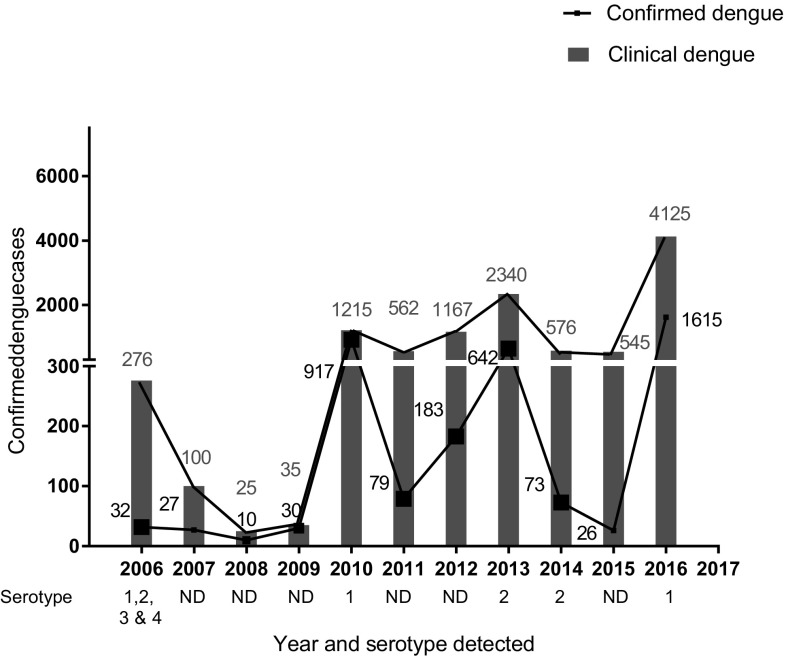
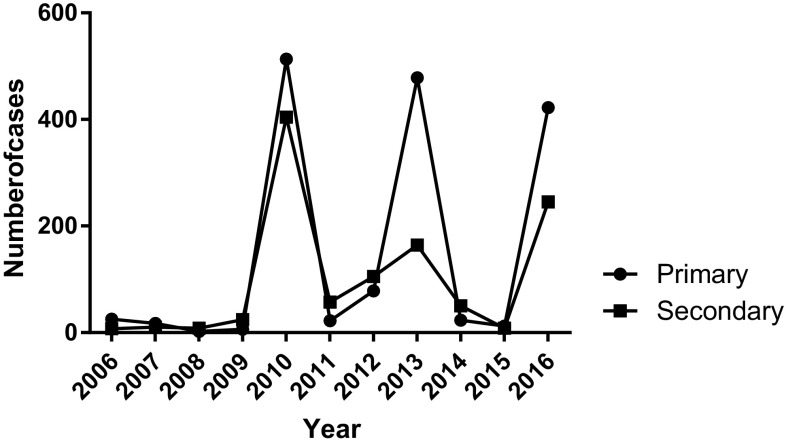
Dengue virus is a major health problem in Nepal. The endogenous dengue appeared in 2006 in the country with reported outbreaks in 2010, 2013 and 2016. Eleven years vertical data show there were sporadic cases in all the years and mostly adults between 25 and 40 years of age were infected with dengue virus. Compared with primary infections, secondary infections were observed in relatively larger numbers during the period of 2008-2016. Most of the cases had symptoms of dengue fever; while 7 and 19 cases demonstrated dengue hemorrhagic fever/dengue shock syndrome in 2010 and 2013 respectively. The proportion of dengue hemorrhagic fever amongst all cases of dengue fever was 2.5:4.7% in 2010 and 2013. We found there is shift of serotype from dengue virus serotype-1 (DENV-1) in 2010, DENV-2 in 2013 and DENV-1 in 2016. We feel there is urgent need for better community, hospital and laboratory based surveillance system capable of monitoring the circulating dengue virus (DENV) serotypes in different districts of Nepal. With improvement in surveillance system and efficient management of cases, the case fatality rate due to severe dengue can be reduced.
Keywords: Altitude; Climate change; Dengue; Monsoon; Seroepidemiology.
Figures
References
-
- Adesina OA, Adeniji JA. Incidence of dengue virus infections in febrile episodes in Ile-Ife, Nigeria. Afr J Infect Dis. 2016;10(1):21–24.
Publication types
LinkOut - more resources
Full Text Sources
Other Literature Sources
