


Efficacy of low-protein diet for diabetic nephropathy: a systematic review of randomized controlled trials
- PMID: 29914534
- PMCID: PMC6006775
- DOI: 10.1186/s12944-018-0791-8
Efficacy of low-protein diet for diabetic nephropathy: a systematic review of randomized controlled trials
Abstract
Background: A low-protein diet (LPD) is believed to be beneficial in slowing the progression of kidney disease. It is reported that low protein diet can improve protein, sugar and lipid metabolism, and reduce the symptoms and complications of renal insufficiency. However, there has been controversial regarding the effects of protein restriction on diabetic nephropathy (DN).
Objective: To investigate the efficacy of LPD on renal function in patients with type 1 or 2 DN by meta-analysis of randomized controlled trials (RCTs).
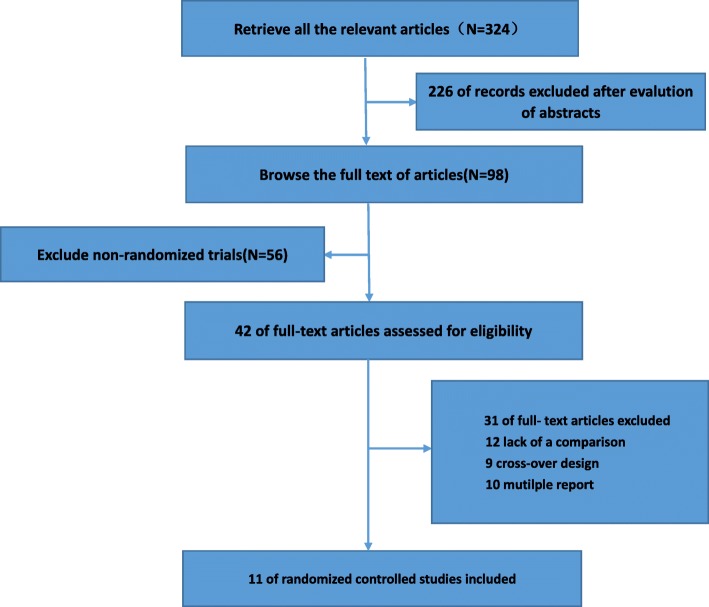
Design: PubMed, MEDLINE, EMBASE and China National Knowledge Infrastructure databases were searched. Eleven randomized controlled trials met the inclusion criteria, of which 10 were English and 1 was Chinese. The primary outcome was a change in glomerular filtration rate (GFR). The secondary outcome was a change in proteinuria. Random-effects models were used to calculate the standardized mean difference (SMD) and the corresponding 95% confidence intervals (CI). Subgroup analyses were also performed.
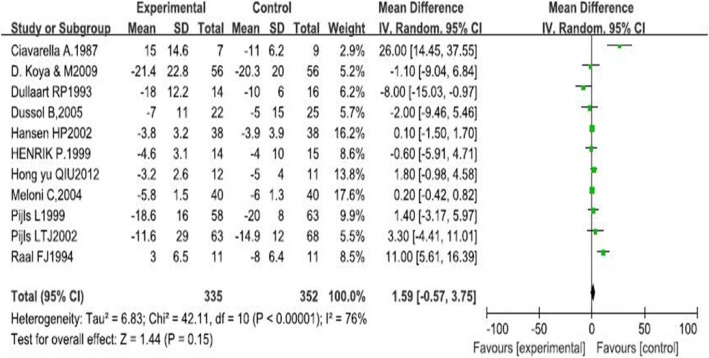
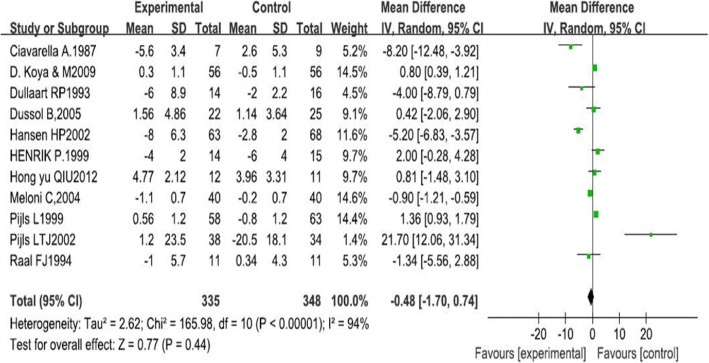
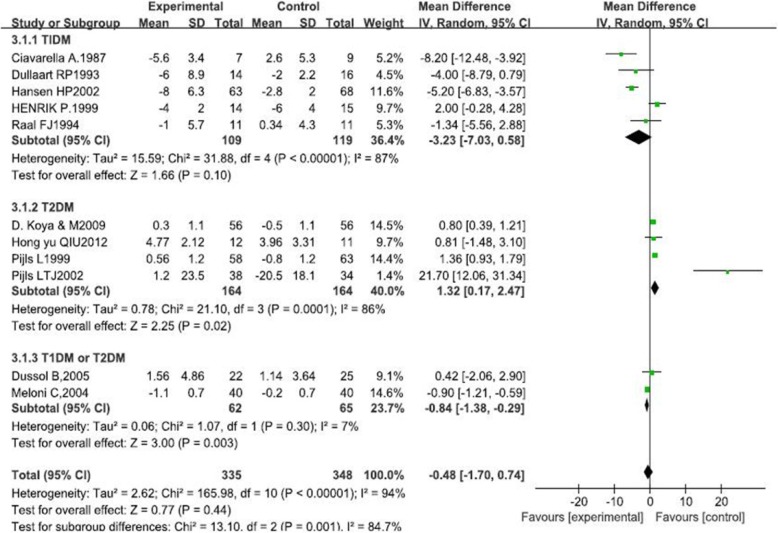
Results: Our research indicated that LPD was not associated with a significant improvement in GFR (1.59 ml · min-1 · 1.73 m-2, 95% CI -0.57, 3.75, I2 = 76%; p = 0.15). This effect was consistent across the subgroups regardless of type of diabetes, course of diabetes and intervention period. Our results also showed that there was no significant difference on improvement of proteinuria in patients of LPD and those in normal-protein diet groups (- 0.48, 95%CI-1.70, 0.74, I2 = 94%, p = 0.44). Subgroup analysis revealed that LPD resulted in increased excretion of proteinuria in patients with type 2 diabetes (1.32, 95% CI 0.17, 2.47, I2 = 86%, p = 0.02).
Conclusion: The present research showed that LPD was not significantly associated with improvement of renal function in patients with either type 1 or 2 diabetic nephropathy. Although these results do not completely eliminate the possibility that LPD is beneficial for patients with diabetic nephropathy, it does not seem to be significant benefit to renal function.
Keywords: Diabetic nephropathy; Low-protein diet; Protein restriction.
Conflict of interest statement
Ethics approval and consent to participate
Not applicable.
Competing interests
The authors declare that they have no competing interests.
Publisher’s Note
Springer Nature remains neutral with regard to jurisdictional claims in published maps and institutional affiliations.
Figures
References
-
- Packham DK, Alves TP, Dwyer JP, et al. Relative incidence of ESRD versus cardiovascular mortality in proteinuric type 2 diabetes and nephropathy: results from the DIAMETRIC (Diabetes Mellitus Treatment for Renal Insufficiency Consortium) database. Am J Kidney Dis. 2012;59:75–83. doi: 10.1053/j.ajkd.2011.09.017. - DOI - PubMed
-
- Molitch ME, DeFronzo RA, Franz MJ, et al. Diabetic nephropathy. Diabetes Care. 2003;26(Suppl 1):S94–S98. - PubMed
Publication types
MeSH terms
Grants and funding
LinkOut - more resources
Full Text Sources
Other Literature Sources
Medical
Miscellaneous
