


Ageing with Chagas disease: an overview of an urban Brazilian cohort in Rio de Janeiro
- PMID: 29914550
- PMCID: PMC6006711
- DOI: 10.1186/s13071-018-2929-y
Ageing with Chagas disease: an overview of an urban Brazilian cohort in Rio de Janeiro
Abstract
Background: Chagas disease control programmes have decreased the prevalence of Chagas disease in Latin America. Together with migration to urban areas and increase in life expectancy, a new scenario for Chagas disease has emerged in Brazil with most patients currently elderly individuals living in urban areas. However, acute Chagas disease cases still occur due to vector transmission by sylvatic vectors and oral transmission by contaminated food. Therefore, we characterized the clinical and epidemiological profile of the patients followed at Evandro Chagas National Institute of Infectious Diseases in Rio de Janeiro, Brazil. We aimed to identify the clinical forms, associated co-morbidities, and geographical areas where younger patients originate from. This will aid in the identification of potential challenges to be currently faced.
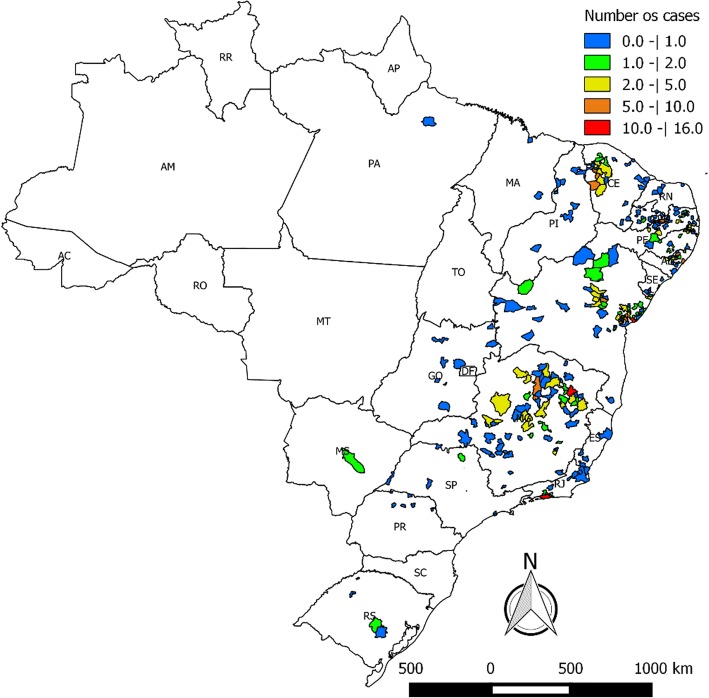
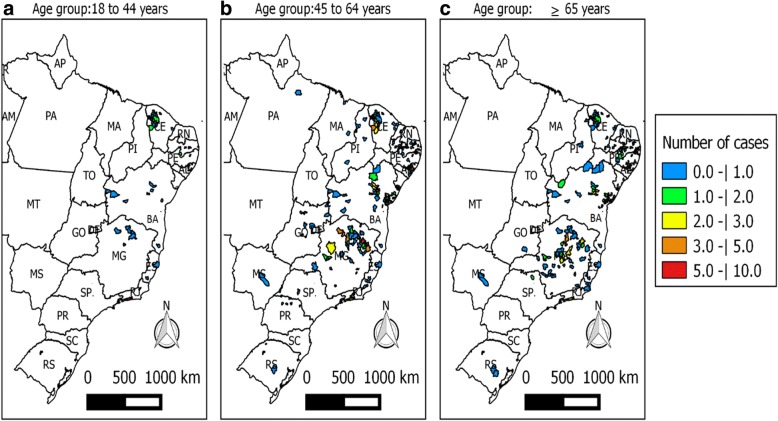
Results: This is a cross-sectional study. Adult patients with chronic Chagas disease were recruited between March 2013 and April 2016. Clinical and epidemiological data were obtained from electronic medical records and interviews. The clinical form of the Chagas disease presented by the patients was determined following the Brazilian Consensus on Chagas disease. Six hundred and nineteen patients (mean age 60 ± 12 years; 56.9% women) were included in this study. Patients' clinical forms were classified as follows: indeterminate 29.1%; cardiac 55.4%; digestive 5.5%; and mixed 10.0%. Patients aged over 65 years comprised 38% of the population. Hypertension was present in 347 (56%) patients, dyslipidemia in 261 patients (42%) and diabetes mellitus in 185 patients (30%). There were no differences regarding gender, race, comorbidities frequency or place of origin across Chagas disease clinical forms. Most of the elderly population originated from Bahia, Minas Gerais and Pernambuco states, while most of the younger patients were born in Ceará, Paraíba and Rio de Janeiro states.
Conclusions: We described a great proportion of elderly patients in the composition of an urban Brazilian Chagas disease patient cohort with a high prevalence of comorbidities. We also identified a change in the pattern of the place of origin among younger patients.
Keywords: Chagas disease; Elderly patients; Geoprocessing; Neglected tropical disease; Trypanosoma cruzi.
Conflict of interest statement
Ethics approval and consent to participate
This study was approved by the Research Ethics Committee of the INI under number 2303713.9.0000.5262. All procedures followed regulatory guidelines and standards for research involving human beings as stated in Brazilian National Health Council Resolution 466/2012 and were conducted according to the principles expressed in the
Competing interests
The authors declare that they have no competing interests.
Publisher’s Note
Springer Nature remains neutral with regard to jurisdictional claims in published maps and institutional affiliations.
Figures
References
-
- WHO Chagas disease in Latin America: an epidemiological update based on 2010 estimates. Wkly Epidemiol Rec. 2015;90:33–44. - PubMed
-
- World Health Organization . Working to overcome the global impact of neglected tropical diseases: first WHO report on neglected tropical diseases. Geneva: Department of Reproductive health and Research, World Health Organization; 2010.
-
- Martins-Melo FR, Ramos AN Jr, Alencar CH, Heukelbach J. Prevalence of Chagas disease in Brazil: a systematic review and meta-analysis. Acta Trop. 2014;130:167–74. - PubMed
MeSH terms
LinkOut - more resources
Full Text Sources
Other Literature Sources
Medical
Miscellaneous
