


Higher dietary inflammation is associated with increased odds of depression independent of Framingham Risk Score in the National Health and Nutrition Examination Survey
- PMID: 29914664
- PMCID: PMC6011232
- DOI: 10.1016/j.nutres.2018.03.004
Higher dietary inflammation is associated with increased odds of depression independent of Framingham Risk Score in the National Health and Nutrition Examination Survey
Abstract
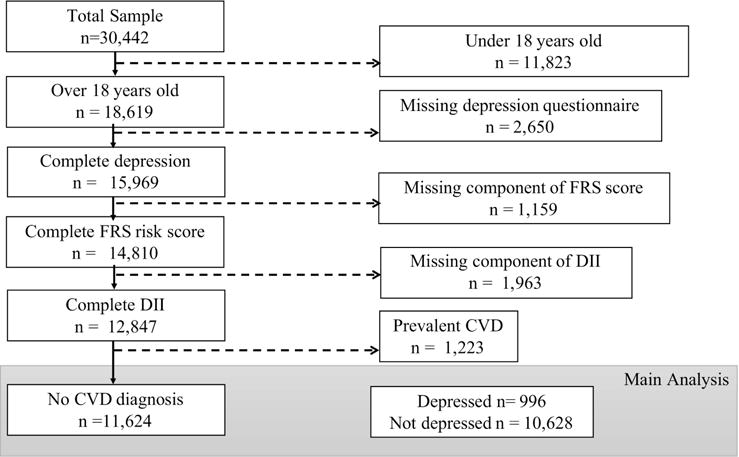
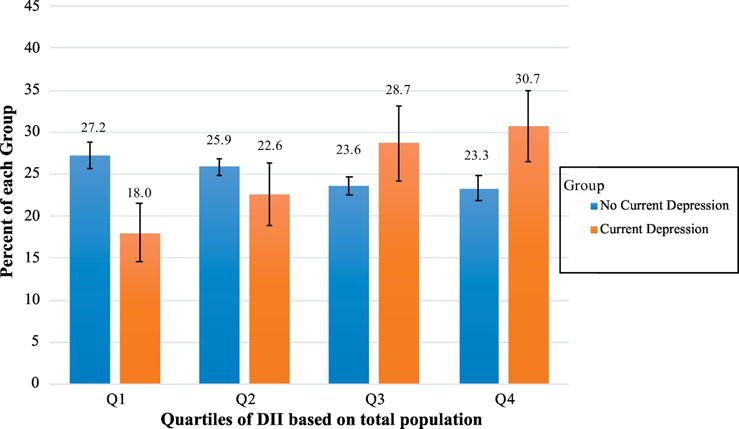
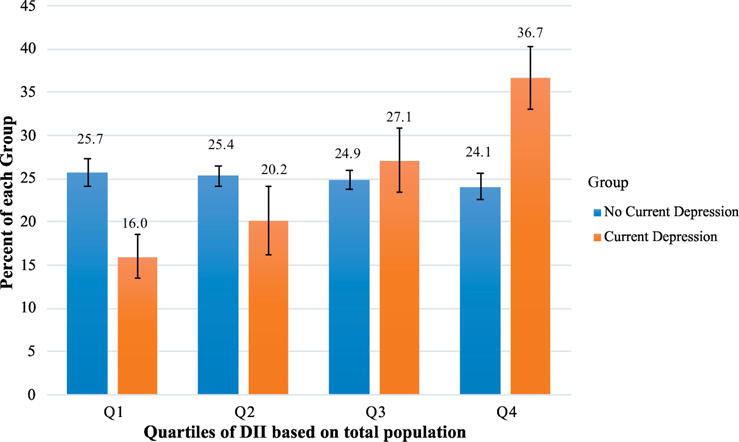
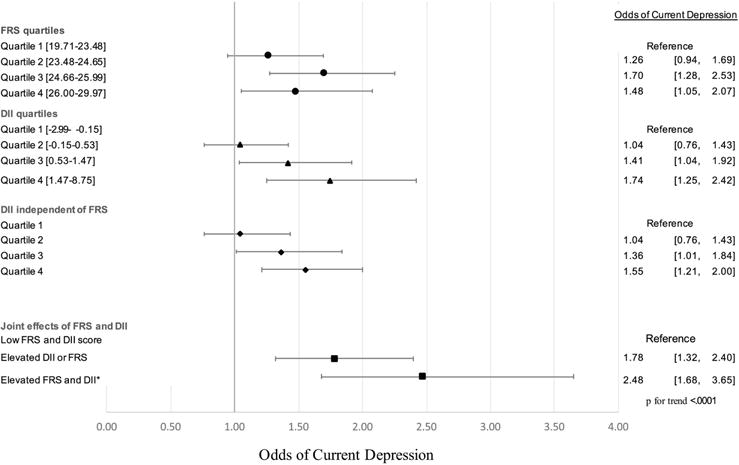
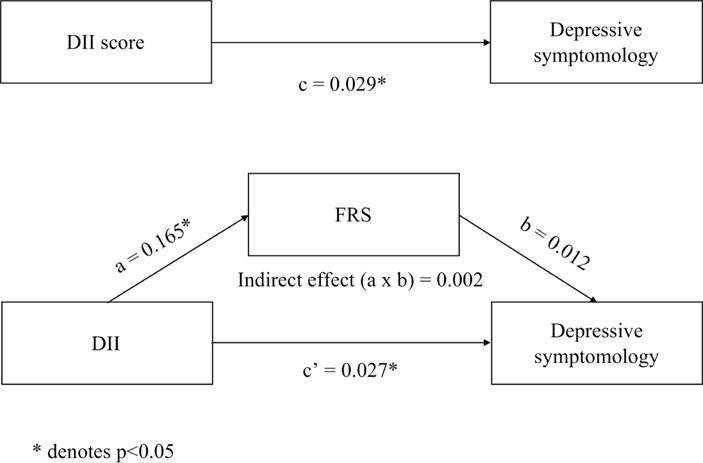
Cardiovascular disease (CVD) may increase depression risk. Risk for future CVD, which can be estimated by the Framingham Risk Score (FRS), and depression risk are both linked to systemic inflammation. Dietary consumption of proinflammatory food can be measured using the Dietary Inflammatory Index (DII) score. We examined the potential impact of DII on depression and whether this effect is independent of FRS. We hypothesized that (1) both FRS and DII would be associated with depression (Patient Health Questionnaire-9 ≥ 10) and (2) associations between DII and depressive symptoms (continuous) would be mediated by FRS. Data were included from adults without CVD who were participants of the 2007-2012 National Health and Nutrition Examination Survey (n = 11 624). Using logistic regression, we tested cross-sectional associations of FRS, DII (adjusting for FRS), and joint effects of FRS and DII with depression. Finally, using the Sobel method, we tested whether FRS mediates the relationship between DII and depressive symptoms. Individuals with FRS or DII scores in the top 2 quartiles had higher odds of depressive symptoms than those in the bottom quartile. The association of DII with depressive symptoms remained after FRS adjustment. The joint effects of elevated DII and FRS were additive. There was no evidence for mediation by FRS between DII and depressive symptoms. Thus, higher DII remained associated with increased odds of depressive symptoms net CVD risk. Collectively, the joint effects of CVD risk and DII indicate that a proinflammatory diet could add to risk for depressive symptoms even in those with a high FRS.
Keywords: Cardiovascular disease risk; Depression; Dietary inflammation; Systemic inflammation.
Copyright © 2018 Elsevier Inc. All rights reserved.
Conflict of interest statement
The authors have no conflicts of interest to disclose.
Figures
References
-
- Major Depression Among Adults. National Institute of Mental Health; 2015. Web.
-
- World Health Organization (WHO) Cardiovascular disease. WHO; 2012. Global Burden of CVD. online.
-
- Statistics NCfH. Health, United States, 2016: With Chartbook on Long-term Trends in Health. Hyattsville, Maryland: 2017. - PubMed
-
- World Health Organization. Depression. Fact Sheet. 2017 Online.
Publication types
MeSH terms
Grants and funding
LinkOut - more resources
Full Text Sources
Other Literature Sources
Medical
