


Long-term Outcomes of Lifestyle Intervention to Prevent Diabetes in American Indian and Alaska Native Communities: The Special Diabetes Program for Indians Diabetes Prevention Program
- PMID: 29915128
- PMCID: PMC6014547
- DOI: 10.2337/dc17-2685
Long-term Outcomes of Lifestyle Intervention to Prevent Diabetes in American Indian and Alaska Native Communities: The Special Diabetes Program for Indians Diabetes Prevention Program
Abstract
Objective: Evidence for long-term translational effectiveness of lifestyle interventions in minority populations is scarce. This article reports long-term outcomes, for up to 10 years, of such an intervention to prevent diabetes in American Indian and Alaska Native (AI/AN) communities.
Research design and methods: From January 2006 to July 2016, the Special Diabetes Program for Indians Diabetes Prevention Program implemented the Diabetes Prevention Program lifestyle intervention among 46 AI/AN health care programs. Enrolled participants underwent a thorough clinical assessment at baseline, after completing the Lifestyle Balance Curriculum (postcurriculum assessment), and annually thereafter. Proportional hazards regression was used to estimate the association between diabetes incidence and postcurriculum weight loss status.
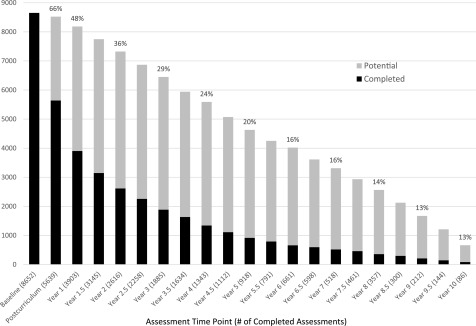
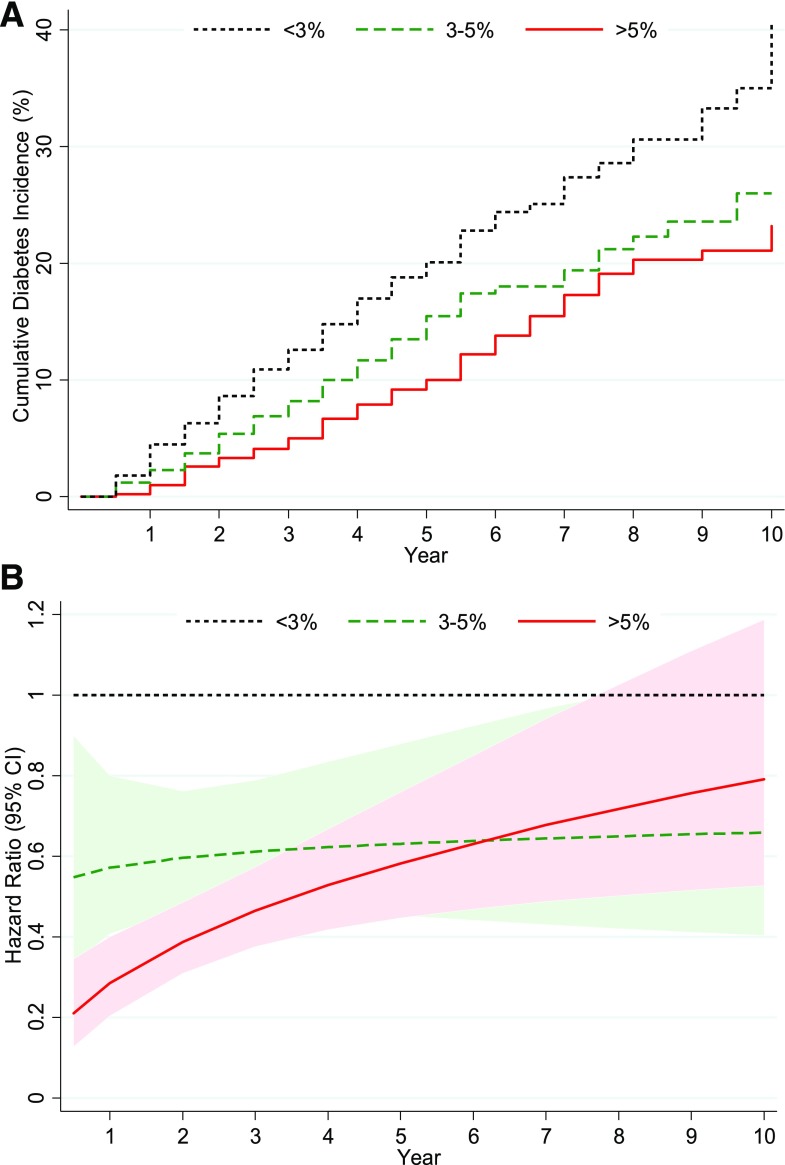
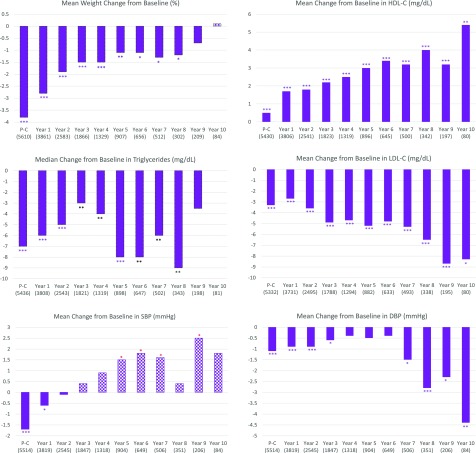
Results: Of 8,652 enrolled participants, 65% finished the postcurriculum assessment. The assessment completion rate diminished over time to 13% in year 10. Among those with postcurriculum weight measurements, 2,028 (36%) lost >5% of their initial weight, 978 (17%) lost 3-5%, whereas 2,604 (47%) had <3% weight loss (average weight loss 3.8%). Compared with those with <3% weight loss, participants with >5% weight loss had a 64% (95% CI 54-72) lower risk of developing diabetes during the first 6 years of follow-up, whereas those with 3-5% weight loss had 40% (95% CI 24-53) lower risk.
Conclusions: Moderate to small weight loss was associated with substantially reduced long-term risk of diabetes in diverse AI/AN communities. High participant attrition rates and nonoptimal postcurriculum weight loss are important challenges found in this translational effort implemented in an underserved population.
© 2018 by the American Diabetes Association.
Figures
References
-
- U.S. Department of Health and Human Services Healthy People 2020: Improving the Health of Americans. Washington, DC, U.S. Government Printing Office, 2010
-
- U.S. Department of Health and Human Services, Centers for Disease Control and Prevention National Diabetes Statistics Report, 2017. Atlanta, GA, Centers for Disease Control and Prevention, 2017
-
- Pan XR, Li GW, Hu YH, et al. . Effects of diet and exercise in preventing NIDDM in people with impaired glucose tolerance. The Da Qing IGT and Diabetes Study. Diabetes Care 1997;20:537–544 - PubMed
-
- Tuomilehto J, Lindström J, Eriksson JG, et al. .; Finnish Diabetes Prevention Study Group . Prevention of type 2 diabetes mellitus by changes in lifestyle among subjects with impaired glucose tolerance. N Engl J Med 2001;344:1343–1350 - PubMed
