


Treatment of exercise pulmonary hypertension improves pulmonary vascular distensibility
- PMID: 29916285
- PMCID: PMC6047253
- DOI: 10.1177/2045894018787381
Treatment of exercise pulmonary hypertension improves pulmonary vascular distensibility
Abstract
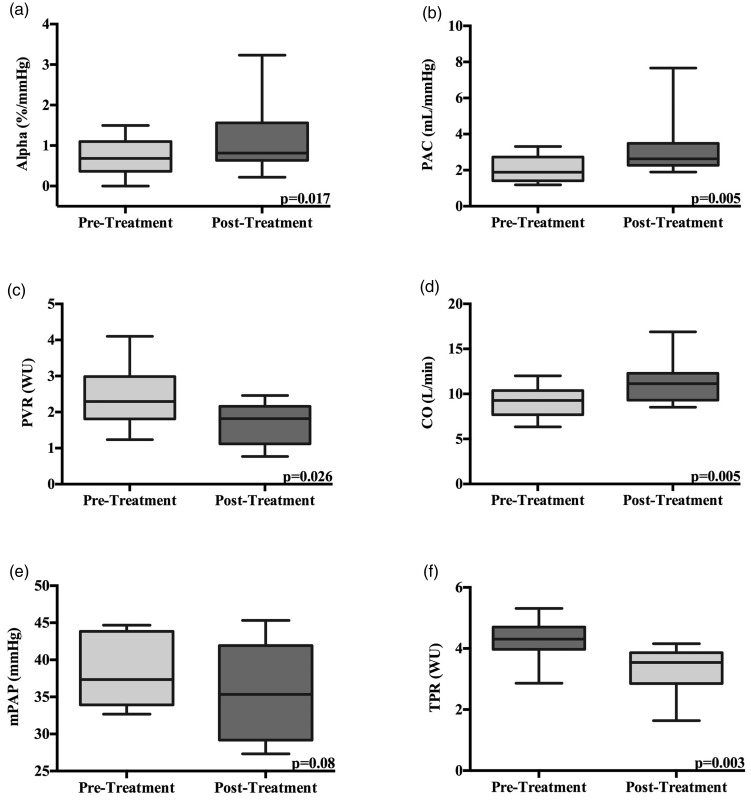
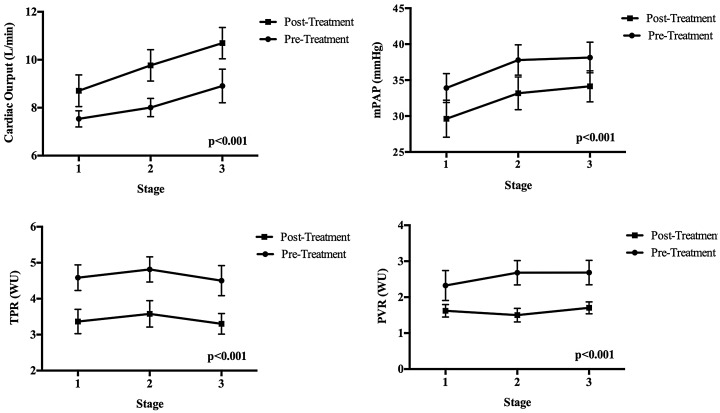
Exercise pulmonary hypertension (ePH) is an underappreciated form of exertional limitation. Despite normal resting pulmonary artery pressures, patients with ePH demonstrate early pulmonary vascular changes with reduced pulmonary arterial compliance (PAC) and vascular distensibility (α). Recent data suggest that targeted vasodilator therapy may improve hemodynamics in ePH, but it is not well-known whether such medications alter pulmonary vascular distensibility. Thus, we sought to evaluate if vasodilator therapy improved α a marker of early pulmonary vascular disease in ePH. Ten patients performed supine exercise right heart catheterization (exRHC) with bicycle ergometer to peak exercise. Patients diagnosed with ePH were treated with pulmonary vasodilators. A repeat symptom-limited exercise RHC was performed at least six months after therapy. Patients with ePH had evidence of early pulmonary vascular disease, as baseline PAC and α were reduced. After pulmonary vasodilator therapy, a number of peak exercise hemodynamics statistically improved, including a decrease of total pulmonary resistance and pulmonary vascular resistance, while cardiac output increased. Importantly, vasodilator therapy partially reversed the pathogenic decreases of α at the time of repeat exRHC. Pulmonary vascular distensibility, α, a marker of early pulmonary vascular disease, improves in ePH after therapy with pulmonary vasodilators.
Keywords: early pulmonary vascular disease; exercise hemodynamics; exercise pulmonary hypertension; pulmonary hypertension; vascular distensibility.
Figures
References
-
- Lewis GD, Bossone E, Naeije R, et al. Pulmonary vascular hemodynamic response to exercise in cardiopulmonary diseases. Circulation 2013; 128: 1470–1479. - PubMed
-
- Godinas L, Lau EM, Chemla D, et al. Diagnostic concordance of different criteria for exercise pulmonary hypertension in subjects with normal resting pulmonary artery pressure. Eur Respir J 2016; 48: 254–257. - PubMed
-
- Herve P, Lau EM, Sitbon O, et al. Criteria for diagnosis of exercise pulmonary hypertension. Eur Respir J 2015; 46: 728–737. - PubMed
-
- Kovacs G, Herve P, Barbera JA, et al. An official European Respiratory Society statement: pulmonary haemodynamics during exercise. Eur Respir J 2017; 50: 1700578. - PubMed
Grants and funding
LinkOut - more resources
Full Text Sources
Other Literature Sources
Miscellaneous
