A Randomized Controlled Trial of Parent-Child Psychotherapy Targeting Emotion Development for Early Childhood Depression
- PMID: 29921144
- PMCID: PMC6309340
- DOI: 10.1176/appi.ajp.2018.18030321
A Randomized Controlled Trial of Parent-Child Psychotherapy Targeting Emotion Development for Early Childhood Depression
Abstract
Objective: Clinical depression in children as young as age 3 has been validated, and prevalence rates are similar to the school-age disorder. Homotypic continuity between early and later childhood depression has been observed, with alterations in brain function and structure similar to those reported in depressed adults. These findings highlight the importance of identifying and treating depression as early as developmentally possible, given the relative treatment resistance and small effect sizes for treatments later in life. The authors conducted a randomized controlled trial of a dyadic parent-child psycho-therapy for early childhood depression that focuses on enhancing the child's emotional competence and emotion regulation.
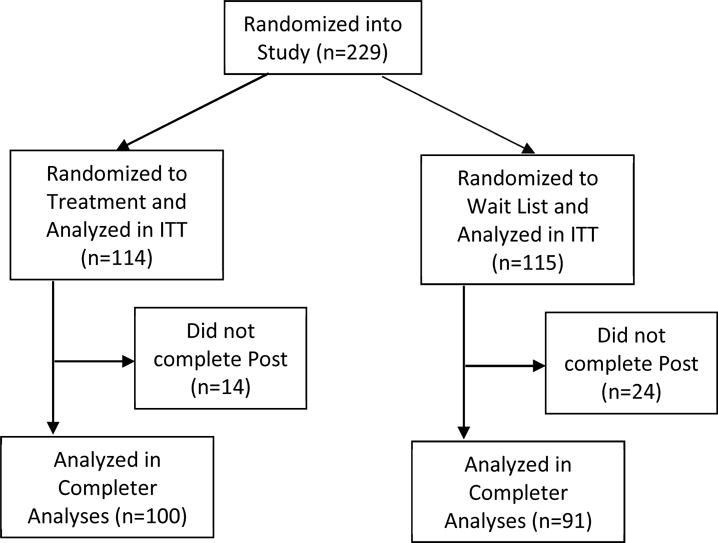
Method: A modified version of the empirically tested parent-child interaction therapy with a novel "emotion development" module (PCIT-ED) was compared with a waiting list condition in a randomized controlled trial in 229 parent-child dyads with children 3-6.11 years of age. Both study arms lasted 18 weeks.
Results: Children in the PCIT-ED group had lower rates of depression (primary outcome), lower depression severity, and lower impairment compared with those in the waiting list condition (Cohen's d values, >1.0). Measures of child emotional functioning and parenting stress and depression were significantly improved in the PCIT-ED group.
Conclusions: The findings from this randomized controlled trial of a parent-child psychotherapy for early childhood depression suggest that earlier identification and intervention in this chronic and relapsing disorder represents a key new pathway for more effective treatment. Manualized PCIT-ED, administered by master's-level clinicians, is feasible for delivery in community health settings.
Trial registration: ClinicalTrials.gov NCT02076425.
Keywords: Depression Treatment; Early Childhood; Psychotherapy.
Figures
Comment in
-
Developmental Window of Opportunity: Implications of Parent-Child Psychotherapy for Early Childhood Depression Treatment.Am J Psychiatry. 2018 Nov 1;175(11):1051-1053. doi: 10.1176/appi.ajp.2018.18060733. Am J Psychiatry. 2018. PMID: 30380932 No abstract available.
References
-
- Luby JL, Heffelfinger AK, Mrakotsky C, Hessler MJ, Brown KM, Hildebrand T. Preschool major depressive disorder: preliminary validation for developmentally modified DSM-IV criteria. Journal of the American Academy of Child and Adolescent Psychiatry. 2002;41(8):928–37. - PubMed
-
- Luby JL, Heffelfinger AK, Mrakotsky C, Brown KM, Hessler MJ, Wallis JM, et al. The clinical picture of depression in preschool children. Journal of the American Academy of Child and Adolescent Psychiatry. 2003;42(3):340–8. - PubMed
-
- Luby JL, Mrakotsky C, Heffelfinger A, Brown K, Spitznagel E. Characteristics of depressed preschoolers with and without anhedonia: evidence for a melancholic depressive subtype in young children. The American journal of psychiatry. 2004;161(11):1998–2004. - PubMed
-
- Egger HL, Angold A. Common emotional and behavioral disorders in preschool children: presentation, nosology, and epidemiology. Journal of child psychology and psychiatry, and allied disciplines. 2006;47(3–4):313–37. - PubMed
Publication types
MeSH terms
Associated data
Grants and funding
LinkOut - more resources
Full Text Sources
Other Literature Sources
Medical