Implementing Central Composite Design for Developing Transdermal Diacerein-Loaded Niosomes: Ex vivo Permeation and In vivo Deposition
- PMID: 29921206
- PMCID: PMC6340157
- DOI: 10.2174/1567201815666180619105419
Implementing Central Composite Design for Developing Transdermal Diacerein-Loaded Niosomes: Ex vivo Permeation and In vivo Deposition
Abstract
Background: Niosomes are surfactant-based vesicular nanosystems that proved their efficiency in transdermal delivery by overcoming skin inherent anatomic barrier; startum corneum. Central composite design is an efficient tool for developing and optimizing niosomal formulations using fewer experiments.
Objective: The objective of this study was to prepare niosomes as a transdermal delivery system of diacerein using film hydration technique, employing central composite design, for avoiding its oral gastrointestinal problems.
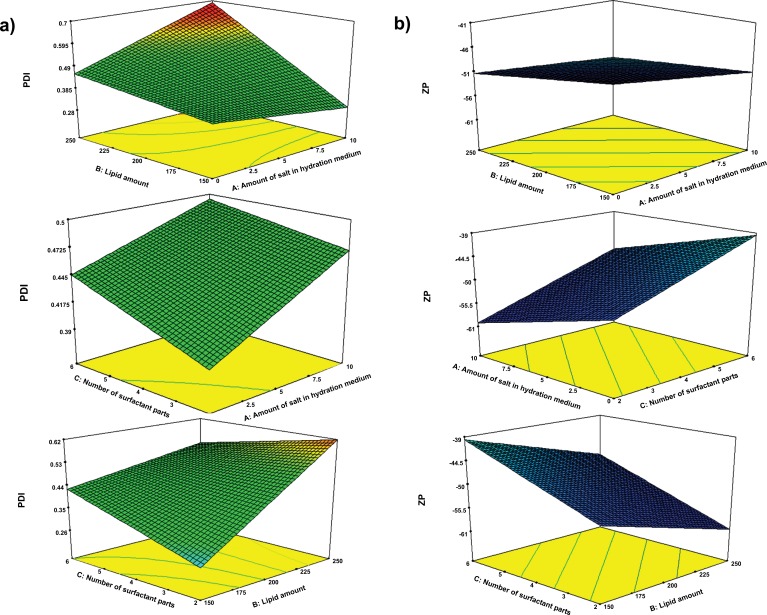
Methods: Three-level three-factor central composite design was employed for attaining optimal niosomes formulation with the desired characteristics. Three formulation variables were assessed: amount of salt in hydration medium (X1), lipid amount (X2) and number of surfactant parts (X3). DCNloaded niosomes were evaluated for entrapment efficiency percent (Y1), particle size (Y2), polydispersity index (Y3) and zeta potential (Y4). The suggested optimal niosomes were subjected to further characterization and utilized as a nucleus for developing elastic vesicles for comparative ex vivo and in vivo studies.
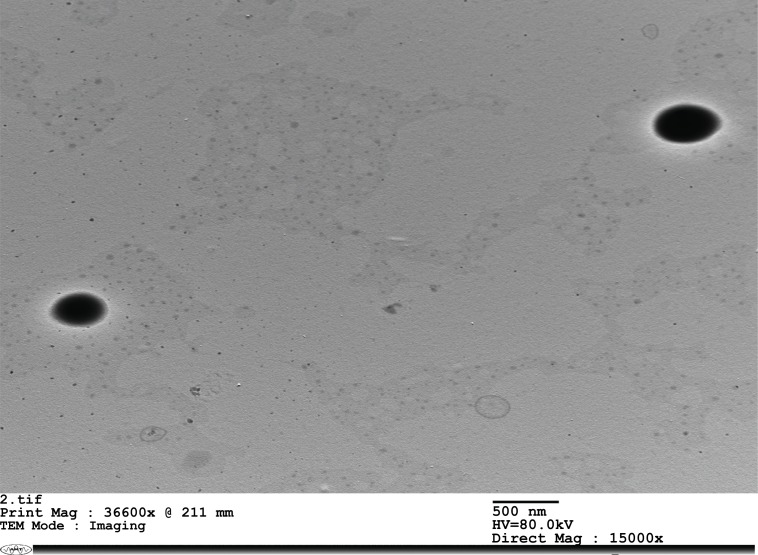
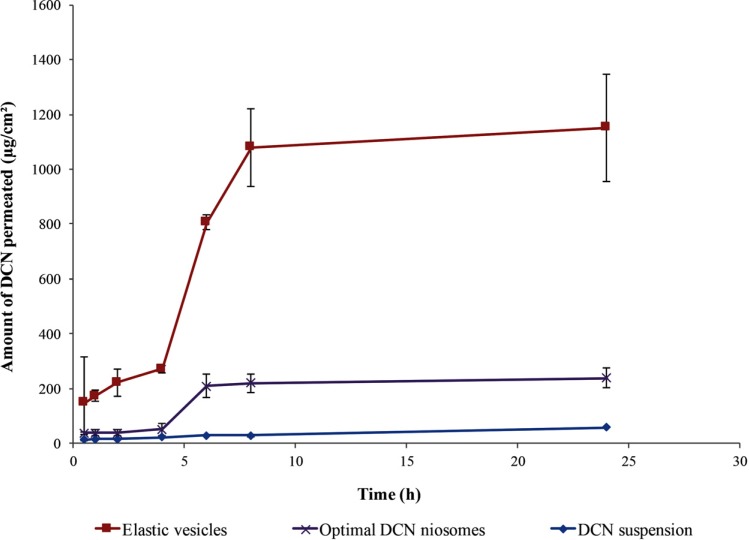
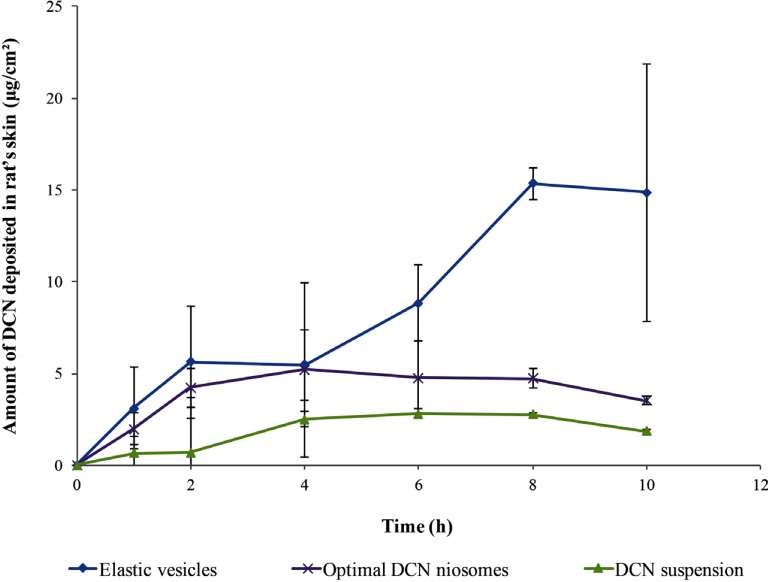
Results: The values of the independent variables (X1, X2 and X3) in the optimal niosomes formulation were 0 g, 150 mg and 5 parts, respectively. It showed entrapment efficiency percentage of 95.63%, particle size of 436.65 nm, polydispersity index of 0.47 and zeta potential of -38.80 mV. Results of ex vivo permeation and skin deposition studies showed enhanced skin permeation and retention capacity of the prepared vesicles than drug suspension.
Conclusion: Results revealed that a transdermal niosomal system was successfully prepared and evaluated using central composite design which will result in delivering diacerein efficiently, avoiding its oral problems.
Keywords: Diacerein; central composite; ex vivo permeation; niosomes; optimization; skin deposition studies..
Copyright© Bentham Science Publishers; For any queries, please email at epub@benthamscience.org.
Figures

References
-
- Komiyama M., Yoshimoto K., Sisido M., Ariga K. Chemistry can make strict and fuzzy controls for bio-systems: DNA nanoarchitectonics and cell-macromolecular nanoarchitectonics. Bull. Chem. Soc. Jpn. 2017;90(9):967–1004.
-
- Kim C.J., Kurauchi S., Uebayashi T., Fujisaki A., Kimura S. Morphology change from nanotube to vesicle and monolayer/bilayer alteration by amphiphilic block polypeptides having aromatic groups at C terminal. Bull. Chem. Soc. Jpn. 2017;90(5):568–573.
-
- NVS, M. Saini, A. Niosomes. A novel drug delivery system. Int. J. Res. Pharm. Chem. 2011;1(3):498–511.
MeSH terms
Substances
LinkOut - more resources
Full Text Sources
Other Literature Sources
Research Materials