


The unique contribution of e-cigarettes for tobacco harm reduction in supporting smoking relapse prevention
- PMID: 29921278
- PMCID: PMC6011187
- DOI: 10.1186/s12954-018-0237-7
The unique contribution of e-cigarettes for tobacco harm reduction in supporting smoking relapse prevention
Abstract
Background: We have little understanding of how vapers use e-cigarettes beyond cessation. E-cigarettes may have a role to play in reducing the health-related harms of tobacco smoking, through not only assisting smoking cessation attempts but also supporting long-term abstinence from smoking. However, there are fears that vaping may lead to the 'renormalisation' of smoking type behaviours. This study aimed to explore patterns of use and reported experiences of vapers quitting smoking using an e-cigarette in relation to long-term smoking status (abstinence or relapse).
Methods: A purposive sample of 40 UK vapers was matched to a sampling frame of demographic characteristics from a representative sample of UK quitters. Following full informed consent, semi-structured qualitative interviews were conducted. Data were thematically analysed by two members of the research team. Final thematic analysis was verified and agreed by consensus.
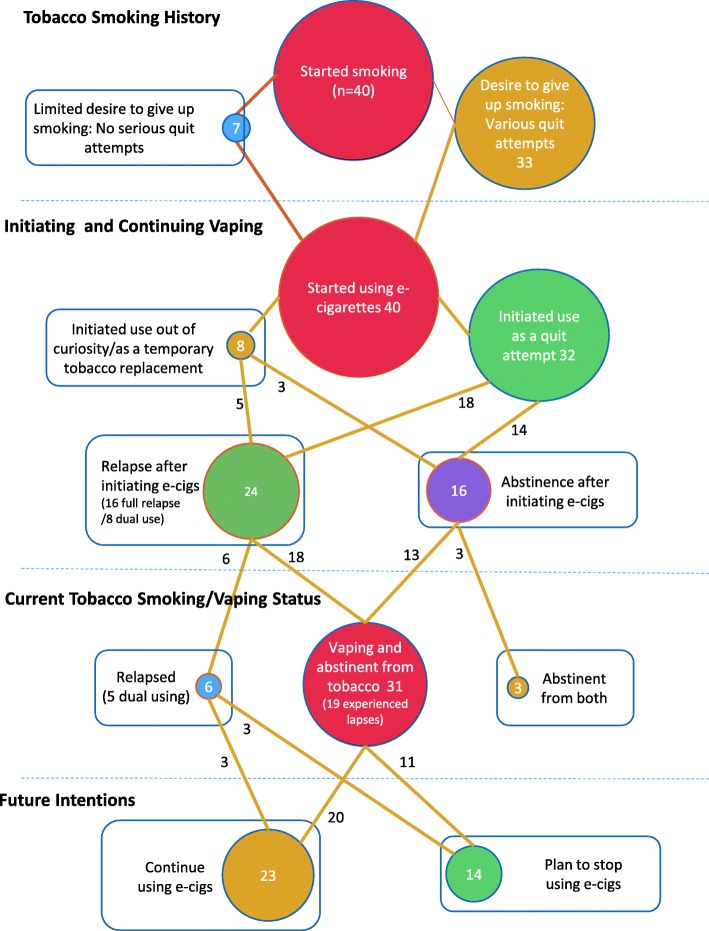
Results: The sample self-reported long histories of tobacco use and multiple previous quit attempts which had eventually resulted in relapse back to smoking, although a small but important group had never before attempted to quit. Initiating e-cigarette use was experienced as a revelation for some, who were quickly able to fully switch to using e-cigarettes as an alternative to tobacco smoking. For others, periods of dual use or smoking relapse combined with attempts at vaping that were not initially satisfactory. Many of these chose a cheaper 'cig-a-like' device which they found to be inadequate. Experimentation with different devices and different setups, over time, resulted in some 'sliding' rather than switching to vaping. This involved periods of 'dual use'. Some settled on patterns of vaping as a direct substitute of previous tobacco smoking, whereas others reported 'grazing' patterns of vaping throughout the day that were perceived to support tobacco smoking abstinence.
Conclusions: Our data demonstrates that e-cigarettes may be a unique harm reduction innovation for smoking relapse prevention. E-cigarettes meet the needs of some ex-smokers by substituting physical, psychological, social, cultural and identity-related aspects of tobacco addiction. Some vapers reported that they found vaping pleasurable and enjoyable-being more than a substitute but actually preferred, over time, to tobacco smoking. This clearly suggests that vaping is a viable long-term substitute for smoking, with substantial implications for tobacco harm reduction.
Keywords: Electronic cigarette; Qualitative; Smoking relapse prevention; Vaping.
Conflict of interest statement
Ethics approval and consent to participate
Ethical approval for the study was granted from UEA’s Faculty of Medicine and Health Sciences Research Ethics Committee, September 2016 (Ref 114). All participants gave written informed consent to be interviewed.
Consent for publication
Consent to publish anonymised quotations in reporting for publication was given by all research participants.
Competing interests
The authors declare that they have no competing interests.
Publisher’s Note
Springer Nature remains neutral with regard to jurisdictional claims in published maps and institutional affiliations.
Figures
References
-
- McNeill A, Brose LS, Calder R, Bauld L, Robson D. Evidence review of e-cigarettes and heated tobacco products 2018: a report commissioned by Public Health England. 2018.
-
- British Medical Association. E-cigarettes: balancing risks and opportunities [Internet]. 2017. Available from: https://www.bma.org.uk/collective-voice/policy-and-research/public-and-p.... Accessed 31 May 2018.
-
- Britton J & B. Electronic cigarettes: a report commissioned by Public Health England. UK Centre for Tobacco and Alcohol Studies—division of epidemiology and public health. Nottingham: University of Nottingham; 2014.
-
- Remeikis A. E-cigarettes still banned in Australia despite support from some MPs [Internet]. The Guardian. 2018 [cited 2018 May 4]. Available from: http://www.theguardian.com/society/2018/mar/29/e-cigarettes-still-banned....
Publication types
MeSH terms
Grants and funding
LinkOut - more resources
Full Text Sources
Other Literature Sources
Medical
