


Effects of a Finger Tapping Fatiguing Task on M1-Intracortical Inhibition and Central Drive to the Muscle
- PMID: 29921946
- PMCID: PMC6008331
- DOI: 10.1038/s41598-018-27691-9
Effects of a Finger Tapping Fatiguing Task on M1-Intracortical Inhibition and Central Drive to the Muscle
Erratum in
-
Publisher Correction: Effects of a Finger Tapping Fatiguing Task on M1-Intracortical Inhibition and Central Drive to the Muscle.Sci Rep. 2018 Aug 29;8(1):13116. doi: 10.1038/s41598-018-31223-w. Sci Rep. 2018. PMID: 30158638 Free PMC article.
Abstract
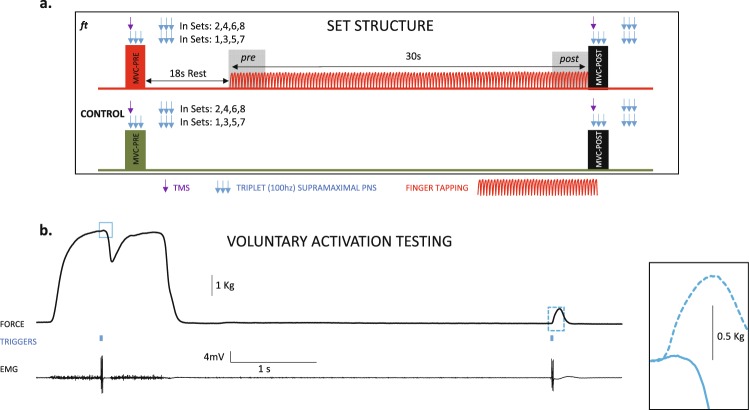
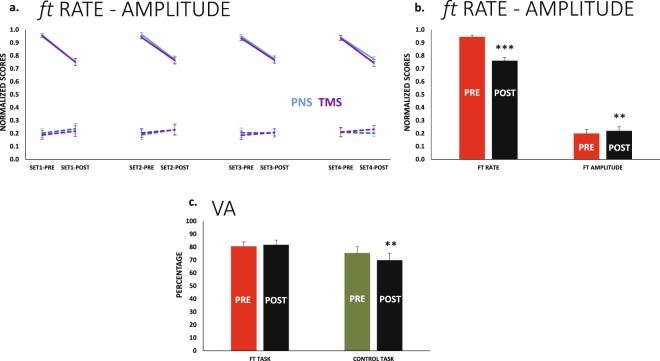
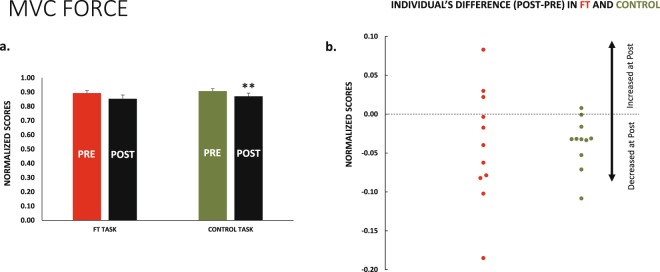
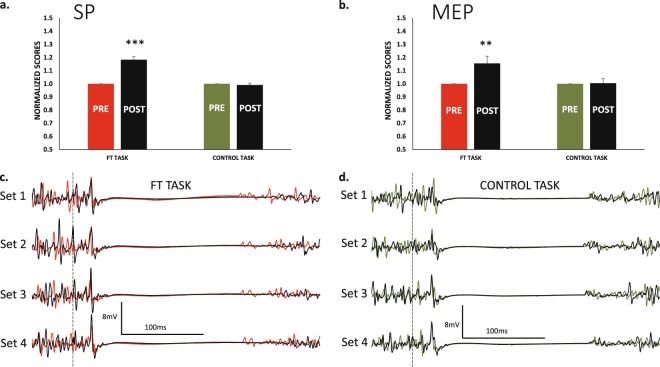
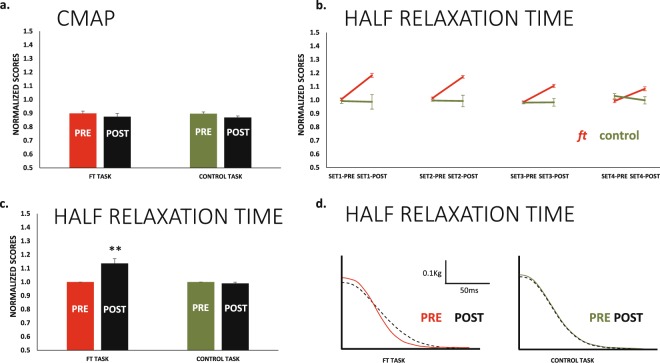
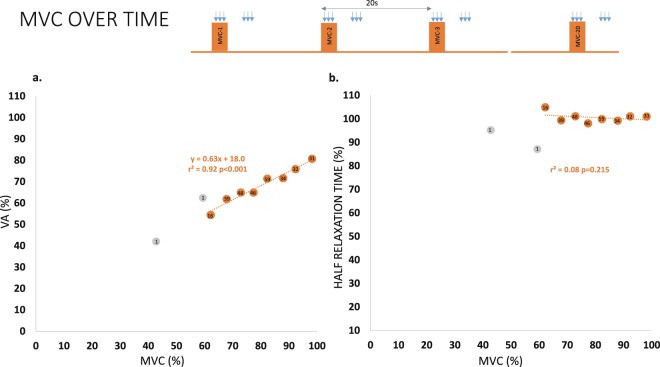
The central drive to the muscle reduces when muscle force wanes during sustained MVC, and this is generally considered the neurophysiological footprint of central fatigue. The question is if force loss and the failure of central drive to the muscle are responsible mechanisms of fatigue induced by un-resisted repetitive movements. In various experimental blocks, we validated a 3D-printed hand-fixation system permitting the execution of finger-tapping and maximal voluntary contractions (MVC). Subsequently, we checked the suitability of the system to test the level of central drive to the muscle and developed an algorithm to test it at the MVC force plateau. Our main results show that the maximum rate of finger-tapping dropped at 30 s, while the excitability of inhibitory M1-intracortical circuits and corticospinal excitability increased (all by approximately 15%). Furthermore, values obtained immediately after finger-tapping showed that MVC force and the level of central drive to the muscle remained unchanged. Our data suggest that force and central drive to the muscle are not determinants of fatigue induced by short-lasting un-resisted repetitive finger movements, even in the presence of increased inhibition of the motor cortex. According to literature, this profile might be different in longer-lasting, more complex and/or resisted repetitive movements.
Conflict of interest statement
The authors declare no competing interests.
Figures
References
MeSH terms
LinkOut - more resources
Full Text Sources
Other Literature Sources
