


New and Evolving Immunotherapy in Inflammatory Bowel Disease
- PMID: 29922662
- PMCID: PMC5988105
- DOI: 10.1159/000445986
New and Evolving Immunotherapy in Inflammatory Bowel Disease
Abstract
Background: Crohn's disease and ulcerative colitis are chronic inflammatory disorders associated with a dysregulated adaptive and innate immune response to gut commensals in genetically susceptible individuals. The pathogenesis of inflammatory bowel disease is complex, and the disease is characterized by significant phenotypic and genotypic heterogeneity.
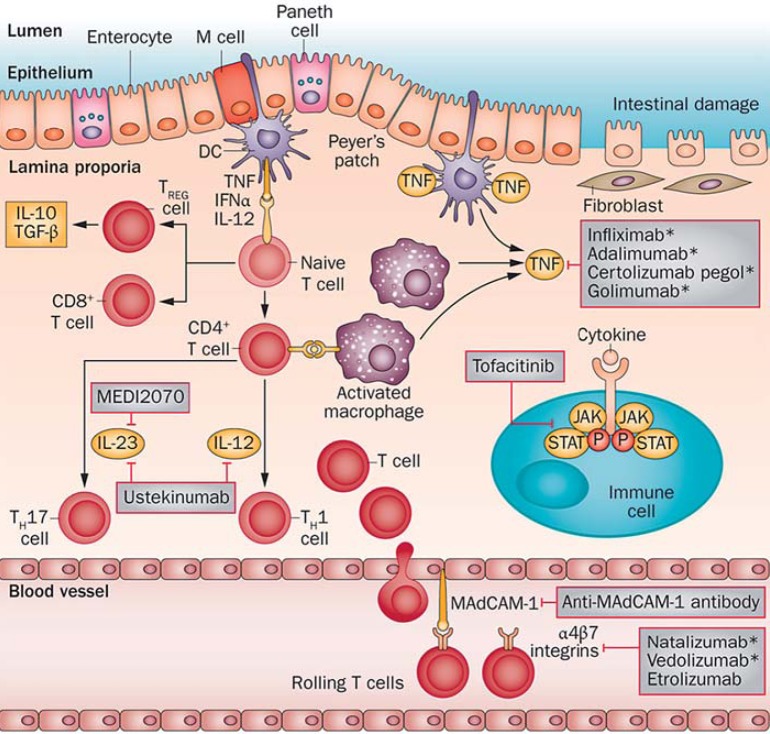
Summary: The introduction of anti-TNF biologics has resulted in improved clinical outcomes in patients with severe and moderately severe disease, but the current treatment paradigm continues to depend on systemic immunosuppression (steroids and immunomodulators) and surgical intervention in a significant number of patients, underscoring a significant unmet need. More recently, a number of genetic and immunologic abnormalities have been unraveled including aberrant intestinal mucosal defense function, abnormal intestinal permeability, dysregulated bacterial antigen processing by macrophages and presentation to T cells, cellular immune regulation and signaling, cytokine production, and leukocyte trafficking.
Key messages: Understanding these molecular mechanisms and effector pathways presents an opportunity for the development of new and improved targeted therapies.
Keywords: Biologics; Crohn's disease; Inflammatory bowel disease; Treatment; Ulcerative colitis.
Figures
References
-
- Ekbom A, Helmick C, Zack M, Adami HO. The epidemiology of inflammatory bowel disease: a large, population-based study in Sweden. Gastroenterology. 1991;100:350–358. - PubMed
-
- Kappelman MD, Rifas-Shiman SL, Kleinman K, et al. The prevalence and geographic distribution of Crohn's disease and ulcerative colitis in the United States. Clin Gastroenterol Hepatol. 2007;5:1424–1429. - PubMed
-
- Hazlewood GS, Rezaie A, Borman M, et al. Comparative effectiveness of immunosuppressants and biologics for inducing and maintaining remission in Crohn's disease: a network meta-analysis. Gastroenterology. 2015;148:344–354. e5; quiz e14-e15. - PubMed
-
- Bouma G, Strober W. The immunological and genetic basis of inflammatory bowel disease. Nat Rev Immunol. 2003;3:521–533. - PubMed
-
- Simpson SJ, Shah S, Comiskey M, et al. T cell-mediated pathology in two models of experimental colitis depends predominantly on the interleukin 12/signal transducer and activator of transcription (STAT)-4 pathway, but is not conditional on interferon γ expression by T cells. J Exp Med. 1998;187:1225–1234. - PMC - PubMed
Publication types
LinkOut - more resources
Full Text Sources
Other Literature Sources
