


Different Pathophysiology of Gastritis between East and West? An Asian Perspective
- PMID: 29922667
- PMCID: PMC5988154
- DOI: 10.1159/000446301
Different Pathophysiology of Gastritis between East and West? An Asian Perspective
Abstract
Background: The incidence of gastric cancer in Asia is higher than that in Europe and Northern America. Helicobacter pylori infection is the most important factor for the development of atrophic gastritis and gastric cancer. The geographical distribution of the prevalence and virulence factors of H. pylori are important to understand the difference between gastritis in the East and West.
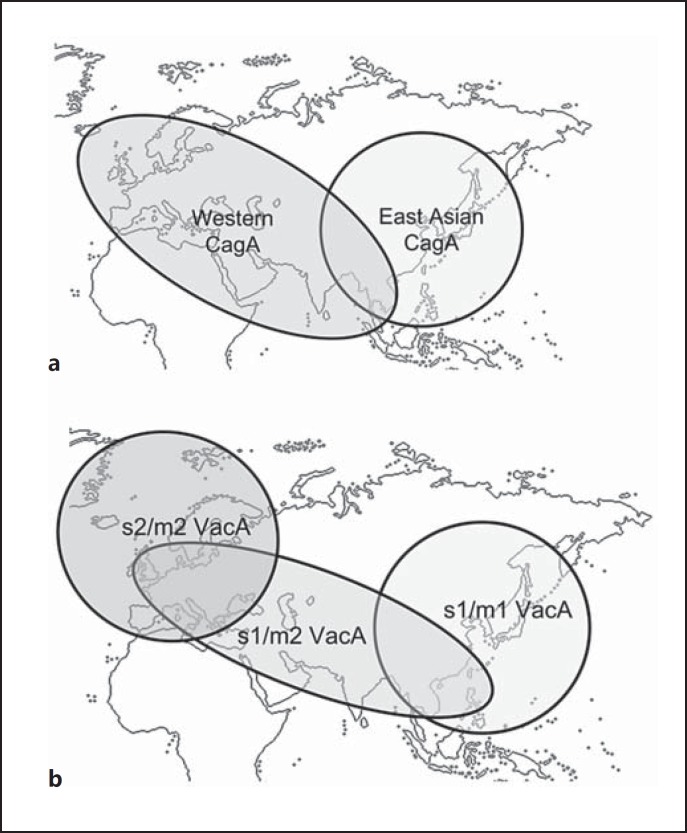
Summary: Articles comparing gastritis cases between eastern and western countries showed that the severity of gastritis is closely related to the risk of gastric cancer, and the severity of gastritis is more advanced in East Asia. Although the prevalence of H. pylori infection is closely associated with the incidence of gastric cancer in European countries, the severity of gastritis and the high incidence of gastric cancer in East Asia are not dependent only on the prevalence of H. pylori infection itself. From the viewpoint of the virulence factors of H. pylori, the East Asian CagA-positive strain (EPIYA motif ABD type) is peculiar in East Asia. Considering comprehensively the geographical distribution of H. pylori subtypes is the most important factor among all prospected risk factors for the incidence of gastric cancer and the rate of development of gastritis. While eating habits, such as salty foods, vegetables and fruits, might influence the progression of gastritis, such factors might be responsible for the geographic heterogeneity of gastritis.
Key message: East Asian CagA-positive H. pylori is the strongest risk factor for gastric carcinogenesis and the development of gastritis.
Keywords: East and West; Gastric cancer; Gastritis; Geographical distribution; Helicobacter pylori infection.
Figures
References
-
- Uemura N, Okamoto S, Yamamoto S, et al. Helicobacter pylori infection and the development of gastric cancer. N Engl J Med. 2001;345:784–789. - PubMed
-
- Fukase K, Kato M, Kikuchi S, et al. Effect of eradication of Helicobacter pylori on incidence of metachronous gastric carcinoma after endoscopic resection of early gastric cancer: an open-label, randomised controlled trial. Lancet. 2008;372:392–397. - PubMed
-
- Ferlay J, Soerjomataram I, Dikshit R, et al. Cancer incidence and mortality worldwide: sources, methods and major patterns in GLOBOCAN 2012. Int J Cancer. 2015;136:E359–E386. - PubMed
-
- Hirayama Y, Kawai T, Otaki J, et al. Prevalence of Helicobacter pylori infection with healthy subjects in Japan. J Gastroenterol Hepatol. 2014;29((suppl 4)):16–19. - PubMed
Publication types
LinkOut - more resources
Full Text Sources
Other Literature Sources
