


Increased Intestinal Permeability and Decreased Barrier Function: Does It Really Influence the Risk of Inflammation?
- PMID: 29922669
- PMCID: PMC5988153
- DOI: 10.1159/000447252
Increased Intestinal Permeability and Decreased Barrier Function: Does It Really Influence the Risk of Inflammation?
Abstract
Background: Increased intestinal permeability due to barrier dysfunction is supposed to cause microbial translocation which may induce low-grade inflammation in various diseases. However, this series of events has not been comprehensively evaluated yet.
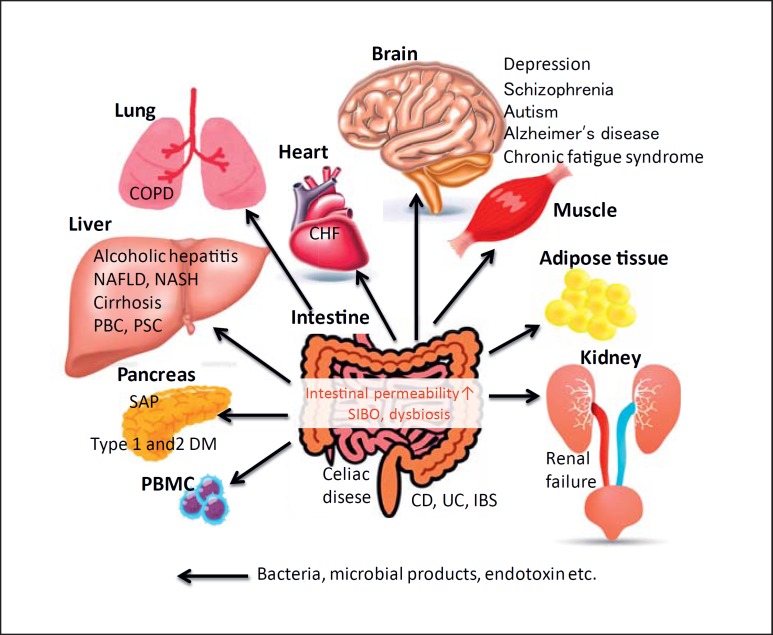
Summary: Intestinal epithelial barrier dysfunction and increased permeability have been described in patients with inflammatory bowel disease (IBD), irritable bowel syndrome (IBS), alcoholic liver disease, nonalcoholic steatohepatitis (NASH), liver cirrhosis, acute pancreatitis, primary biliary cholangitis (PBC), type 1 and type 2 diabetes, chronic kidney disease, chronic heart failure (CHF), depression, and other diseases. Most clinical reports used either permeability assays of challenge tests or measurement of circulating bacterial markers like endotoxin for assessment of 'the leaky gut'. The intestinal permeability assessed by the challenge tests has often been related to the changes of tight junction proteins in the epithelium or circulating endotoxin levels. In patients with IBD, alcoholic liver disease, NASH, liver cirrhosis, PBC, obstructive jaundice, severe acute pancreatitis, and CHF, endotoxemia and proinflammatory cytokinemia have been found in addition to increased permeability. In the serum of patients with IBS and depression, antiflagellin antibodies and antilipid A antibodies were detected, respectively, together with increased permeability and proinflammatory cytokinemia. The site of infection, which is localized to the intestine in IBD and IBS, includes various extraintestinal organs in other diseases. The relation of gut dysbiosis to intestinal barrier dysfunction has gradually been clarified.
Key messages: Although no direct cause-and-effect relationship has been confirmed, all clinical and experimental data suggest the importance of intestinal hyperpermeability in the inflammatory changes of various diseases. Increased intestinal permeability is a new target for disease prevention and therapy. Considering the close relationship of 'the leaky gut' and gut dysbiosis to the major diseases, we can conclude that meticulous dietetic and probiotic approaches to recover healthy microbiota have the potential to make a breakthrough in the management of these diseases tomorrow.
Keywords: Acute pancreatitis; Chronic heart failure; Chronic kidney disease; Depression; Endotoxemia; Inflammatory bowel disease; Intestinal permeability; Irritable bowel syndrome; Liver disease.
Figures
References
-
- Wyatt J, Oberhuber G, Pongratz S, Puspok A, Moser G, Novacek G, Lochs H, Vogelsang H. Increased gastric and intestinal permeability in patients with Crohn's disease. Am J Gastroenterol. 1997;92:1891–1896. - PubMed
-
- Vivinus-Nebot M, Frin-Mathy G, Bzioueche H, Dainese R, Bernard G, Anty R, Filippi J, Saint-Paul MC, Tulic MK, Verhasselt V, Hebuterne X, Piche T. Functional bowel symptoms in quiescent inflammatory bowel diseases: role of epithelial barrier disruption and low-grade inflammation. Gut. 2014;63:744–752. - PubMed
Publication types
LinkOut - more resources
Full Text Sources
Other Literature Sources
