Laser safety in fiber-optic monitoring of spinal cord hemodynamics: a preclinical evaluation
- PMID: 29923371
- PMCID: PMC8357330
- DOI: 10.1117/1.JBO.23.6.065003
Laser safety in fiber-optic monitoring of spinal cord hemodynamics: a preclinical evaluation
Abstract
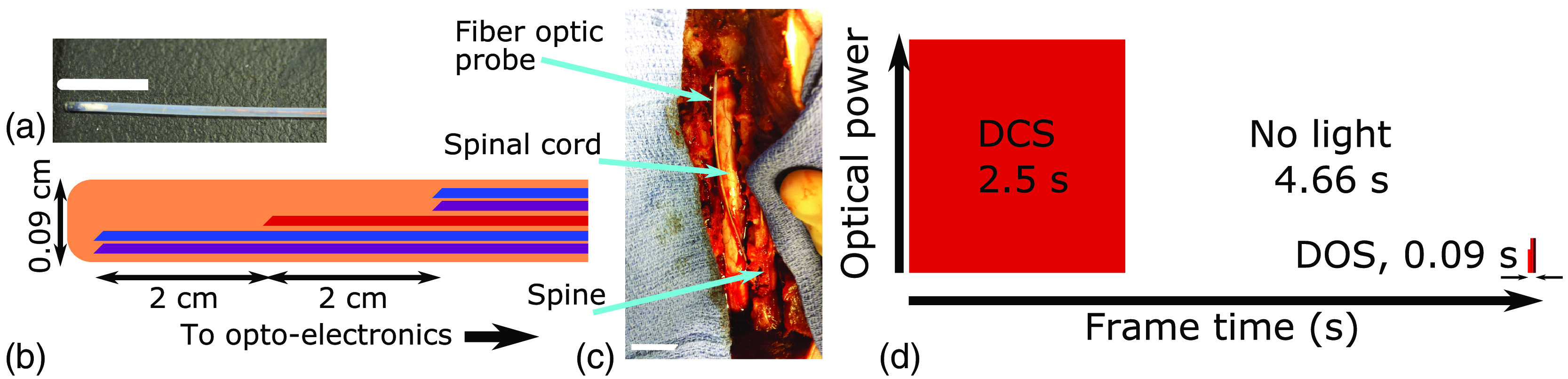
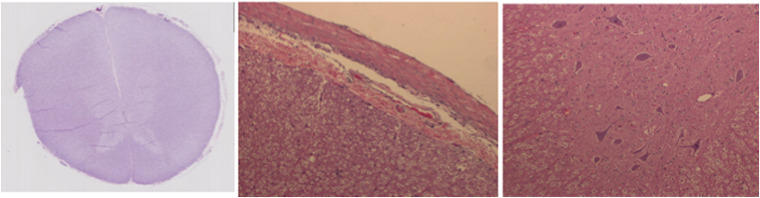
The prevention and treatment of spinal cord injury are focused upon the maintenance of spinal cord blood flow, yet no technology exists to monitor spinal cord ischemia. We recently demonstrated continuous monitoring of spinal cord ischemia with diffuse correlation and optical spectroscopies using an optical probe. Prior to clinical translation of this technology, it is critically important to demonstrate the safety profile of spinal cord exposure to the required light. To our knowledge, this is the first report of in situ safety testing of such a monitor. We expose the spinal cord to laser light utilizing a custom fiber-optic epidural probe in a survival surgery model (11 adult Dorset sheep). We compare the tissue illumination from our instrument with the American National Standards Institute maximum permissible exposures. We experimentally evaluate neurological and pathological outcomes of the irradiated sheep associated with prolonged exposure to the laser source and evaluate heating in ex vivo spinal cord samples. Spinal cord tissue was exposed to light levels at ∼18 × the maximum permissible exposure for the eye and ∼ ( 1 / 3 ) × for the skin. Multidisciplinary testing revealed no functional neurological sequelae, histopathologic evidence of laser-related injury to the spinal cord, or significant temperature changes in ex vivo samples. Low tissue irradiance and the lack of neurological, pathological, and temperature changes upon prolonged exposure to the laser source offer evidence that spinal cord tissues can be monitored safely with near-infrared optical probes placed within the epidural space.
Keywords: diffuse optics; hemodynamics; intraoperative monitoring; ischemia; optical monitoring; spinal cord.
(2018) COPYRIGHT Society of Photo-Optical Instrumentation Engineers (SPIE).
Figures
References
Publication types
MeSH terms
Grants and funding
LinkOut - more resources
Full Text Sources
Other Literature Sources