


Sponge chemical defenses are a possible mechanism for increasing sponge abundance on reefs in Zanzibar
- PMID: 29924803
- PMCID: PMC6010217
- DOI: 10.1371/journal.pone.0197617
Sponge chemical defenses are a possible mechanism for increasing sponge abundance on reefs in Zanzibar
Abstract
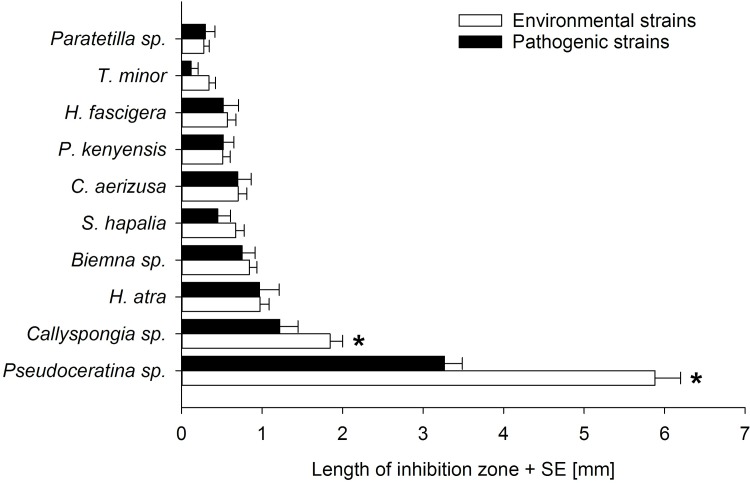
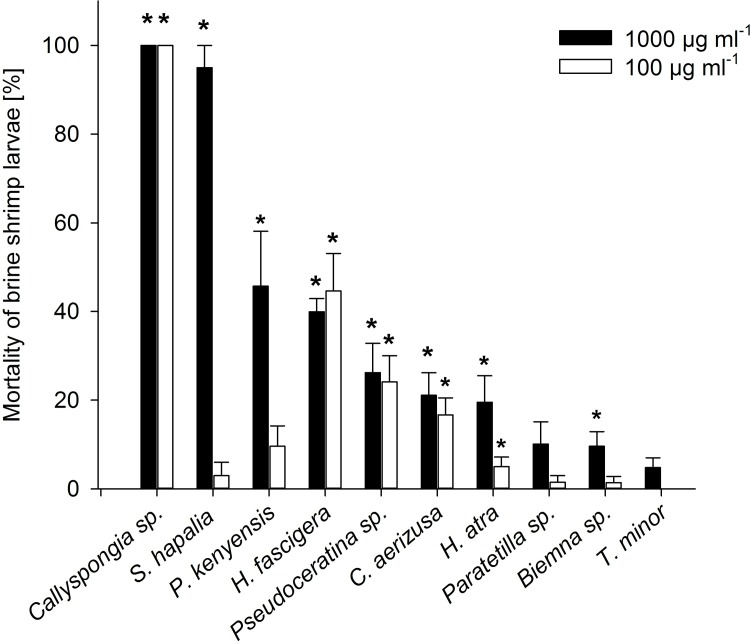
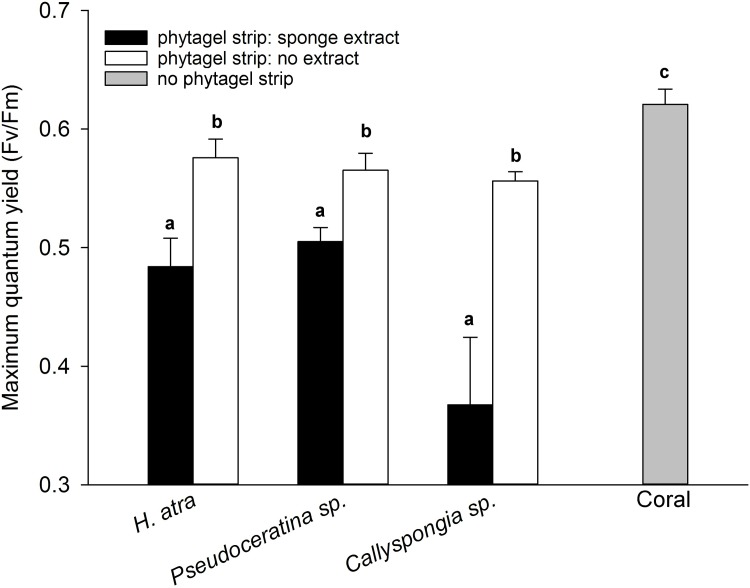
Coral reefs are experiencing increasing anthropogenic impacts that result in substantial declines of reef-building corals and a change of community structure towards other benthic invertebrates or macroalgae. Reefs around Zanzibar are exposed to untreated sewage and runoff from the main city Stonetown. At many of these sites, sponge cover has increased over the last years. Sponges are one of the top spatial competitors on reefs worldwide. Their success is, in part, dependent on their strong chemical defenses against predators, microbial attacks and other sessile benthic competitors. This is the first study that investigates the bioactive properties of sponge species in the Western Indian Ocean region. Crude extracts of the ten most dominant sponge species were assessed for their chemical defenses against 35 bacterial strains (nine known as marine pathogens) using disc diffusion assays and general cytotoxic activities were assessed with brine shrimp lethality assays. The three chemically most active sponge species were additionally tested for their allelopathic properties against the scleractinian coral competitor Porites sp.. The antimicrobial assays revealed that all tested sponge extracts had strong antimicrobial properties and that the majority (80%) of the tested sponges were equally defended against pathogenic and environmental bacterial strains. Additionally, seven out of ten sponge species exhibited cytotoxic activities in the brine shrimp assay. Moreover, we could also show that the three most bioactive sponge species were able to decrease the photosynthetic performance of the coral symbionts and thus were likely to impair the coral physiology.
Conflict of interest statement
The authors have declared that no competing interests exist.
Figures
References
-
- Hughes TP, Barnes ML, Bellwood DR, Cinner JE, Cumming GS, Jackson JBC, et al. Coral reefs in the Anthropocene. Nature. 2017;546: 82–90. doi: 10.1038/nature22901 - DOI - PubMed
-
- Gardner TA, Côté IM, Gill JA, Grant A, Watkinson AR. Long-term region-wide declines in Caribbean corals. Science (80-). 2003;301: 958–960. doi: 10.1126/science.1086050 - DOI - PubMed
-
- Bellwood DR, Hughes TP, Folke C, Nyström M. Confronting the coral reef crisis. Nature. 2004;429: 827–833. doi: 10.1038/nature02691 - DOI - PubMed
-
- Norström A V., Nyström M, Lokrantz J, Folke C. Alternative states on coral reefs: Beyond coral-macroalgal phase shifts. Mar Ecol Prog Ser. 2009;376: 293–306. doi: 10.3354/meps07815 - DOI
-
- Bell JJ, Davy SK, Jones T, Taylor MW, Webster NS. Could some coral reefs become sponge reefs as our climate changes? Glob Chang Biol. 2013;19: 2613–2624. doi: 10.1111/gcb.12212 - DOI - PubMed
Publication types
MeSH terms
LinkOut - more resources
Full Text Sources
Other Literature Sources
