


Role of multimeric analysis of von Willebrand factor (VWF) in von Willebrand disease (VWD) diagnosis: Lessons from the PCM-EVW-ES Spanish project
- PMID: 29924855
- PMCID: PMC6010290
- DOI: 10.1371/journal.pone.0197876
Role of multimeric analysis of von Willebrand factor (VWF) in von Willebrand disease (VWD) diagnosis: Lessons from the PCM-EVW-ES Spanish project
Abstract
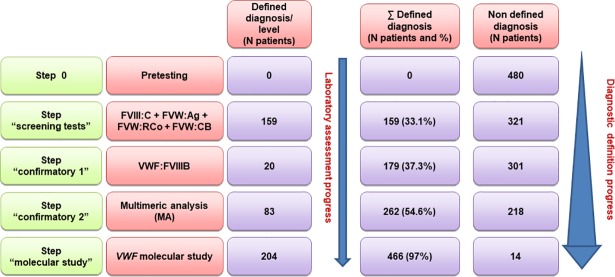
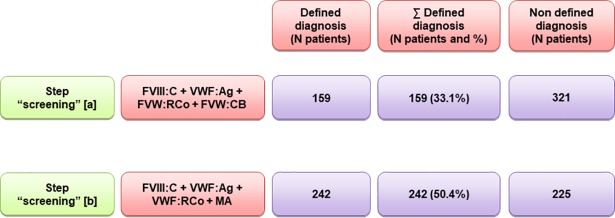
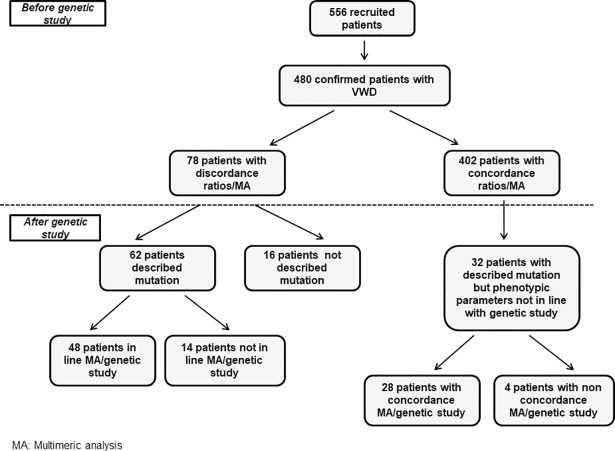
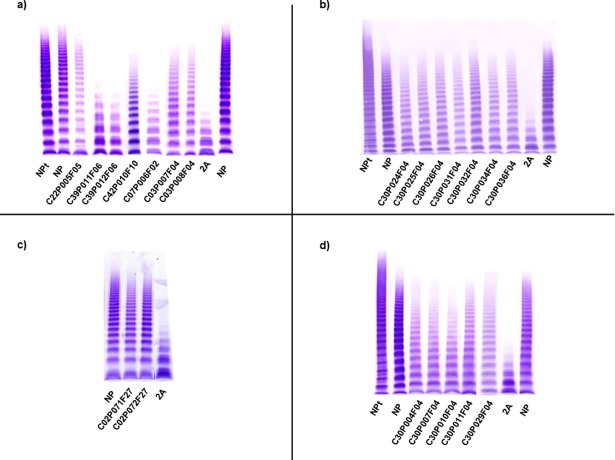
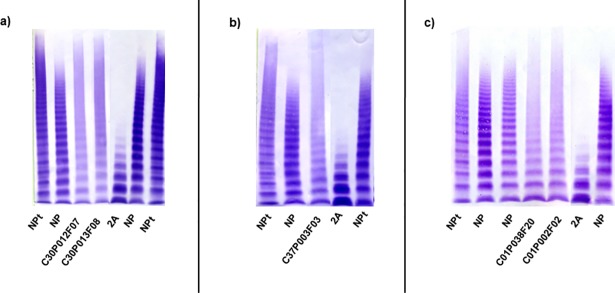
The multimeric analysis (MA) of plasma von Willebrand factor (VWF) evaluates structural integrity and helps in the diagnosis of von Willebrand disease (VWD). This assay is a matter of controversy, being considered by some investigators cumbersome and only slightly informative. The centralised study 'Molecular and Clinical Profile of von Willebrand Disease in Spain (PCM-EVW-ES)' has been carried out by including the phenotypic assessment and the genetic analysis by next generation sequencing (NGS) of the VWF gene (VWF). The aim of the present study was to evaluate the role of MA to the diagnosis of these patients and their potential discrepancies. Two hundred and seventy out of 480 patients centrally diagnosed with VWD had normal multimers, 168 had abnormal multimers and 42 a total absence of multimers. VWF MA was of great significance in the diagnosis of 83 patients (17.3%), it was also of help in the diagnosis achieved in 365 additional patients (76%) and was not informative in 32 cases (6.7%). With regard to discrepancies, 110 out of 480 (23%) patients centrally diagnosed with VWD presented some kind of discordance between VWF:RCo/VWF:Ag and/or VWF:CB/VWF:Ag ratios, multimeric study and/or genetic results. The VWF MA was key in the presence of novel mutations as well as in cases with phenotypic discrepancies. A comparison between the contribution of MA and VWF:CB showed a clearly higher contribution of the former in the diagnostic process. These data seem to reinforce the relevance of the VWF MA in VWD diagnosis, despite all its limitations.
Conflict of interest statement
The authors have declared that no competing interests exist. The funders provided support but did not have any additional role in study design, data collection and analysis, decision to publish, or preparation of the manuscript, as well as they do not alter our adherence to PLOS ONE policies on sharing data and materials. The only implication in the study of the funding organizations was to provide financial support for the development of the project (sample collection and shipment and for research materials). The Project “Molecular and Clinical Profile of VWD in Spain (PCM-EVW-ES) SPANISH REGISTRY” has been registered at www.clinicaltrials.gov Protocol Registration and Results System. (Study: Identifier: NCT02869074RE. Responsible Party Francisco Javier Batlle Fonrodona). Affiliation: Spanish Society on Thrombosis and Haemostasis (SETH). Last Public Release: 10/03/2017. The Banc de Sang i Teixits (Blood and Tissue Bank) is a public agency of the Catalan Department of Health. For more information you can visit the web page: https://www.bancsang.net/info-corporativa/en_missio/.
Figures
References
-
- Ruggeri ZM. Von Willebrand factor, platelets and endothelial cell interactions. J Thromb Haemost 2003; 1(7): 1335–1342. - PubMed
-
- Leebeek FW, Eikenboom JC. Von Willebrand’s Disease. N Engl J Med 2016; 375(21): 2067–2080. Review. doi: 10.1056/NEJMra1601561 - DOI - PubMed
-
- Batlle J, Pérez-Rodríguez A, Pinto JC, Loures E, Rodríguez-Trillo A, López-Fernández MF. Diagnosis and management of von Willebrand disease in Spain. Semin Thromb Hemost 2011; 37(5): 503–510. doi: 10.1055/s-0031-1281036 - DOI - PubMed
-
- Costa-Pinto J, Pérez-Rodríguez A, del C Gomez-del-Castillo M, Lourés E, Rodríguez-Trillo A, Batlle J et al. Diagnosis of inherited von Willebrand disease: comparison of two methodologies and analysis of the discrepancies. Haemophilia 2014; 20(4): 559–567. - PubMed
Publication types
MeSH terms
Substances
LinkOut - more resources
Full Text Sources
Other Literature Sources
Medical
Miscellaneous
